World
Some health workers in DR of Congo’s Ebola outbreak go on strike over pay issues

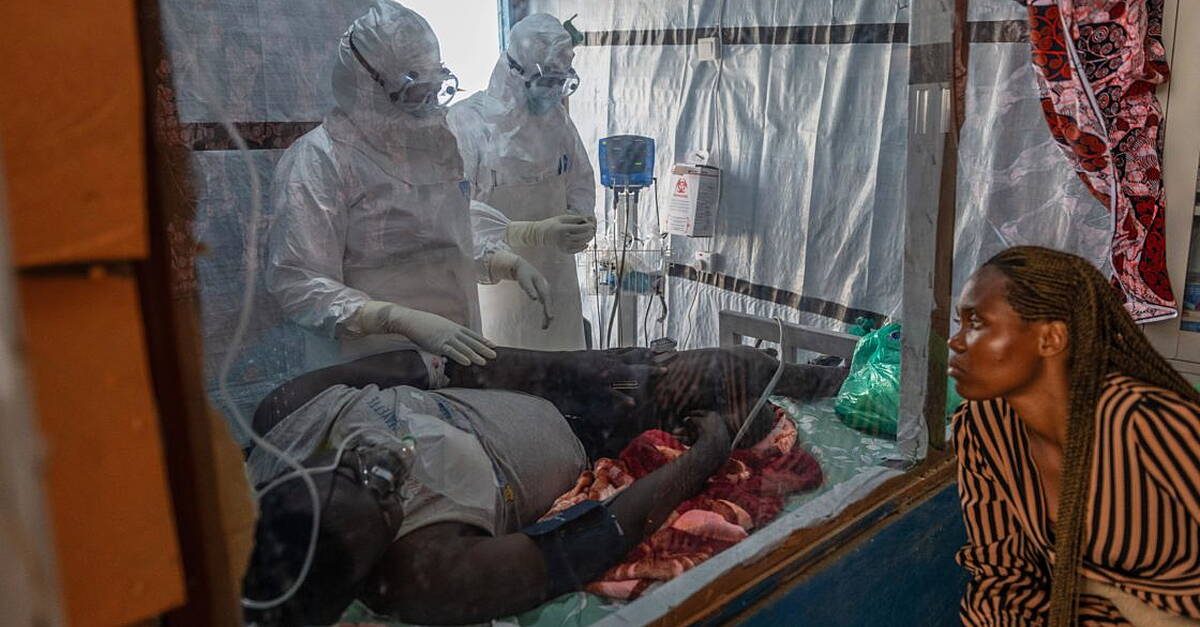
The healthcare workers at the epicentre of the Democratic Republic of the Congo’s Ebola outbreak are walking off their jobs to protest delays in their payments, threatening efforts to slow the outbreak that officials said continues to spread faster than the response.
In Ituri province, the hardest hit among the three provinces in the Democratic Republic of the Congo affected by the outbreak, some of the health professionals and other front-line workers told The Associated Press they have not been paid their wages and bonuses since the outbreak was declared on May 15.
They also alleged they were working with limited gear, and were being treated unfairly by authorities as well as response teams.
We spend money on transport to get to work. We thought we’d be rewarded. At the moment, nothing is going right because we’re not being paid. We don’t deserve this sort of treatment
“Since the Ebola virus disease outbreak was declared, we’ve been demanding payment for our work,” Dr Biensi Kano, a member of the epidemiological surveillance committee in Ituri’s capital, Bunia, told the AP.
The latest government data shows 1,708 recorded cases, including 580 deaths, and that the first month of this Ebola outbreak was already the worst on record, health authorities said.
The strike comes at the start of enrolment for clinical trials for the treatment of the Bundibugyo virus that is responsible for this outbreak.
The World Health Organisation representative in the Democratic Republic of the Congo, Dr Anne Ancia, said on Tuesday that the virus continues to spread, fuelled by population movements and insecurity, while some treatment centres are at near-full capacity.
The non-payment of benefits “exposes us and our families to significant socio-economic difficulties and seriously undermines our living conditions” said Dr Kano.
In an official notice to national and provincial authorities over the weekend, front-line workers in Ituri threatened to strike if the wages were not paid in 24 hours.
By Tuesday, some had already stopped working although no official strike has been declared.
The aggrieved front-line workers also include safety and security teams, those that often embark on community outreach as well as those burying patients who died from Ebola.
The Democratic Republic of the Congo’s government did not immediately respond to a request for comment about the situation.
Officials in Ituri, however, said they have met with the workers and their concerns are being addressed.
“The fact that Bunia airport is closed is hampering the very implementation of the response, particularly certain aspects of the flow of funds,” Akilimali Pierre, incident manager at Congo’s National Institute of Public Health, told the AP.
“This is one of the reasons that may account for the delay in payment.”

Some of the workers organised a protest on Monday outside the Rwampara Ebola treatment centre.
They set tyres alight, causing a brief panic in the vicinity before the police intervened to restore order.
Health workers face other challenges as well, including attacks from angry residents and scepticism about the virus.
Dr Ben Bakule, a community investigator, said he narrowly escaped death in late May when a group of angry young men attacked him and his colleagues while they were tracing contacts of a confirmed Ebola case in the village of Tutu, in Djugu territory.
“We spend money on transport to get to work. We thought we’d be rewarded. At the moment, nothing is going right because we’re not being paid. We don’t deserve this sort of treatment,” he told the AP.
“We might have to give up our jobs. These are risks we’re taking. We risk dying for nothing.”
I came here to save people’s lives, but this is how I am being thanked… We are working day and night without being paid
“This government wants this epidemic to continue,” Dr Bakule added, his voice tinged with frustration.
When he visited the mining town of Mongbwalu — considered the hot spot for the disease — last month, minister of health Roger Kamba assured the response teams that the government was prioritising their working conditions.
“All doctors, all nurses and all staff working on the response will be fully supported. We have the money for that,” Mr Kamba said at the time.
But front-line workers say the reality is different.
“We are doing everything we can to make the public understand how dangerous this disease is. I came here to save people’s lives, but this is how I am being thanked,” said Dr Ghislain Maneba, an epidemiologist and community investigator in the Rwampara health zone.
“We are working day and night without being paid.”

Meanwhile, the strike by some workers has caused concern among residents in Ituri, where measures to slow the outbreak have resulted in economic hardship.
Bunia resident Anifa Kito said she fears that response efforts may falter, further complicating daily life.
“I would ask the authorities to resolve this situation before things get any worse,” she said, standing in front of her tomato stall.


U.S. defence official convicted for aiding Nigeria-based scammers launder millions of dollars

Enugu Records Major Malaria Drop As Health Officials Push Free Treatment Awareness

Presidential panel on State police begin their work

Edo seeks stronger collaboration to protect fibre infrastructure

The referee is a little bit suspect – President Trump confirms he spoke to FIFA president to review Folarin Balogunâs red card

Transfer: Meslier becomes Arteta’s second signing of this summer

Coastguard accused of running over girlfriend and staging her su!cide

 Society2 days ago
H0rny Old Man Caught On Camera In Broad Daylight Trying To Chop Mad Woman At Roadside
- Investigation16 hours ago
15-year-old student slashes schoolmate with cutlass for allegedly touching her brâ¬ast repeatedly during school clean-up exercise
- Society2 days ago
Chaos At Cemetery As Area Boys Hijack Dead Body In Coffin, Stops Family From Burial Over Unpaid Debt
- Investigation2 days ago
If this was AFCON the nonsense being said would be crazy â Former Congolese footballer Yannick Bolasie slams FIFA over Balogun red card reversal
- Society3 days ago
Armed Robbers Target Mobile Money Vendor, One Shot Dead as GH¢140,000 Is Recovered
- News3 days ago
Obi demands accountability over IMF’s ₦8.83tn off-budget spending report
- National3 days ago
Transfer: Real Madrid confirm fourth signing under Mourinho
- Breaking3 days ago
Report alleging ₦500bn offer to split S’South votes false, baseless – Jonathan