World
Tate’s New Director Knows Its Glory Days. Can She Bring Them Back?

This Video Is Trending Right Now
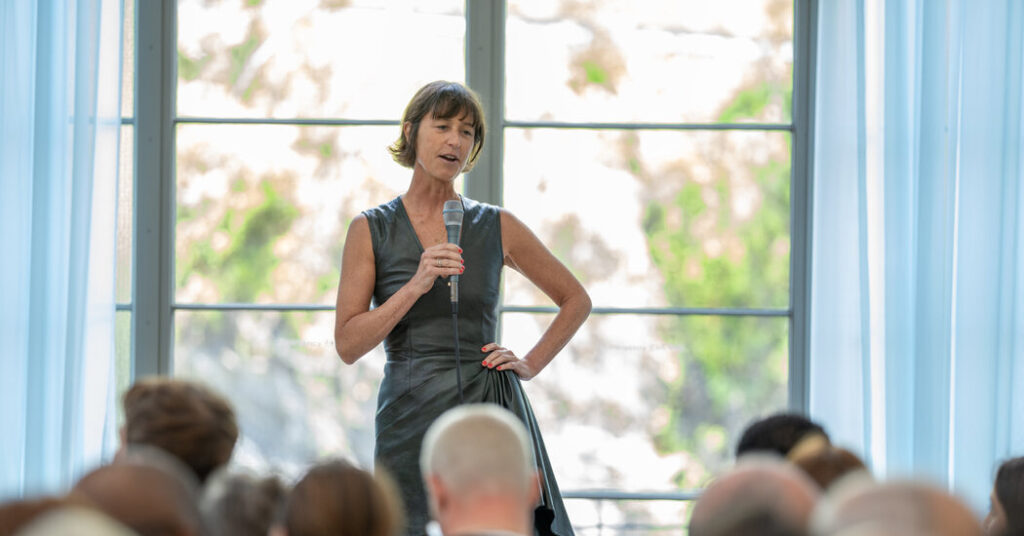
As Jessica Morgan prepares to take over as the new director of the Tate museums and galleries, her knowledge of Tate as a beloved — and uniquely British — institution, combined with a fund-raising acumen honed in the United States, where there is notably more private money to court, are huge assets. She’s also a favorite of artists.
“She takes audiences seriously without being cynical or sensationalist,” the artist Rosalind Nashashibi, who was a Tate trustee from 2022 to 2026, said in an interview. “She’s the perfect hand for this glove right now.”
What we might think of as “right now” is a vastly different landscape in the arts compared to 2014, when Morgan left a curator position at Tate for the United States, to become the director of Dia Art Foundation. Brexit had yet to occur, never mind Covid-19, and the effects of the 2008 financial crisis had perhaps not yet reached their deepest lows, including large-scale cuts to the arts.
Looking back, the first decade or so of the ’00s seems like a more optimistic and confident era for art and museums in Britain, as elsewhere. Morgan, 57, who was previously at Tate from 2002-2014, might bring some of this energy back to her former London workplace, where she is well remembered.
In January, when she takes up the helm at Tate — Britain’s largest museum network, with two flagship spaces in London and regional outposts in Liverpool and St. Ives — Morgan will face many of the issues now confronting cultural institutions in Britain, as elsewhere across the globe.
Cuts to public funding. Conversations around ethical corporate partnerships and private philanthropy. Charged political debates about the role of culture in the present and its responsibility to the past. Rising operating costs and ticket prices during a cost-of-living-crisis. And poor staff morale amid internal labor disputes about pay stagnation.
Her track record at Dia, where she achieved huge fund-raising success, oversaw the physical expansion of the institution and quietly widened a sometimes narrow understanding of Minimalist art, shows that she understands how wide a director’s vision must be. In her earlier Tate days, she brought works by about 100 new artists into the permanent collection and curated a variety of critically admired — and sometimes provocative — exhibitions. (People still talk about Tino Sehgal’s “These Associations,” a live installation that she programmed in 2012, drawing over 1.5 million visitors.)
Morgan continued this dedication to change during her tenure at Dia, bringing new artists like Steve McQueen, Tehching Hsieh and Lee Ufan into the Minimalist fold while also acquiring historical standouts like Nancy Holt’s “Sun Tunnels” (1973-76) — the institution’s first piece of Land Art by a woman. She also oversaw a show of female artists that should also be added to the growing canons of those movements.
Although it hasn’t opened yet, she also initiated a new major project with the landscape architect Sara Zewde to create sculptural landforms that reorient the movement of water on Dia Beacon’s property, which — like elsewhere in the world — is facing rising water levels and increasingly powerful storms. This will come as a welcome signal to the steadily increasing participants in the international Gallery Climate Coalition, of which Tate is an active member.
Tate will be a bigger stage for Morgan, but the pay cut as she moves from Dia will be significant: British institutions can notoriously only afford much lower salaries than their U.S. counterparts. (Though it’s worth noting: The previous Tate director’s nearly $300,000 salary still put her among the top 1 percent of earners in Britain.)
Yet here she is, in any case, cheerfully taking on the mantle of the institution that she described in Tate’s news release as “undoubtedly the world’s foremost institution for international modern and contemporary art and for British art, leading the field through its collection and exhibition program.”
With the exception of a few outliers in the British news media, which can be wary of change, most responses to Morgan’s appointment so far have been positive, welcoming her as a director who can wear many hats and to bring something new to a sometimes unwieldy institution. Dia’s loss is Britain’s gain: an exciting, canny and — crucially — optimistic appointment for the country’s cultural landscape.


Banning Social Media for Kids Is a Bad Idea

Russian Nationals Sentenced in Angola Terrorism Trial

Bayelsa Health Commissioner Calls For Halt To Unhygienic Processing Of Imported Cowhides(Kpomo meat)

Ghana Police Has Worked Secretly With Ajagurajah To Hack My Account — King Promise Lookalike Robest
Fashola Rules Out Presidential Ambition, Says ‘I’m President at Home’

US House passes record $1.15trn defence bill to fund Iran war

Nuclear Energy Revival Puts Westinghouse in Prime Position

 Investigation2 days ago
65-year-old married female teacher blindfolded and tied 10-year-old schoolboy to bed before having s3x with him
- Investigation2 days ago
âBusinesses are dy!ng in South Africa. Nobody is making money – South African man decries low patronage days after anti-immigrant protest
- Investigation3 days ago
âResurrection of the Christâ writer reveals actor Mel Gibsonâs dark spiritual warning about âPassionâ sequel
- World2 days ago
Trump Is Caught in the Trap He Set
- Investigation2 days ago
"I ‘m fine and healthy" – Video of late Mary Habila debunking her d3ath rumours 3 days before she d!ed at Umahi’s residence
- Investigation3 days ago
Nigerian midfielder Suliat Abideen signed by Fenerbahçe
 News3 days ago
Alleged fraud: Court grants ex-Warri refinery MD, Jimoh Yisawu ₦500m bail
- Investigation3 days ago
âTimi Dakolo, youâve proven you lack integrityâ â DJ Timmy intensifies criticism of singer amid contract dispute