Society
THE MAN WHO STOPPED THIRD TERM: WHY THE 2006 BATTLE STILL SHAPES NIGERIA’S POLITICS

By Suleiman Salihu Mu’azu
Some political battles never truly end.
The actors may grow older, political parties may change, alliances may collapse and new coalitions may emerge, but the consequences of those battles continue to shape the destiny of a nation.
One such battle was Nigeria’s Third Term saga of 2006.
Nearly two decades later, its shadow still hangs over the country’s politics and over the relationship between former President Olusegun Obasanjo and his former Vice President, Atiku Abubakar.
THE MOMENT NIGERIA FACED A CONSTITUTIONAL TEST
Nigeria returned to democratic rule in 1999 after years of military dictatorship. The Constitution was clear: a president could serve only two four-year terms.
Yet, as President Olusegun Obasanjo approached the end of his second tenure, a proposal emerged to amend the Constitution in a way that would permit an additional presidential term.
Supporters described it as constitutional reform.
Critics viewed it as an attempt to prolong executive power beyond the limits set by the Constitution.
The proposal ignited one of the fiercest political struggles in Nigeria’s democratic history.
Civil society organisations, journalists, religious leaders, opposition politicians and many lawmakers resisted the amendment, arguing that altering presidential term limits would weaken one of the most important safeguards against the concentration of power.
ATIKU’S DEFINING MOMENT
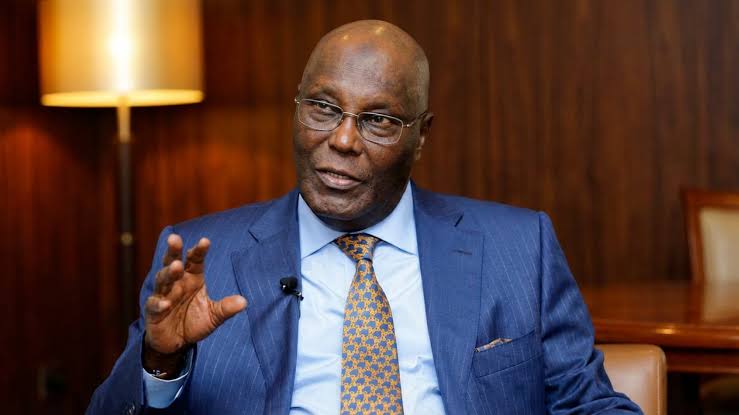
At the centre of that storm stood Vice President Atiku Abubakar.
Although relations between him and President Obasanjo had already deteriorated, Atiku became one of the most prominent political figures associated with opposition to the Third Term project.
His allies worked with legislators and political stakeholders who believed Nigeria’s democracy should not be altered to suit any individual, regardless of status or achievements.
When the constitutional amendment ultimately failed in the National Assembly in May 2006, many Nigerians regarded it as a defining victory for constitutional democracy.
It demonstrated that democratic institutions could withstand enormous political pressure and that no elected leader was above the Constitution.
A POLITICAL DIVORCE THAT NEVER HEALED
The collapse of the Third Term proposal marked more than the defeat of a constitutional amendment.
It marked the complete breakdown of one of Nigeria’s most influential political partnerships.
The relationship between Obasanjo and Atiku deteriorated into years of public disagreements, political rivalry and conflicting accounts of their time in government.
Books were published.
Interviews followed.
Political endorsements shifted.
Each election cycle revived debates about their fractured relationship.
Whether one agrees with either man or not, it is difficult to separate their personal rivalry from the evolution of Nigeria’s democratic politics over the last two decades.
WHY THIS HISTORY MATTERS TODAY
As Nigeria approaches another defining election, the lessons of 2006 deserve renewed attention.
The real question is not about personalities.
It is about principles.
Democracy survives only when constitutions are respected, institutions remain independent and political power is subject to clear limits.
History repeatedly shows that nations become vulnerable when loyalty to individuals begins to outweigh loyalty to constitutional order.
That is why the Third Term debate remains one of the most significant democratic tests in Nigeria’s Fourth Republic.
HISTORY’S VERDICT
History will remember President Olusegun Obasanjo for major reforms, including debt relief, telecommunications expansion and important economic initiatives.
History will also remember that his presidency became associated with the unsuccessful Third Term campaign a proposal that generated one of the greatest constitutional controversies in modern Nigeria.
History will remember Atiku Abubakar as one of the prominent political figures who opposed that effort and who emerged from the episode as a central figure in Nigeria’s opposition politics.
Citizens may disagree about his policies, his ambitions or his political journey.
But his role in one of the defining constitutional battles of Nigeria’s democracy will remain part of the historical record.
THE LESSON FOR 2027
The enduring lesson of 2006 is not about Obasanjo.
It is not even about Atiku.
It is about Nigeria.
Democracy is not protected by constitutions alone. It is protected by citizens, legislators, judges, journalists and leaders who are willing to defend constitutional limits when they are tested.
Every generation inherits the responsibility of safeguarding democratic institutions.
The generation that defeated the Third Term proposal fulfilled that responsibility.
The question before Nigerians today is whether the present generation will show the same commitment to constitutional democracy, accountable leadership and the peaceful transfer of power.
History is always watching.
Suleiman Salihu Mu’azu is a Public and Policy Analyst, Kaduna (Email: [email protected])


Brittney Griner Called Wife ‘The Best Mother And Spouse’ Weeks Before Pulling The Plug On 8-Year Marriage

Canada introduces tougher financial scrutiny for international students

How not to avoid a conflict of interest

‘It’s just what we’ve all dreamed of.’ L.A. team helps launch Women’s Pro Baseball League

Zenith Bank fires staff over TikTok video

Stop having children with poor men – Nigerian woman says as she slams man for posting unflattering post-birth photo of his "malnourished, anemic and exhausted" wife

Divers Search a New Jersey River for Second of 2 Children They Fear Drowned

 World2 days ago
My daughter’s squishy toy burst on her legs. We ended up in the emergency room.
- National3 days ago
FG Exceeds 2024 Borrowing Target by ₦4.79tn as Debt Hits ₦12.62tn
- National3 days ago
Scott Wolf’s Estranged Wife Finally Catches A Break In Court After Doxxing Drama
- World3 days ago
What Is Open-Weights A.I.?
- World3 days ago
A Battle Over Female Ambition
- Investigation3 days ago
âDonât you want to be like Peller? He didnât go to school but still made his parents proudâ â Daddy Freeze jokes with son over â¦7m school fees
- Investigation2 days ago
P0rn star Emily Willisâ family reaches $3m settlement over rehab brain injury that left her permanently disabled
- Investigation2 days ago
âItâs is an opportunity but not an obligationâ â FIFA president Infantino defends new proposal to sell FIFA World Cup rights to private company after facing backlash