National
Tinubu’s infrastructure, human capital investments will drive Nigeria towards $1t economy — Yilwatda

The National Chairman of the All Progressives Congress (APC), Prof. Nentawe Goshwe Yilwatda, has said the administration of President Bola Ahmed Tinubu is deliberately investing in infrastructure and human capital development as part of a comprehensive strategy to transform Nigeria into a $1 trillion economy.
Yilwatda stated this when he received the Governing Council of the Federal University of Health Sciences, Otukpo, Benue State.
The team, led by its Pro-Chancellor, Professor Muhammad Audu, was received at the APC National Secretariat in Abuja.
The APC National Chairman, in a statement by his Special Adviser on Media and Information Strategy, Abimbola Tooki, said the Federal Government’s ongoing investments in roads, bridges, rail transportation, deep seaports, education, and other critical infrastructure were designed not only to address existing development gaps, but also to create the foundation for increased productivity, investment, job creation, and national prosperity.
According to him, the Tinubu administration has adopted a deliberate approach to infrastructure development, recognising that no economy can achieve sustained growth without efficient transportation networks and other critical infrastructure that connect people, businesses, markets and productive centres.
He said the administration was working towards establishing five major deep seaports in different parts of the country.
These are the Badagry Deep Sea Port in Lagos State, Olokola Deep Sea Port along the Ondo-Ogun coastal axis, Ibom Deep Sea Port in Akwa Ibom State, Bakassi Deep Sea Port in Cross River State, and Bonny Deep Sea Port in Rivers State.
Yilwatda said: “These are not isolated infrastructure projects.
“They are part of a larger economic strategy.
“We are building the infrastructure that will support the $1 trillion economy that President Bola Ahmed Tinubu has set as a target for Nigeria.”
The National Chairman of the ruling party at the federal level and in most states of the federation added that the Federal Government was simultaneously developing coastal highways and other road networks to connect the major ports and improve the movement of people, goods and services across the country.
He said: “We are building seven coastal roads to connect the five deep seaports.
“The government is deliberate about this.
“We want to ensure that our transportation infrastructure supports trade, investment and economic activities across the country.”
Prof. Yilwatda also highlighted the strategic importance of the railway project linking Nigeria to Maradi in Niger Republic, describing it as an initiative with significant implications for regional trade and Nigeria’s economic competitiveness.
He explained that Maradi is a major commercial centre with longstanding economic ties to northern Nigeria and that the rail connection would facilitate faster and cheaper movement of people and goods while strengthening Nigeria’s position as a regional trade and logistics hub.
According to him, the project is also expected to increase the volume of goods transiting through Nigerian ports by providing the landlocked Niger Republic with more efficient access to the country’s seaports.
He disclosed that there were 81 road projects in the North Central alone, while more than 260 federal road and bridge projects were being executed across the six geopolitical zones.
He further noted that 27 major road projects valued at about N3.9 trillion had recently been approved across 15 states, describing the investments as part of the administration’s broader strategy to reduce travel time, facilitate commerce and stimulate investment.
He said: “Our objective is to improve connectivity across the country so that Nigerians can travel from one part of the country to another within a reasonable period.
“Better roads mean better commerce, easier access to markets, improved access to healthcare and education, and greater opportunities for investment.”
On the tax reforms, Yilwatda said the objective was to ensure fairness by making those with lower incomes pay less while those with greater earning capacity contribute proportionately more.
He also said the administration’s foreign exchange reforms had significantly improved the management of the market and were aimed at reducing the distortions associated with the parallel market.
He said the country’s economic indicators were increasingly positive, citing a GDP growth rate of about four per cent and improved investor confidence.
Yilwatda disclosed that Nigeria had also attracted significant investment commitments, including Shell’s reported $20 billion investment, which he said would create employment opportunities and stimulate economic activities across several sectors.


Troops neutralise scores of terrorists, recover arms, motorcycles in Sokoto

Atiku Claims Tinubu Is 90 and Vows to Prove It in Court

2 Dead After Waste Dump Collapses on Building in Calabar

Video Of Stepmother Serving Husband’s Children Food On Bare Ground Goes Viral

Man Rescued After Jumping Into Water From Jos Bridge

Lagos moves to convert abattoir waste into biogas, fertiliser

Trump Mourns Dolly Parton, Orders Lowering of U.S. Flags Across the Country for One Week
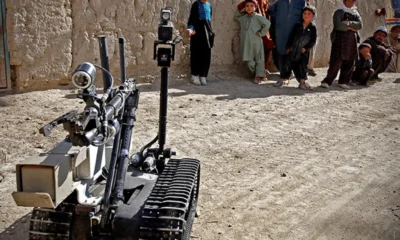
 Investigation3 days ago
K!ller Robots could target humans â UN and Red Cross warn
 Investigation3 days ago
Kano man opens fire at neighbourâs wedding ceremony over loud music, k!lls one guest and injures four others
- Society2 days ago
Government Of Ghana Declines MTN’s GH¢20 Million Donation For Victims Of South African Xenophobic Attacks
- Investigation3 days ago
Judge rejects Ghislaine Maxwellâs bid to throw out conviction for aiding Jeffrey Epstein s3xually abuse teenage girls
- Investigation3 days ago
No African university in worldâs top 100 – Good luck Jonathan laments
- News2 days ago
Naira Holds Firm as Dollar Stays Near ₦1,347
- Investigation2 days ago
Gospel singer, Neon Adejoâs wife defends him, asks photographer David Martins to address abuse allegations
- Investigation2 days ago
Iâd be worth â¬150m If I played in todayâs football era â Yakubu Aiyegbeni