National
West Africa Regulators Mobilise for Coordinated Submarine Cable Resilience Strategy Post-Outage

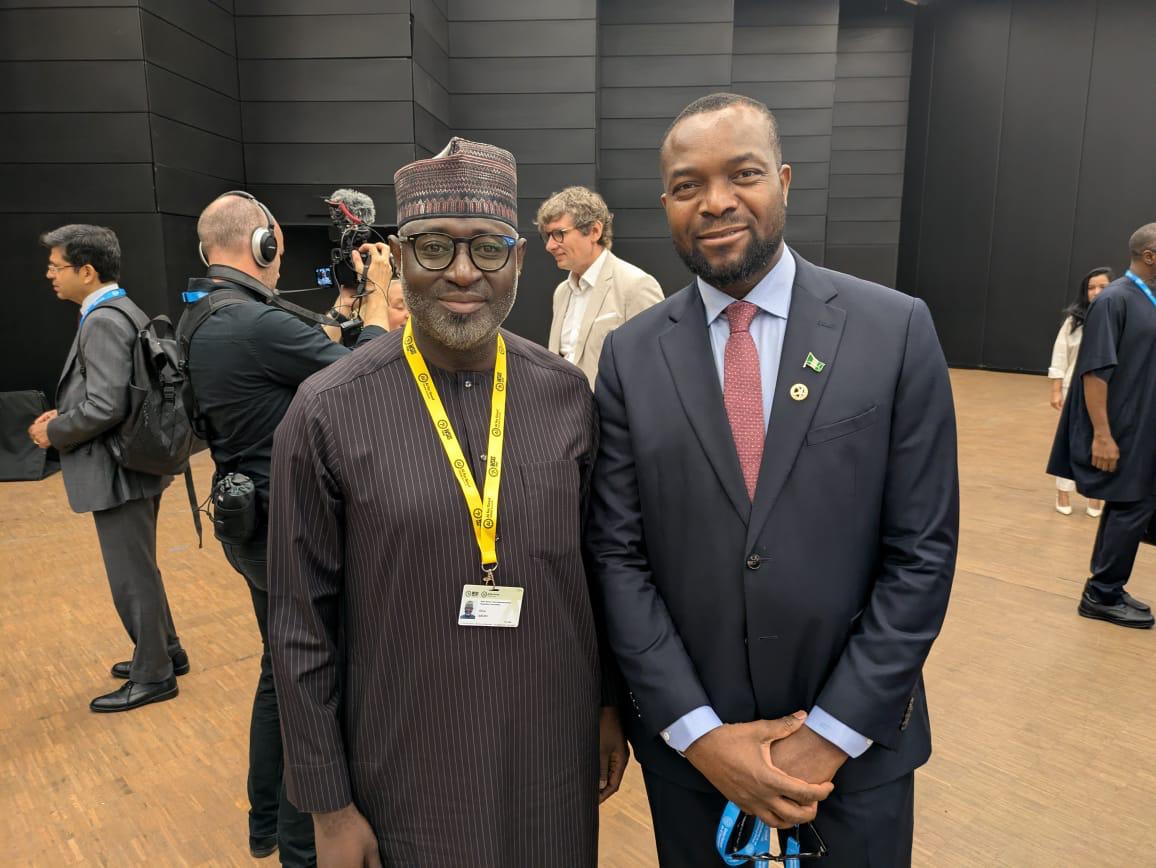
The West Africa Telecommunications Regulators Assembly (WATRA) is spearheading a concerted regional effort to translate global recommendations on submarine cable resilience into actionable strategies. This initiative aims to fortify the region’s digital infrastructure against future disruptions, following the widespread internet outages that significantly impacted businesses, financial services, and government operations across West Africa in March 2024.
This proactive stance is informed by the recent publication of recommendations from the Working Groups of the International Advisory Body on Submarine Cable Resilience. This global initiative, a collaboration between the International Telecommunication Union (ITU) and the International Cable Protection Committee (ICPC), seeks to enhance the robustness of submarine cable networks, which are critical for over 95% of global internet traffic.
Aliyu Yusuf Aboki, executive secretary of WATRA and a member of the International Advisory Body, highlighted the region’s readiness to implement practical measures. “The March 2024 disruptions were an important wake-up call for our region,” Aboki stated. “They demonstrated that submarine cable resilience is not simply a technical or telecommunications issue. When connectivity is disrupted, the consequences extend to businesses, financial transactions, public services, trade, jobs and livelihoods across our economies.”
The March 2024 outages, caused by multiple submarine cable failures off the West African coast, severely disrupted internet connectivity in countries including Nigeria, Ghana, Côte d’Ivoire, Liberia, and Benin. The incident underscored the region’s substantial reliance on a limited number of undersea cables and exposed the vulnerability of its rapidly expanding digital economy due to insufficient network redundancy.
WATRA is championing a regional approach that elevates submarine cable resilience to an economic priority. Aboki emphasised, “West Africa’s digital economy is growing rapidly and becoming increasingly important to economic growth, productivity and employment. We therefore have to ensure that, as we scale digital opportunity, we are not also scaling vulnerability.”
The global recommendations advocate for enhanced collaboration between governments, regulators, and cable operators, expedited permitting for repairs, improved incident reporting and information sharing, better access to repair vessels and spare parts, regular resilience exercises, and increased investment in network redundancy and route diversity. Many of these proposals resonate with ongoing discussions within WATRA since last year’s disruptions.
The Nigerian Communications Commission (NCC) has been recognised for its pivotal role in elevating submarine cable resilience to a regional regulatory priority immediately after the March 2024 outages. Aboki noted, “The Nigerian Communications Commission deserves particular recognition for its early leadership following the March 2024 outage. The NCC helped ensure that submarine cable resilience quickly became an important issue for discussion and cooperation among West African regulators.” He further stressed that the interconnected nature of these cable systems necessitates a combined national and regional response.
Nigeria also contributed significantly to shaping the global recommendations, with Bosun Tijani, the Minister of Communications, Innovation and Digital Economy, serving as co-chair of the International Advisory Body. The global recommendations arrive at a crucial juncture for Africa, as digital payments, e-commerce, cloud computing, and AI continue their rapid expansion. Protecting existing digital infrastructure is now seen as equally vital as expanding broadband access. The burgeoning development of hyperscale data centres across Nigeria and other African markets further amplifies the demand for resilient international connectivity, making submarine cable protection a strategic imperative for investors and corporate leaders.
WATRA plans to collaborate with its member regulators, governments, industry stakeholders, the ITU, ICPC, and other partners to transform these recommendations into practical regional initiatives. “The recommendations provide a strong basis for the next phase of our work,” Aboki concluded. “The priority now must be to examine how these global recommendations can be translated into practical actions appropriate to the West African context.” The success of these efforts will be measured by their ability to enhance preparedness, mitigate disruptions, accelerate recovery, and ultimately safeguard the economic backbone of the region’s increasingly digitalised economies.
… West Africa Regulators Mobilise for Coordinated Submarine Cable Resilience Strategy Post-Outage … Naijaonpoint.


Police recover illegal firearm, ammunition from Akwa Ibom residence

I have kept my promise to Ham people, says Gov Uba Sani

Air Peace warns of disruptions as ground handling equipment damages aircraft + Photos

Gunmen invade Kogi school, abduct four students, principal, NECO officer during exam

2026 World Cup: We were not at our best – Mbappe

2027: We need to forgive ourselves, North will work with South-East – Kwankwaso

LeBron James Sparks Fresh NBA Speculation Ahead of Fanatics Fest Appearance

 Investigation2 days ago
Each and every one of you is guilty РDanish aid worker Anja Ringgren Lov̩n slams Nigerians filming malnourished child accused of being a witch in viral video
- News3 days ago
Army officer killed during rescue of kidnapped Oyo pupils, teachers buried
- National2 days ago
Gbajabiamila: I borrowed N400 million to buy appointment in Tinubu’s government, says Adeyemi
- Society3 days ago
NPP Internal Elections: Bantama NPP Supporter Goes Half N@kɛd At Night, Invokes Curses On Delegates Over Disputed Constituency Election
- Investigation3 days ago
Parents to pay â¦50,000 to register each child for WAEC or NECO SSCE as govt approves 82% increase
- Investigation2 days ago
Female teacher admits to having s£x with boy, 16, as she splits from husband who first exposed her misconduct.
- Investigation2 days ago
Twelve people arrested after âextreme right-wing terror threatâ against Islamic event in UK
- Investigation22 hours ago
Veterans demand â¦250,000 Minimum Wage for soldiers