World
Why Epidemics Breed Rage at Health Workers

This Video Is Trending Right Now
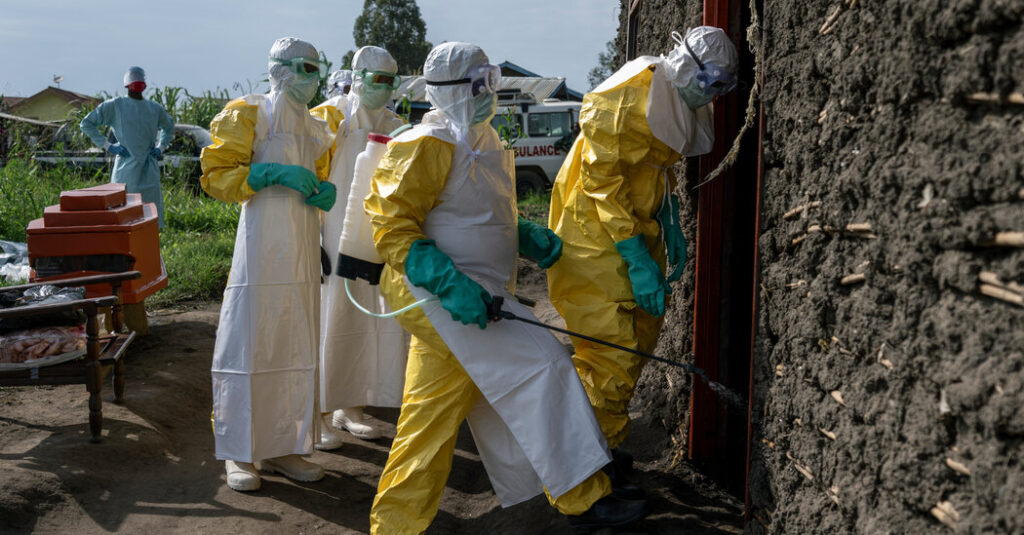
Efforts to contain Ebola in the Democratic Republic of Congo did not begin well. Patients fled a treatment unit in Mongbwalu, a mining town, after community members set it on fire. Residents assaulted a burial team in the town of Katana and forced the crew to turn over a coffin. People living in the Kpangba displacement camp drove out health workers searching for Ebola contacts; the assailants insisted that the victims had not died of the disease. Similar antagonism hampered Ebola responses in 2014-16 and again in 2018.
Reactions like this would be easy to chalk up to poor education and anachronistic rituals: “Fear and ignorance as ebola ‘out of control’ in parts of west Africa,” as one Guardian headline put it in 2014. But unrest during epidemics is not about Ebola, Africa or education. It is something societies have struggled with for centuries, and it is evident in rich countries as well as poor ones, in modern times and medieval ones. During the Covid pandemic, Western doctors, nurses and health officials received not only applause and gratitude but also death threats. Patients denied that Covid existed as they died of the disease. Protesters carrying guns occupied sidewalks outside hospitals. Multitudes embraced treatments, such as ivermectin, that study after study showed to be ineffective. Vaccinators in Italy were assaulted. A German gas station attendant and a Michigan Family Dollar security guard were killed after asking customers to wear masks.
It can be difficult to imagine why those menaced by a deadly disease would threaten the people who are trying to protect them. But outbreaks elicit a contradictory mix of responses. They often unfold in three acts, wrote Charles E. Rosenberg, a medical historian: First, people deny reality and put off behavioral changes that might slow the spread. Then they demand explanations, often blaming “individual and community sins” or, in some cases, doctors. Finally, they take action. Then they have to contend with the aftermath of both the infections and the finger-pointing — the life-and-death consequences for themselves and their neighbors.
When armed community members remove a child from an Ebola treatment unit, “we may view that as irrational, illogical, kind of anti-science,” says Megan Schmidt-Sane, an American medical anthropologist who has briefed humanitarian groups fighting the current Ebola outbreak on ways to adapt public health advice to people’s realities. “We know that this is about so much more than that. It’s about history and culture and politics and even just about how people love and care for others in their family who are sick. And to reduce it to something like ‘resistance’ that needs stamping out in a really militaristic, heavy-handed response — that’s the exact wrong way to go.” Only when we understand these tendencies, she and other scholars say, can we navigate them.
Why distrust breeds
Before the discovery that germs cause illness, humans searched for answers that might explain waves of disease and death. In antiquity, doctors faulted rotting organic matter and recommended burning strong-smelling substances to counteract the dangerous bad air or “miasma.” During the Black Death in the 14th century, Europeans accused Jews, Catalans and others of poisoning wells, and massacred them. Later, plague outbreaks led to the invention of quarantines, health passes for travelers and isolation hospitals.
Even then, not every outbreak caused social divisions. Titus Livy and other ancient authors described dozens of epidemics before and just after the Common Era that fostered harmony between social classes and cooperative efforts to appease the gods. By contrast, some American Evangelist leaders and politicians in the 1980s, presumably well educated about germ theory, invoked divine punishment when epidemiologists learned that AIDS was spreading among gay men.
And when scientific explanations come along, they still leave people to fight over … science. Even though we can photograph the tiniest viruses and sequence their genetic codes, considerable mystery and debate remain over how pathogens emerge, spread and kill. Did the virus that causes Covid originate in a Chinese lab or an animal? Can mpox spread through the air as well as by touch? What is the best way to prevent the next pandemic?
Samuel K. Cohn, a professor of medieval history at the University of Glasgow, has traced ways that societies have responded to outbreaks from ancient history to the current day. At a conference he attended in 2015, a medical anthropologist named Ruth Kutalek had flown in from the Ebola response in Liberia and described community members who viewed doctors as working with the government to harm rather than help. The antagonism toward medical workers there had surprised her, she said. Dr. Cohn says his response was: Look at Europe. “With Ebola, what they were shouting out, the chants, were basically what you see in cholera” beginning in the 1830s and into the 20th century in places including Italy, he told me.
In decades of scholarly work, Dr. Cohn has found exceptions to nearly every theory trying to explain why outbreaks sometimes incite social violence and blame, and at other times do not. Before and after germ theory was accepted and cholera was discovered to be caused by a bacterium, both in the mid-19th century, impoverished people in diverse settings from New York City to tsarist Russia “produced similar fantasies that accused elites of plotting to cull populations of the poor,” Dr. Cohn wrote in a social history of epidemics. This mistrust led to the murder of medical professionals “and the ritualistic destruction of hospitals and medical equipment,” he also wrote in an article coauthored with Dr. Kutalek after their conference meeting. Communities protested governments for doing too much and for not doing enough to protect people — phenomena also reported in the current Ebola outbreak.
Sometimes the state is the party sowing blame. Health disinformation has a long history, including in Soviet intelligence efforts to pin H.I.V. on U.S. bioweapons research. In the early 20th century, Ottomans accused Armenians of spreading typhus, and Nazis accused Jews of the same, manufacturing scientific-sounding rationales to victimize those groups. Now, technologies have made it possible for whatever someone says about a disease to travel the world faster than a virus itself. In the current Ebola outbreak, conspiracy theories and claims of manufactured bioweapons began circulating on social media within hours of the World Health Organization’s emergency declaration.
Scholars say it is easy to understand why certain ideas, such as the notion that Ebola is a business opportunity, take hold, especially when cash, jobs and S.U.V.s show up as part of a $1.4 billion response while other problems go unaddressed. Ebola looms less large as a threat to people whose lives are at risk every day from hunger, destitution and common infectious diseases. Ebola is just the latest shock after decades of conflict and suffering, state neglect, colonial and post-colonial violence, and the failure of international peacekeepers to stop civilian massacres.
Campaigns framed as humanitarian in the past have caused terror. Under the rule of King Leopold II and then Belgium in the early 20th century, colonial officials confined people suspected of having sleeping sickness — a parasitic disease spread by tsetse flies — that was thinning the ranks of forced laborers. Foreign doctors experimented with toxic, arsenic-based treatments that were sometimes lethal. Research suggests these types of efforts contributed to persistent medical distrust across multiple African countries. “Both medicine and humanitarianism have been used” to advance outsiders’ interests, says Myfanwy James, a British assistant professor of international development at the London School of Economics and Political Science. “These deeply held suspicions actually are based on historical experience.”
The year before the current Ebola outbreak, the United Nations Office for the Coordination of Humanitarian Affairs reported 226 burglaries against aid providers; 165 incidents involving threats, intimidation or aggression against them; and 215 cases in which their movements were restricted. The country’s population also faced a precipitous drop in foreign assistance last year, when the Trump administration dismantled the U.S. Agency for International Development, an effort championed by the world’s richest man, Elon Musk.
Asking people to change their ways of life to protect themselves against Ebola is also challenging because in times of fear, people find comfort in normal routines and rituals. And there are existential concerns. Many people living at the center of the current Ebola outbreak rely on mining for survival, and the travel involved in this work has been implicated in the virus’s spread. “It is very difficult to come into the community to ask the community not to work because there is an epidemic,” says Dr. Francis Akili Cishugi, founder of the Congolese nonprofit organization Action Santé, which has conducted outbreak outreach in affected areas. Covid, too, showed how differently people balance the sometimes-conflicting goals of saving lives and preserving their livelihoods and ways of life.
The adjustments
In recent decades, anthropologists and people who study how to communicate effectively about risks have tried to bridge the understanding between the communities affected by deadly diseases and the public health responders asking them to change their ways of life.
Sometimes the results are unsatisfying. During the 2014-16 West Africa Ebola outbreak, responders at first blamed themselves: Perhaps they focused too much on telling impoverished populations not to eat bush meat in case another bat was harboring Ebola. Maybe they should have emphasized the much more common threat of caring for loved ones or preparing dead bodies without protection. Perhaps spreading the message that “Ebola is a deadly disease” caused individuals to lose hope and skip treatment and isolation.
Still, after they adjusted their messages, villages sometimes followed the same tragic trajectories, with residents continuing to care for the ill in ways that put them at risk until people they knew started dying. Even now, Dr. Akili Cishugi says, some people are starting to accept the need to protect themselves mainly “because they see families who have lost loved ones to the disease — many families.”
Yet it is possible for experts to empower communities to save themselves. Once they had training and tools like hand soap, teams of Liberian grass-roots workers went door to door teaching residents how to stop the Ebola epidemic. People also used masks and physical distancing to protect family members and neighbors during the early waves of Covid.
The question is how to proffer the solution, particularly because even when people know something is dangerous and how to avoid it, they don’t always change their behavior. (We still smoke, drive too fast and exercise too little.) “The intervention system must adapt to community realities,” says Ghaffar Gomina, a communications expert from Benin who has been coordinating UNICEF’s community engagement efforts during the current Ebola outbreak.
The handling of dead bodies during epidemics has been a particular challenge around the world. In 2020 during the first Covid surge in Italy, families protested when a hospital prohibited them from touching their loved ones’ corpses, compelling the hospital to allow it. Similar disputes emerged in a cholera outbreak in Louisiana’s bayous in the early 20th century and in a plague outbreak in India during British colonial rule. Drawing on previous outbreaks, workers in Congo are now adapting burial practices to honor community beliefs while reducing the risk posed by infectious bodies. Instead of trying to keep families away from gravesites as Ebola victims are safely interred, relief workers are driving their relatives there to observe from a distance, for instance.
Dr. Abdou Sebushishe, an adviser with the International Medical Corps, grew up in eastern Democratic Republic of Congo and has worked in several Ebola-affected areas there in recent weeks. As his group sets up its treatment centers in conjunction with the government, it brings local residents to see the sites and talk through the services that will be provided. Sometimes it adjusts them based on the feedback: The entrance to an isolation unit was moved after visiting community members pointed out that it would upset incoming patients to make them walk past a morgue, for instance. “They feel they have a say, and it helps,” he says, even if it doesn’t win trust every time. Kigonze, a displaced persons camp where there was a widespread refusal to be tested, is one of the places that began sending more patients to the charity’s treatment centers after consultations.
In the past few years, many African countries now include anthropologists among the responders sent to investigate outbreaks, says Julienne Anoko, a Cameroonian anthropologist who works on community engagement for the W.H.O. The key, she and others say, is designing response strategies in concert with affected communities whenever possible, rather than sending in anthropologists to try to resolve problems after they crop up.
When she arrived in the early days of this outbreak, she said people attributed deaths to witchcraft, sorcery or poisoning. “They were believing in their own explanation, which is normal,” she says, “to try to put order on what is happening.” Ideas that diverge from science will always exist, and armed conflict, poor roads and high population mobility complicate outreach: Two months into the response, new Ebola cases are still growing faster than in any previous outbreak, and more than half of people who contract the disease are dying without making contact with the response system.
But in places where health workers were able to impart the true nature of the threat, Dr. Anoko says, more people sought help because they “accept the virus is killing them, and they are scared of dying.”


Trump Rejected Nearly 6,000 Clemency Applications Amid Hope of Pardon Wave

IBEDC restores power to Oyo communities after prolonged blackout

Trump’s Border Czar shocks onlookers with claim about ICE killings

2027 presidency: Our supporters are not people looking for food, money on election day – Kwankwaso

Jen Psaki throws Trump’s words in his face over damning ‘confession’ about his Qatari jet

NAFDAC Secures Conviction Of Trader Producing, Selling Fake Alcoholic Drinks

Money will probably matter most for Trump’s presidential pick: analyst

 Society3 days ago
Heartbroken Girlfriend Storms Studio To Remove Portrait Tattoo Of Cheating Boyfriend From Her Back
- Breaking3 days ago
Ondo police arrest father for burning his 10-year-old daughter’s private part with hot iron over bedwetting
- Society21 hours ago
2026 Ballon d’Or: Top 4 players to win award after World Cup final revealed
- Investigation2 days ago
âI canât date a man who earns less than me. Iâve supported men financially before, and Iâm done with thatâ â Mercy Eke
- Society17 hours ago
Pepper Seller Caught On Camera Applying Pepper On Newborn Baby As Rituals To Usher Her Into The Business
- World1 day ago
Spain earns $51 million for World Cup win and runner-up Argentina gets $34 million as total payout for all 48 teams hits record-high $871 million
- Society3 days ago
Man Finds Beautiful Lady Stripped Totally ‘Nɛkɛd’ In Deep Forest, Says She Doesn’t Know How She Got There
- Investigation2 days ago
US President Trump questions Thomas Tuchelâs tactics in England World Cup loss to Argentina