Breaking
CBN: Naira-Dollar rate gap narrows below 2%, reserves hit $52.5bn

Advertisement
Advertisement
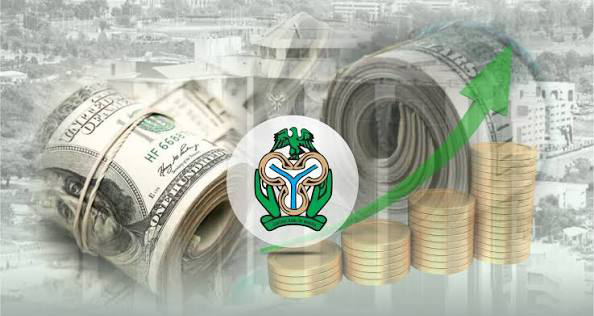
The Central Bank of Nigeria, CBN, says the gap between the official and Bureau de Change, BDC, exchange rates has narrowed to below two per cent, while the country’s foreign exchange reserves have risen to more than $52.5 billion.
CBN Governor, Olayemi Cardoso, disclosed this on Tuesday in Lafia, Nasarawa State, at the CBN Fair organised for stakeholders in the state.
Mr Cardoso, who was represented by the Acting Director of Corporate Communications and Investor Relations Department of the bank, Hakama Sidi-Ali, said the developments reflected the impact of reforms implemented by the apex bank over the past 34 months.
He said the reforms had also contributed to a moderation in inflation, improved stability in the foreign exchange market and renewed investor confidence in the Nigerian economy.
“The latest data from the National Bureau of Statistics indicate that headline inflation fell slightly from 15.91 per cent in June to 15.43 per cent in July 2026.
“Core and food inflation also eased over the same period, reflecting the effects of disciplined monetary tightening, exchange-rate unification, and improved market transparency,” Cardoso said.
He added that the naira had continued to strengthen, with the spread between official and BDC rates now narrowing to below two per cent.
“Nigeria’s foreign reserves remain above US$52.5 billion as of July 17, 2026, marking a 17-year high and surpassing the CBN’s yearly target.
“This is supported by sustained inflows and renewed investor confidence and participation across asset classes in Nigeria,” he said.
The CBN governor attributed the developments to reforms undertaken by the bank, including the unification and increased transparency of the foreign exchange market and the recapitalisation of the banking sector.
Other reforms, he said, included the launch of the non-resident Bank Verification Number (BVN), the B-Match system for foreign exchange trading and the unveiling of the Nigeria Payments System Vision 2028 (PSV 2028).
Cardoso also cited the introduction of a 75 per cent Cash Reserve Ratio (CRR) on non-Treasury Single Account public sector deposits as part of measures aimed at improving liquidity management and curbing inflationary risks.
He said the CBN, in collaboration with the Financial Markets Dealers Association, had also introduced the Nigerian Overnight Financing Rate (NOFR), a market-based benchmark for short-term funding transactions.
### CBN pushes digital payments
Cardoso said the apex bank remained committed to promoting alternative payment channels as tools for deepening financial inclusion, stimulating economic growth and accelerating national development.
He said digital payment channels played an important role in supporting monetary, price and financial system stability, which are central to the CBN’s mandate.
The governor said the CBN Fair provided an avenue for the bank to engage stakeholders on its policies and initiatives while obtaining practical feedback on ways to improve the livelihoods of Nigerians.
Earlier, the CBN Branch Controller in Lafia, Njideka Nwabukwu, said the bank had recorded progress in deepening financial inclusion through agent banking, Point-of-Sale (POS) terminals, mobile money, QR payments, internet banking and instant payment platforms.
Nwabukwu said the launch of the Payments System Vision 2028 in June 2026 further demonstrated the CBN’s commitment to building a secure, innovative, interoperable and inclusive payments ecosystem.
She, however, said more needed to be done to expand digital payment infrastructure in rural and underserved communities, improve financial and digital literacy, strengthen cybersecurity and consumer protection, and encourage greater adoption of digital payments among small businesses and vulnerable groups.
According to her, achieving the PSV 2028 target of 95 per cent financial inclusion would require collective efforts by financial institutions, payment service providers, businesses, government agencies and members of the public.
Nwabukwu urged entrepreneurs and traders to embrace digital payment solutions and encouraged youths to use technology responsibly to create value and economic opportunities.
She also urged Nigerians to respect the naira, stressing that spraying, hawking, mutilating and counterfeiting the currency remained prohibited.
Some participants, including Sani Abubakar and Joy Ogwu, commended the CBN for organising the fair, saying it broadened their understanding of financial inclusion and the role of monetary policy in controlling inflation.
The fair featured presentations on the activities of various departments of the apex bank. (NAN)


Kano govt bans IV fluid, blood transfusion at patent medicine stores
âI am not going to apologize to Monday Okpobolo,I posted his WAEC results for the people of Edo state to see who is governing them. I feel so bad for his kids- singer, Davido

MTN Nigeria reinforces commitment to digital education, donates 149 MiFi devices to teachers

Women protest killings in Plateau as 24 victims get mass burial

The more bills you pay, the less romantic you become – Singer Flavour says

I’m not guilty, 54-year-old docked over alleged theft of five goats

Osun: Wike speaks on opposition stance to electoral process, outcome
- Investigation3 days ago
Man alleged to be a lecturer is str!pped and b£@ten by Unizik students after a female student alleged that he molâ¬sted

 Society3 days ago
Man Travels From Volta Region With “Ghana Must Go” Bag To Stock Up On KFC’s GH¢15 Promo
- Investigation3 days ago
âHilda Baci and Dapper are no longer togetherâ â Lawyer reacts after Seyi Vibez drags celebrity chef into music label drama
- Investigation2 days ago
Osun election proves voters can beat rigging â Pat Utomi
- Society3 days ago
We Disgrace Ourselves Too Much In Ghana” — Lady Reacts To Massive Crowd At KFC Weija Over GH¢15 Promo, Prays For Heavy Rain To End The Day
- Investigation3 days ago
âI am a well-brought-up Yoruba girl, so the respect you see me show isnât unusualâ â Diiadem responds to new allegations by Ehi
- Investigation2 days ago
Osun election: No political deal with Tinubu â Adelekeâs camp replies Festus Keyamo after he remarked âAgreement is agreement.â
- Investigation3 days ago
âIâve known Big Church for over 13 years; I never admitted to being pregnant for anyoneâ â Internet personality, Diadem addresses pregnancy rumours