News
Poisonous bites: How poor hygiene taints puff-puff, buns business

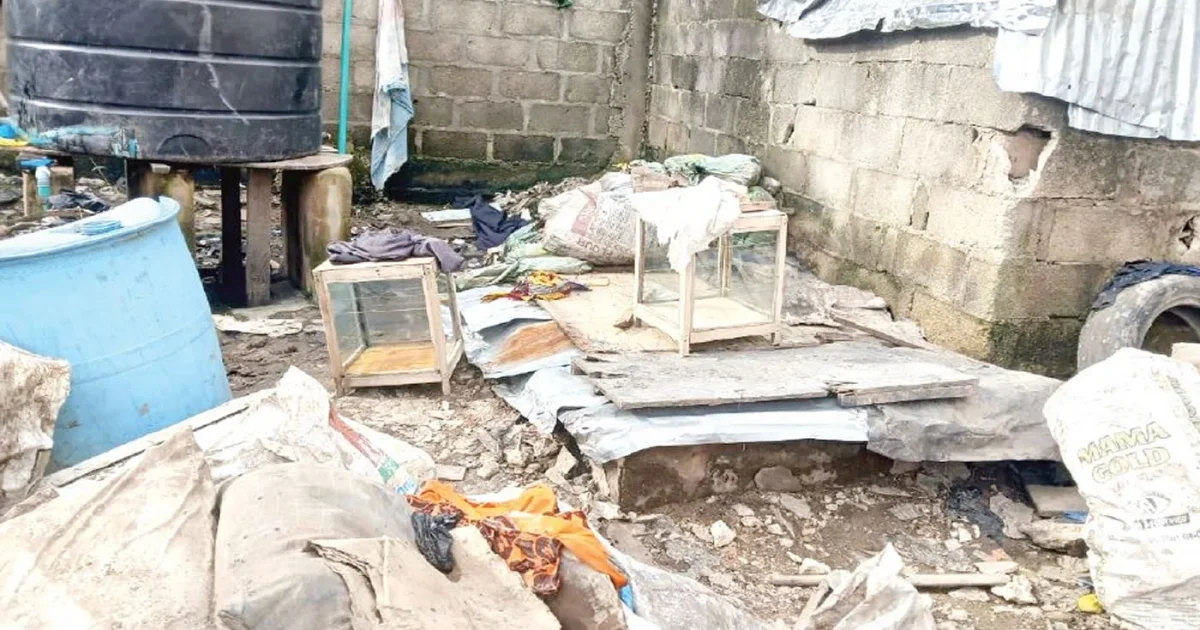
Every day, thousands of Nigerians buy popular flour-based snacks such as puff-puff, buns and doughnuts from roadside vendors without ever wondering how or where they are made. In this report, DANIEL AYANTOYE traces their journey, uncovering unhygienic conditions, regulatory gaps and hidden dangers lurking behind every bite
As the sun dipped below the Lagos skyline, workers sprang into action, mixing flour, sugar and yeast into dough in large bowls as they raced against time to produce batches of popular street snacks such as puff-puff, buns and doughnuts for the next day’s dawn hawking across the bustling city.
By first light, the golden-brown snacks would begin their journey across Lagos, changing hands from production centres to hawkers and, eventually, to commuters hurrying to work, schoolchildren heading to class and office workers seeking a quick breakfast.
For many Nigerians, these handy street snacks remain a favourite because they are affordable, readily available and filling.
But behind every bite lies a disturbing reality hidden from the millions who consume them daily – an unsanitary production process.
Filthy production process
When this correspondent visited one of the production centres on Okeleye Street in the Oshodi area of Lagos, workers were busy preparing the snacks inside a makeshift wooden structure.
Beside the production area stood a pit toilet and a dingy bathroom, while flies hovered around the premises.
A borehole serving as the facility’s water source was located only a short distance from a partly covered soakaway.
Plastic containers used for packaging and glass display cases used for hawking the snacks lay beside shallow gutters filled with stagnant, murky water.
Some other containers, already used and awaiting washing and reuse, were seen resting directly on the soakaway pit, which was covered with roofing sheets and wooden planks.
A pungent stench hung over the place, making the environment around the production area unpleasant and unhealthy.
The disturbing conditions observed at the facility were far from isolated. Similar scenes played out at other snack production centres visited across Lagos, raising serious concerns about the safety of some of the city’s most widely consumed street foods.
Worrisome situation
At a busy T-junction in the Ketu area of Lagos State, a roadside kiosk where the snacks were produced was erected on a drainage channel covered with wooden planks. A heap of refuse sat close by.
As frying continued, freshly prepared snacks were displayed openly for customers. Flies hovered around the uncovered products, occasionally settling on them before being waved away by the vendors.
The constant movement of vehicles along the road also sent clouds of dust into the air, exposing the displayed snacks to further contamination.
Despite the conditions, business continued uninterrupted.
As batches of puff-puff sizzled in large pots of hot oil, customers arrived one after another to make purchases. Some ate the snacks immediately, while others bought and left.
A visit to the Ikorodu Garage area of Lagos revealed a similar pattern.
Along the busy roadside, puff-puff and other snacks were displayed openly without any covering to shield them from dust, flies and other environmental contaminants.
Nearby, overflowing waste bins emitted offensive odours, creating an unhygienic atmosphere around the food vendors.
Despite the environment, commercial activities continued as commuters, traders and passers-by stopped to buy the snacks.
A visit to another production facility in the Oshodi area, however, presented a striking contrast.
Unlike the previous locations, the surroundings appeared cleaner and better organised. The production area was orderly, with equipment and work surfaces arranged in a more structured manner.
Inside the kitchen, a young man sat beside three large frying pots filled with bubbling vegetable oil, carefully dropping portions of dough into the sizzling oil as flames from the firewood beneath kept the oil at the required frying temperature.
On nearby tables, trays of freshly prepared yellowish buns and uncooked dough were neatly arranged, awaiting frying or collection by vendors.
However, despite the cleaner environment, the snacks were left uncovered. Flies occasionally hovered around them before settling briefly on the exposed products.
Elsewhere within the premises, some workers who had returned from the morning distribution were resting after hours of hawking across different parts of the metropolis.
Their empty plastic containers and trays, used to transport and sell the snacks, were stacked neatly in one corner of the facility, awaiting washing before the next day’s production cycle.
Nigeria’s love affair with puff-puff
Across the country, puff-puff, in particular, has become a beloved street food.
The deep-fried snack is sold almost everywhere: at bus stops, markets, schools, motor parks, office complexes and residential neighbourhoods, making it one of the easiest foods to find at any time of the day.
Its enduring popularity is driven largely by affordability and convenience.
Whether bought individually or in small portions, it remains within the reach of many low- and middle-income earners.
For schoolchildren, it is often tucked into lunch packs or bought from vendors outside school gates on their way home. Office workers rely on it as a convenient breakfast or midday snack, while traders, artisans and commercial drivers commonly buy it to stave off hunger during busy work schedules.
At motor parks and bus terminals, hawkers carrying trays or displaying these deep-fried snacks in glass cases weave through waiting passengers, many of whom grab a few pieces before continuing their journeys.
The snacks also enjoy strong patronage in neighbourhood markets, where shoppers often buy them alongside pap or soft drinks, and in the evenings, when families, students and commuters seek a quick bite after the day’s activities.
From roadside kiosks and makeshift stalls to mobile hawkers, puff-puff has become deeply woven into Nigeria’s informal food economy.
Its widespread acceptance has fuelled a thriving network of producers and vendors who prepare and distribute thousands of batches daily.
Yet, behind the convenience and affordability lies a largely unseen production and distribution chain that operates with little public scrutiny. As this investigation found, the conditions under which many of these snacks are produced, handled and sold raise serious questions about food safety and regulatory oversight.
A booming informal food economy
Although there are no official statistics on the size of Nigeria’s puff-puff industry, the popular snack operates within the country’s much larger informal ready-to-eat food sector, which plays a significant role in feeding millions of Nigerians every day.
Data from the National Bureau of Statistics’ Nigeria Labour Force Survey for the fourth quarter of 2022 showed that 93.5 per cent of employed Nigerians worked in the informal sector, highlighting the dominance of informal businesses as a source of livelihood nationwide.
Researchers have also underscored the importance of informal ready-to-eat food vending in Nigeria’s urban food system.
A study by Kehinde Paul Adeosun, Peter Oosterveer and Mary Greene, published in the peer-reviewed journal PLOS ONE in 2023, found that informal food vendors provide affordable and accessible meals for urban residents, particularly low-income earners. The researchers also noted that street food businesses contribute significantly to employment opportunities.
However, alongside their popularity, concerns have continued to grow over the safety of street foods, particularly where production and handling practices fall short of acceptable hygiene standards.
A separate study titled Evaluation of the Microbial Contamination of Some Snacks: A Case Study of Lagos Mainland, Lagos State, Nigeria examined commonly consumed snacks, including puff-puff, collected from different parts of Lagos Mainland.
Laboratory analysis revealed bacterial contamination in some of the samples tested, underscoring the importance of proper hygiene, safe water, good handling practices and effective regulatory oversight in street food production.
Despite the widespread consumption of puff-puff, there is a significant data gap.
There are no publicly available national figures on the number of producers, roadside vendors, daily production volumes or the economic value of the industry. The absence of such data reflects the broader challenge of monitoring Nigeria’s vast informal food sector, where many businesses operate outside formal regulatory structures.
The journey to the streets
Long before many Lagos residents begin their daily commute, production is already underway inside dozens of small-scale puff-puff factories scattered across Lagos.
From late afternoon, workers measure flour, sugar, yeast and other ingredients into large bowls before kneading the mixture, allowing it to ferment and eventually dropping portions of dough into vats of hot vegetable oil.
As batches of golden-brown puff-puff emerge from the frying pans, they are transferred into large plastic bowls, baskets and containers to cool before beginning another journey the following morning—from production centres to roadside stalls, bus stops, markets, schools and motor parks, where thousands of Nigerians buy the snack every day.
Saturday PidomNigeria observed that once production ended, the snacks moved through an informal but well-established distribution network that delivered them to vendors across the city before the morning rush.
Some factory operators sold directly to hawkers and roadside retailers who arrived as early as dawn to buy in bulk, while others relied on regular distributors who transported the snacks to markets, bus stops, schools and other high-traffic locations before the city fully came alive.
Depending on demand, retailers purchased dozens or even hundreds of pieces each morning, transporting them in plastic containers, trays and buckets aboard commercial buses, tricycles, motorcycles or private vehicles to their various selling points.
However, Saturday PidomNigeria observed wide variations in storage and handling practices.
While some vendors kept the freshly prepared snacks in covered containers until customers arrived, others displayed them openly on trays, tables and in plastic bowls, leaving them exposed to dust, flies and repeated handling by prospective buyers throughout the day.
Consumers ignore risks
Despite growing concerns over food safety, many Lagos residents continue to patronise puff-puff and buns because they are affordable, filling and readily available.
A teacher, Mrs Okorie Ruth, who bought two buns for N200 from a hawker in the Ketu area of Lagos, said the snacks were often a convenient alternative when there was no time to prepare a meal.
“We buy it just to hold our stomach, not because it is a complete meal,” she said. “When you are travelling or rushing to work, you may not have time to cook. With water, it keeps me going until I get to my destination.”
A secondary school student, Ayo Adewale, said puff-puff remained popular among students because of its affordability and taste.
“I buy it almost every day,” he said. “We all like it. Once the hawkers come to the school, many students rush to buy.”
Despite the visible hygiene concerns at many roadside vending points, several consumers interviewed by Saturday PidomNigeria admitted that affordability and convenience often outweighed their fears about food safety.
Not everyone, however, is willing to take the risk.
A private company employee, Akerele Kayode, said he deliberately avoided roadside snacks because of concerns about how they were prepared.
“I don’t eat them because of the health risks,” he said. “You don’t know the quality of the water or oil used in preparing them. As you grow older, your immunity reduces, so I don’t think it’s worth risking my health because of hunger.”
Demand drives sales
For hawkers, however, the business remains profitable.
An Obalende-based vendor, Adamu Yusuf, said he could sell puff-puff worth about N30,000 before 2 p.m. on a good day.
“We leave the factory around 6 a.m. and supply different places, including motor parks and schools. The demand is always high,” he said.
Another hawker, Akan Udo, who has been in the business for about 10 years, said he rarely ended the day with unsold products.
“It is a good business because people buy every day. We arrange the snacks from the factory in covered containers and only open them when customers want to buy,” he said.
The hawkers’ accounts underscore the strong consumer demand that continues to sustain the trade despite growing concerns over food safety and hygiene.
‘We adhere to proper hygiene’ — Factory owners
Factory owners, however, insisted that they observe hygienic practices and rejected suggestions that their products pose health risks.
Speaking with Saturday PidomNigeria, they described the business as one driven by speed, affordability and high daily demand.
A factory owner in Oshodi, Mrs Dorcas Vandyckye, said production begins before daybreak to ensure vendors receive fresh supplies in time for the morning rush.
“We start very early in the morning. After we finish making them, the hawkers come to collect them and sell almost everything before afternoon. After that, we rest until the next day,” she said.
Responding to concerns about hygiene, Vandyckye maintained that efforts were made to keep the production environment clean.
“We make sure everything here is clean. When the hawkers return, they wash the containers. We know we are selling food to the public, so cleanliness is very important to us. If not for the recent flood that affected this place, the environment would have been much neater,” she added.
Another factory owner, identified simply as Anty Eku, also defended the hygiene standards at her facility, saying quality remained central to her business.
She said clean water was used throughout the production process and that she had invested significantly in maintaining the facility.
“As you can see, I keep myself clean, and that is how I keep my food. I use good cooking oil and quality flour to produce my puff-puff and doughnuts. I have been in this business for more than 20 years.
Their assurances, however, contrasted sharply with the conditions observed by this correspondent at several production centres and roadside vending points.
Experts warn of public health dangers
Food safety experts warned that poor hygiene during the production, storage and handling of puff-puff and other roadside snacks could expose consumers to food-borne diseases and other long-term health risks.
Speaking in separate interviews with Saturday PidomNigeria, a former Vice-Chancellor of Rivers State University and Professor of Food and Nutritional Biochemistry, Simeon Achinewhu, described food prepared under unhygienic conditions as a serious public health threat.
“Food handlers need proper education on safe hygiene practices,” he said.
Also speaking, Professor of Soil Microbiology Ambrose Adze warned that the repeated use of cooking oil and poor environmental sanitation could encourage the growth and transfer of harmful microorganisms to food.
He called for stricter regulation of roadside food production, urging regulatory agencies to conduct regular inspections, collect food samples for laboratory analysis and enforce compliance with hygiene standards.
He also advised consumers to prioritise food safety when making purchasing decisions.
Similarly, a Professor of Community and Public Health Nutrition at the University of Nigeria, Nsukka, warned that flies moving between human waste and exposed food could transmit disease-causing organisms.
“Our sanitation system is still poor in many places. Flies can move from faeces or other contaminated surfaces to exposed food, transferring harmful pathogens. While some people may recover from the resulting illnesses, repeated exposure to contaminated food can undermine the body’s immune system and increase the risk of food-borne diseases,” she said.
Regulators explain oversight
Regulatory authorities said responsibility for monitoring roadside puff-puff production does not rest solely with a single agency, with different institutions overseeing various aspects of food safety and environmental sanitation.
The Resident Media Consultant of the National Agency for Food and Drug Administration and Control, Sayo Akintola, said the agency’s regulatory mandate primarily covers manufactured and packaged food products, bottled water, medicines, cosmetics and chemicals, noting that roadside fried snacks do not fall within its routine registration framework.
“NAFDAC has a mandate that covers manufactured packaged food, bottled water, medications, cosmetics and chemicals. I am sure the states have agencies that handle issues like puff-puff and similar roadside foods. The local governments also have health officials to prevent outbreaks of epidemics.
“How do you issue a NAFDAC registration number to puff-puff fried by the roadside? However, anywhere we see illegal manufacturing of products under our mandate, we take enforcement action,” he said.
On its part, the Lagos State Ministry of the Environment and Water Resources said it regularly carries out enforcement against unhygienic roadside food vendors.
The ministry’s Public Relations Officer, Adekunle Adeshina, said officials frequently confiscated items from vendors operating in unsanitary conditions but noted that such actions often attracted public criticism.
“The Lagos State Ministry of the Environment frowns on such practices. We regularly carry out enforcement against people frying puff-puff and similar snacks by the roadside and confiscate such items.
“Unfortunately, many members of the public criticise the government whenever we do this, saying we lack sympathy because the vendors are trying to earn a living. But should that be at the expense of public health?
“They continue because people patronise them. There are eateries where these snacks are prepared and sold in cleaner environments.”








‘I never lost faith in myself’ – Commonwealth gold medalist, Enekwechi

Beijing Protests After New Zealand Minister Insults Chinese-Born Lawmaker

OnlyFans model Courtney Clenney reaches plea deal month before murder trial for boyfriend’s stabbing death

Empty Chair Bearing Akofena Safo’s Name Draws Attention at Apostle Kwadwo Safo’s Funeral

Mamdani beware — Cleveland’s forgotten folly holds a warning for NYC

Plateau board gives owners seven days to remove illegal structures

Taurus, August 2026: Your Monthly Horoscope

 World2 days ago
My daughter’s squishy toy burst on her legs. We ended up in the emergency room.
- Investigation3 days ago
âDonât you want to be like Peller? He didnât go to school but still made his parents proudâ â Daddy Freeze jokes with son over â¦7m school fees
- Investigation3 days ago
P0rn star Emily Willisâ family reaches $3m settlement over rehab brain injury that left her permanently disabled
- Investigation18 hours ago
âSome of us are âpick meâ and we wouldnât know. I used to do things for men I liked when it was supposed to be the other way aroundâ â Lady reveals
- Investigation2 days ago
âWe are going to beat the f**king sh*t out of themâ – Trump issues sharp warning to Iran as diplomacy ends after surprise attack on US base
- Breaking19 hours ago
âWe are going to beat the f**king sh*t out of themâ – Trump issues sharp warning to Iran as diplomacy ends after surprise attack on US base
- Investigation17 hours ago
Before you go about snatching someone else’s husband, please check the quality of what your’re snatching first- actress Rita Edochie shades an unnamed âhusband snatcherâ
- Breaking13 hours ago
âNigeria is the Republic of docile peopleâ- OAP Dotun slams critics of Tyla concert boycott as he recalls South Africa’s treatment of Burna Boy