Investigation
Terrorist financiers using crowdfunding and womenâs bank accounts to conceal and move illicit funds – NFIU

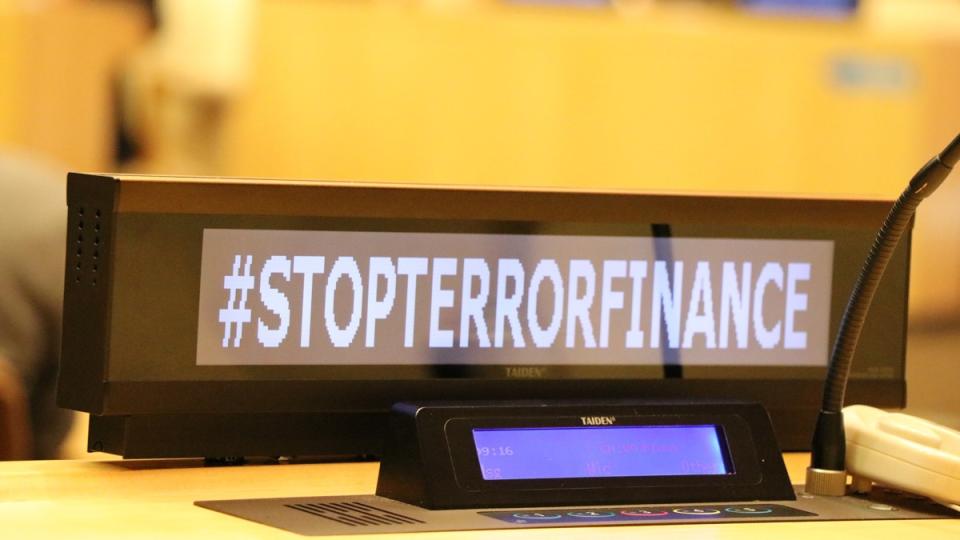

The Nigerian Financial Intelligence Unit (NFIU) has warned that terrorist financiers are increasingly exploiting women’s bank accounts, improperly registered phone numbers, coded transaction descriptions and crowdfunding platforms to move and conceal illicit funds in Nigeria.
In its 2025 annual report, the NFIU identified what it described as emerging methods used to finance terrorist operations, including the use of accounts opened in the names of wives, sisters and female associates but secretly controlled by male commanders and logistics managers.
“Terrorist financiers are opening bank accounts in women’s names while male commanders and logistics managers secretly control them,” the report said. “They exploit cultural norms that make women less likely to be suspected by authorities, using wives, sisters, or female associates as fronts to distance illicit funds from the true operatives.”
The agency said some women whose accounts are used in this way may be unaware of the transactions or the amount of money passing through their accounts. It described the practice as “identity laundering”, noting that the men may retain control of the ATM cards, mobile banking credentials and personal identification numbers connected to the accounts. The NFIU also identified the use of phone numbers that are disconnected from or improperly linked to account holders as another method of concealing financial transactions.
According to the report, facilitators may use pre-registered SIM cards, SIM cards registered to deceased people or numbers linked to other individuals for mobile banking and account alerts. “They bypass the security link between SIM cards and Bank Verification Numbers (BVNs) by using pre-registered SIMs, SIMs registered to deceased people, or SIMs tied to gender-based proxies,” the agency said.
“This severs the audit trail: when a transaction is flagged, investigators trace the phone to an unrelated person, letting the real facilitator stay anonymous and continue operations.” The NFIU further said terrorist cells, including those linked to the Islamic State West Africa Province (ISWAP), use detailed and coded transaction descriptions to manage payments and conceal their purpose.
It said some groups use precise narrations for logistics-related payments sent from a single source to multiple recipients, potentially creating an internal accounting system while appearing unusual to financial monitoring systems.
The agency said facilitators also use innocuous words, secret codes, alphanumeric strings and different languages to evade automated banking filters. “Facilitators use this coded language, often switching languages to evade banks’ automated keyword filters that flag terms like ‘Jihad,’ ‘Arms,’ or ‘Boko’,” the report said.
“This practice obscures the true purpose of transfers, preventing detection and enabling continued financing.” The NFIU also identified crowdfunding campaigns and international remittance platforms as channels that could be exploited to move terrorist funds into Nigeria.
According to the report, a foreign-based facilitator could launch social media campaigns presented as humanitarian relief or educational support before directing donors to payment pages or bank accounts. The agency said hundreds of sympathisers could contribute relatively small amounts, with individual donations ranging from $50 to $500.
“Hundreds of sympathizer donors contribute $50–$500 each, amounts small enough to avoid most automated AML alerts,” the report said. The NFIU said the funds could then be consolidated in a master account before being divided into smaller transfers sent through international money-transfer operators and remittance applications to Nigerian money mules.
It said students, small-business owners and relatives could be recruited as intermediaries, with recipients potentially converting the funds to cash, purchasing dual-use items or transferring money through mobile banking to terrorist logistics managers and field operatives.
The agency said the findings showed the increasing sophistication of terrorist financing networks and their exploitation of legitimate banking, telecommunications and digital fundraising systems to support insurgent operations.

2027: Support APC or leave Kuje – Abuja council chairman threatens residents

Tinubu inherited an economy in shambles â Akpabio

Police detain officers accused of N40,000 extortion

No African university in worldâs top 100 – Good luck Jonathan laments

Rapper Famous Dex arrested for domestic battery

He captured Liberian judiciary â Falana calls out NBA for inviting George Weah to conference

MAAUN founder offers postgraduate scholarships to Elrazi Medical University lecturers, pledges partnership

 Investigation2 days ago
How I survived as my husband and two children di£d after eating amala â Widow speaks
- National2 days ago
Police uncover adulterated drinks warehouse in Warri
- National2 days ago
Aiyedatiwa won’t support candidate against APC – Aide
- Investigation2 days ago
Bayelsa police rescue woman after 26 days in kidnappersâ den, arrest suspect
- Society2 days ago
Truck Driver Documents How Police At Tema Harbour Entrance Demand ¢20 Bribes But “Kills” Stubborn Drivers Who Fail To Pay
- Breaking2 days ago
Tinubu renews tenure of NAN MD, NTA DG
- Society1 day ago
Young Man Caught At Dawn Stealing Phone And ¢500
- Politics1 day ago
EDHA Reverses Agbebaku’s Resignation, Impeaches Former Speaker