Breaking
Tinubu orders forensic audit of IPPIS to flush out fake agencies, ghost workers

Advertisement
Advertisement
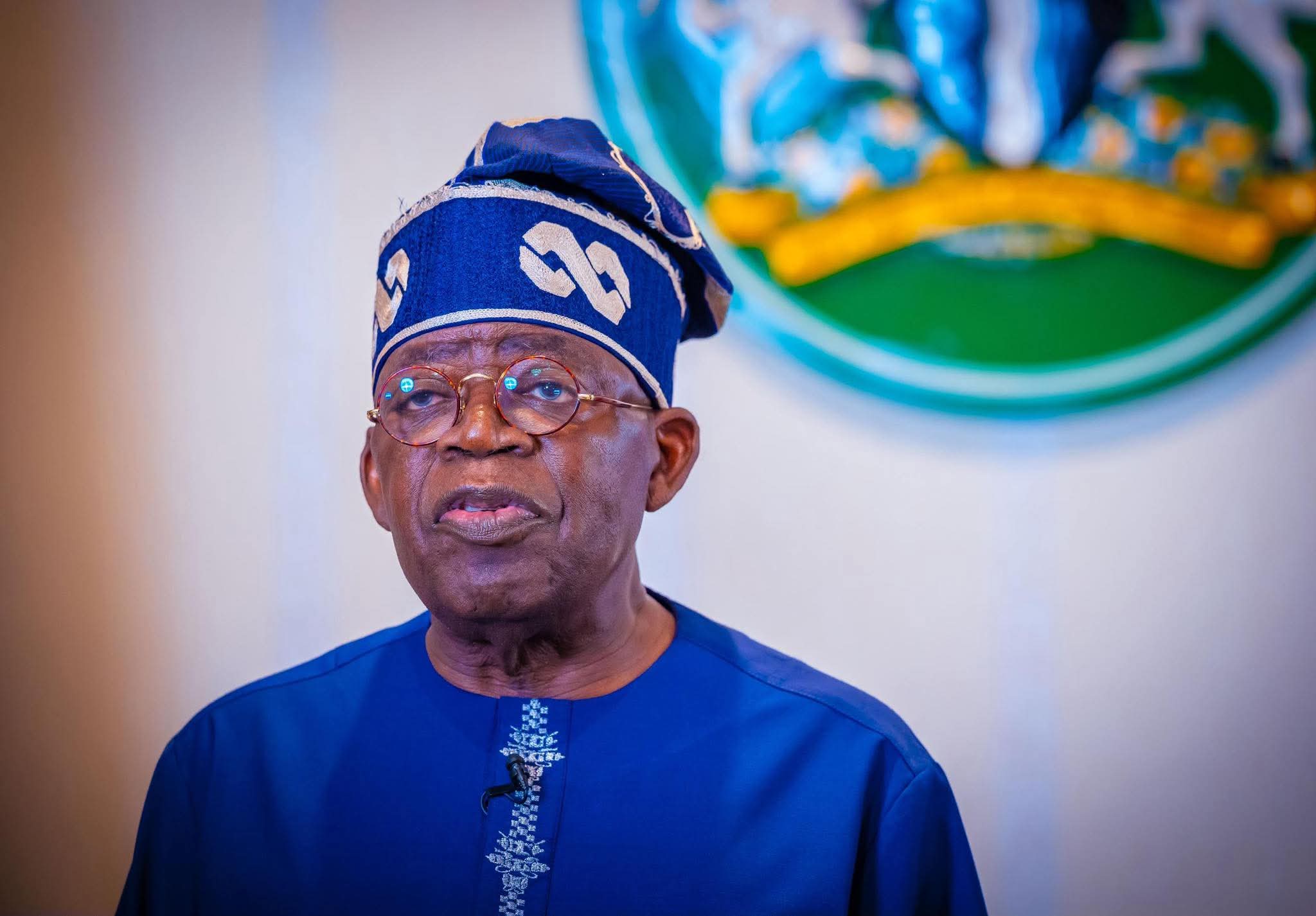
President Bola Tinubu has ordered a comprehensive forensic audit of Federal Government systems, including the Integrated Personnel and Payroll Information System, IPPIS, ministries, departments, agencies and other government institutions.
The exercise is expected to uncover the nature and extent of weaknesses in the government’s control systems and establish how such loopholes may have been exploited to facilitate ghost workers, payroll fraud and other forms of abuse of public resources.
The President’s directive was disclosed in a statement issued on Friday by his Special Adviser on Information and Strategy, Bayo Onanuga.
According to the statement, the Minister of Finance and Coordinating Minister of the Economy, Taiwo Oyedele, has been directed to oversee and coordinate the exercise.
The directive followed a resolution of the Federal Executive Council (FEC) on August 19, 2026, in response to findings by the Independent Corrupt Practices and Other Related Offences Commission (ICPC) concerning alleged “fake agencies,” ghost workers and other weaknesses in government control mechanisms.
The audit will comprise two interconnected components, with the first focusing specifically on government systems, particularly IPPIS and related payroll, personnel, pension and financial-management platforms.
The exercise will examine reported cases of ghost workers and payroll fraud and reconcile the figures identified by the ICPC.
It will also trace how fictitious or ineligible persons were allegedly enrolled into government payroll systems and examine access controls, identity verification, biometric authentication and bank-account controls.
The audit team will further investigate the interfaces between IPPIS and other government platforms, including the Government Integrated Financial Management Information System (GIFMIS), Remita, the Treasury Single Account (TSA) and Sub-TSA.
The objective, according to the statement, is to determine whether identified irregularities resulted from weaknesses in the digital systems, failures in administrative processes, inadequate segregation of duties or deliberate circumvention of established controls.
The second component will involve a comprehensive review of Federal Government agencies, departments, commissions, councils, parastatals and other government bodies.
The exercise is expected to establish a definitive inventory of all such entities and verify the legal basis for their existence.
It will also examine the processes through which government entities obtain official recognition, budgetary consideration, correspondence privileges, office facilities and access to government systems and resources.
The government said the review would assess governance, procurement, internal audit and oversight mechanisms across federal institutions, with the aim of identifying and closing systemic weaknesses that could enable irregular entities or individuals to gain access to public resources.
President Tinubu directed that the exercise be conducted in accordance with the highest standards of independence, professionalism and forensic integrity.
The audit team is expected to have access to relevant government systems and records necessary for the exercise.
It will also collaborate with the ICPC to ensure that the audit complements ongoing investigations, prosecutions and recovery efforts by the anti-corruption agency.
The President said the exercise must go beyond identifying individual cases of fraud or administrative failure, stressing the need to address weaknesses embedded in the architecture of government.
According to the statement, the exercise is expected to strengthen government control systems, close systemic loopholes, improve data verification and reconciliation, reinforce accountability and ensure that only legally constituted entities and eligible personnel have access to government resources.
The forensic audit is also expected to provide the Federal Government with a clearer picture of its personnel, institutional structures and financial-management systems while helping to prevent the recurrence of payroll and administrative fraud.
The Presidency said the initiative underscored Tinubu’s commitment to strengthening transparency, accountability, fiscal governance and institutional integrity across the Federal Government.
The development comes amid heightened scrutiny of government payroll and institutional structures following concerns over ghost workers, fictitious government entities and weaknesses in existing control mechanisms.
The outcome of the audit is therefore expected to inform further reforms aimed at tightening government systems and safeguarding public funds from leakages and fraudulent access.


‘I have evidence Tinubu is 90 years old, i can prove it in Court’ â Atiku

Tinubu orders forensic audit of IPPIS to flush out fake agencies, ghost workers

Family kicks as DSS rearrests Miyetti Allah leader after release from EFCC

N1.5m for kidney: Lawyer alleges illegal organ harvest in Abuja

2027: Atiku vows to revive ECOMOG, bring Niger, Mali, Burkina Faso back to ECOWAS

I have evidence Tinubu is 90 years old – Atiku

2027 Hajj: CSO tasks NAHCON, states, tour operators on new Pilgrims’ Enlightenment Template

 Society2 days ago
Government Of Ghana Declines MTN’s GH¢20 Million Donation For Victims Of South African Xenophobic Attacks
- Investigation2 days ago
Gospel singer, Neon Adejoâs wife defends him, asks photographer David Martins to address abuse allegations
- Investigation2 days ago
Iâd be worth â¬150m If I played in todayâs football era â Yakubu Aiyegbeni
- Investigation3 days ago
No African university in worldâs top 100 – Good luck Jonathan laments
- News3 days ago
Naira Holds Firm as Dollar Stays Near ₦1,347
- Investigation3 days ago
Baby factory uncovered in Ogun state by police
- Investigation3 days ago
âI genuinely miss the era of me not having a child. Canât I just have peace and quiet?â â Woman cries out
- Investigation2 days ago
Hollywood veteran Tim Curry, known for iconic roles in âRocky Horrorâ and âIT,â dead at 80