Business
2026 fiscal policy eases imports, tightens energy burden

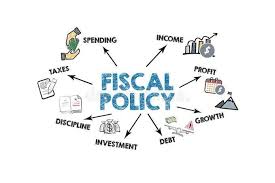
Nigeria’s economy faces a delicate balance as the 2026 Fiscal Policy Measures ease import duties on key food and production inputs, offering relief to importers and businesses. However, a 32-basis-point rise in headline inflation to 15.38 per cent in March is quickly offsetting these gains, JIDE AJIA reports
As surging energy costs and structural supply constraints continue to keep consumer prices “sticky”, analysts warn that the road to price stability remains fraught with mid-year hurdles, including the looming implementation of new green taxes.
According to a detailed outlook by Futureview Research released on Wednesday, the new policy framework introduces a “mixed inflationary impulse” that will define price formation across the Nigerian economy in the coming months.
Tariffs versus energy
The analyst notes that the Federal Government’s decision to slash duties on essential commodities is a strategic move to dampen the effect of imported inflation.
“The downward revision of import duties on several essential goods, including rice, sugar, salt, and other consumer items, should help moderate import-driven price pressures,” Futureview stated. “Similarly, lower tariffs on key inputs such as crude palm oil and motor vehicles may help ease production and logistics costs.”
However, these gains face a formidable adversary in the global energy market. The report warns that the relief expected from lower trade barriers is currently being eroded by the volatility of the international oil market.
“This expected relief is likely to be tempered by persistently high crude prices, which continue to sustain elevated fuel and diesel costs in Nigeria,” the analyst noted.
Inflation’s stubborn streak
This policy collision comes as the National Bureau of Statistics reports renewed price pressures. The latest Consumer Price Index for March 2026 shows headline inflation rose to 15.38 per cent, up from 15.06 per cent in February.
While this represents a substantial year-on-year decline from the 27.35 per cent recorded in March 2025, the month-on-month momentum suggests the battle is far from over.
The NBS noted that food inflation climbed to 14.31 per cent year-on-year, driven by skyrocketing costs of staples such as yam, cassava, tomatoes, and Irish potatoes. “The sustained increase in average food prices continued to exert upward pressure on the overall index,” the NBS reported, even as monthly food inflation showed a slight moderation to 4.17 per cent.
Mid-year inflation trap
The research highlights a specific timeline for concern, pointing toward May as a flashpoint for rising costs due to the “pass-through effects” of energy prices on transportation.
“These elevated energy costs are feeding into broader CPI levels, particularly in May,” the report added, suggesting that the cost of moving goods across the country remains a primary driver of headline inflation.
This is a key reason why core inflation, which excludes volatile agricultural produce and energy, rose sharply to 16.21 per cent year-on-year. More concerning is the month-on-month acceleration in core inflation, which jumped from 0.89 per cent in February to 4.03 per cent in March.
Green tax inequality
Adding to the complexity is the impending Green Tax surcharge, scheduled for July 2026. This levy, targeting beverages, tobacco, and energy-intensive production, could nullify earlier gains from tariff cuts.
“The introduction of the green tax surcharge from July 2026 is expected to further offset these disinflationary gains,” Futureview warned.
The “burden” of these price hikes is also felt unevenly across the federation. In March, the highest year-on-year inflation rates were recorded in Bayelsa (27.37 per cent), Sokoto (26.03 per cent), and Bauchi (23.67 per cent). Conversely, Osun (5.25 per cent) and Kano (9.85 per cent) posted the lowest increases.
On the food front, Sokoto faced the most intense monthly pressure at 11.78 per cent, while Katsina recorded a marginal 0.09 per cent increase.
Outlook
Ultimately, while analysts see a long-term benefit in the government’s trade efficiency measures, the immediate outlook remains cautious. Futureview concluded that while tariff rationalisation signals a medium-term disinflationary bias, near-term inflation is likely to remain “sticky” as fiscal adjustments and elevated energy costs continue to shape price formation for the Nigerian consumer.


WADA targets India’s performance-enhancing drugs production

Police avert suspected bomb attack in Ondo

Death Rate Must Drop: UNILAG College Of Medicine Launches High-Tech On Nigeria’s Healthcare Crisis

Carthage Dominates as NCS Struggles to Find Footing

Atiku, a serial loser, will recontest in 2031

California woman wins $300,000 after accusing cruise ship of overserving her 14 tequila shots

Power crisis deepens as 9,536MW capacity remains idle

 Breaking2 weeks ago
Outrage as video of secondary school students in Benue state str!ping their classmate surfaces online
 News2 weeks ago
I Joined A Cult, Worked So Hard For Demons – Tonto Dikeh Confesses While Ministering (Video)
- News3 weeks ago
Heartbreaking Story Of 300-Level Ekiti University Student Who Was K!lled After Truck Crashed Into His Building (Video)
- National2 weeks ago
Environmental Sanitation: Lagos meets with LG, LCDA bosses
- News2 weeks ago
WAEC Releases 2026 WASSCE Timetable (Full List)
- Breaking2 weeks ago
Singer Flavour shows off Italian woman and vows to shower her with so much love that she’ll have no choice but fall in love (video)
- Breaking2 weeks ago
Mother Abandons 4 Children with Neighbor and Disappears for Months — Shocking Case Raises Questions
- World1 week ago
Trump LIVE: Iran war bombshell as Trump could be 'removed from Presidency'