World
Frozen 'dead drunk man’ brought back to life after five hours in -20C

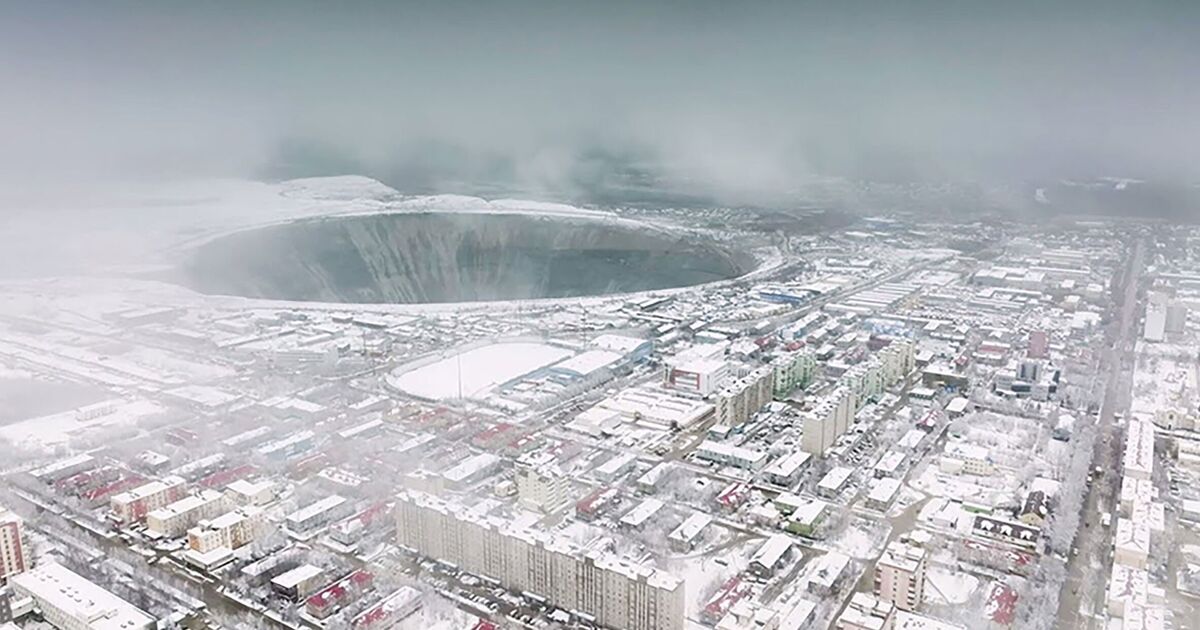
The man returned to life after 5 hours, doctors claim (Image: East2West)
A “clinically dead” man in remote Siberia was brought back to life after spending more than five hours collapsed in sub-zero temperatures. Doctors say the extraordinary case shows how extreme cold can preserve life.
The unnamed man, believed to have been intoxicated after a vodka binge, fell asleep on a bench in Mirny, Yakutia — the world’s coldest inhabited region — as temperatures plunged to around -20°C. He was later found not breathing by passers-by, who called an ambulance. When medics arrived, they recorded no heartbeat, no blood pressure and a “flatline” on an electrocardiogram — all signs of clinical death.
READ MORE: NASA supercomputer predicts exact year ‘world will end’
READ MORE: Incredible new ‘super tomatoes’ might finally cure long running health problem

The man was found in Siberia in conditons of around -20C (Image: Getty)
Rather than declaring him dead, doctors at the hospital in Mirny—Russia’s diamond capital, launched a complex resuscitation using a specialised rewarming technique developed for Arctic conditions.
He was rushed to hospital, where anaesthetist Dr Dmitry Bosikov led a meticulous four-hour process to raise his body temperature from 24°C to 34°C.
“The rewarming method is based on gradual thawing, which does not lead to damage of the smallest blood vessels, as damage to the microvascular network can result in heart attacks, cerebral oedema, kidney failure, and death,” said a hospital statement.
It added: “Over the course of 4 hours, the man’s body temperature was raised from 24°C to 34°C. This was a coordinated, painstaking, and technically flawless effort.
“From the moment the temperature reached 34°C, advanced cardiopulmonary resuscitation was initiated—chest compressions, mechanical ventilation, and administration of drugs to stimulate circulation.
“After 25 minutes of resuscitation, a faint sign of life appeared on the monitor—ventricular fibrillation.”
In total, doctors said “life returned” after five hours and 34 minutes.
There were initial fears of severe organ damage, but after 24 hours in an induced coma, the man regained consciousness.
His kidneys were functioning normally and no major systems had been impaired.
He was discharged just five days later.
Doctors say the case highlights a little-known principle: patients with severe hypothermia can sometimes be revived long after they appear dead.
Extreme cold can slow the body’s demand for oxygen, effectively preserving the brain and vital organs — but only if patients are handled carefully and rewarmed slowly.
The hospital credited the survival to the coordinated response of paramedics and its specialised rewarming protocol.
The man’s identity and age have not been disclosed.


Omah Lay Claims The Title of Afrobeats Greatest Artist

Bandits: Wike’s Aide, Olayinka Reveals Major Problem North Must Begin To Solve

Nigeria targets 300,000 metric tonnes of sugar production by 2030 – Minister

This comet is ‘regrowing’ its tail in space and scientists compare it to a lizard

El-Rufai gets bail; court adjourns to April 21
‘Kwara Not Safe Haven For Criminals’ – New NSCDC Boss Warns

Efforts continue for new round of talks as stand-off between US and Iran deepens

 Breaking2 weeks ago
Outrage as video of secondary school students in Benue state str!ping their classmate surfaces online
 News2 weeks ago
I Joined A Cult, Worked So Hard For Demons – Tonto Dikeh Confesses While Ministering (Video)
- News2 weeks ago
Heartbreaking Story Of 300-Level Ekiti University Student Who Was K!lled After Truck Crashed Into His Building (Video)
- National2 weeks ago
Environmental Sanitation: Lagos meets with LG, LCDA bosses
- Breaking1 week ago
Mother Abandons 4 Children with Neighbor and Disappears for Months — Shocking Case Raises Questions
- News2 weeks ago
WAEC Releases 2026 WASSCE Timetable (Full List)
- Breaking2 weeks ago
Singer Flavour shows off Italian woman and vows to shower her with so much love that she’ll have no choice but fall in love (video)
- World6 days ago
Trump LIVE: Iran war bombshell as Trump could be 'removed from Presidency'