Business
Tinubu committed to ensuring stable electricity for Nigerians — REA MD

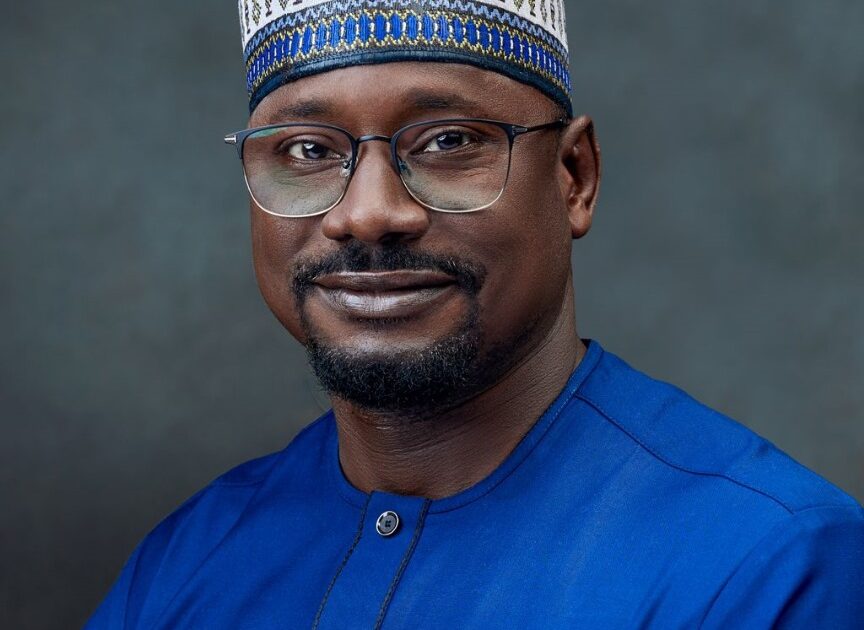
In this interview with Dare Olawin, the Managing Director/Chief Executive Officer of the Rural Electrification Agency, Abba Aliyu, discusses the agency’s and the Federal Government’s commitment to expanding electricity access across Nigeria, with a focus on unserved and underserved communities. Excerpts:
What steps is your agency taking to support universal electrification in Nigeria?
We have developed the National Electrification Strategy and Implementation Plan. We are doing state-by-state roundtables. We are picking each state to determine the state’s level of electrification and what would take that state to achieve universal electricity access. What are the resources within the states? You cannot apply one single methodology for the entire country because each state’s unique resources, infrastructure, and socio-economic conditions require tailored approaches to achieve universal electricity access. Lagos is more developed than Kano and Ebonyi states. Each state is on a unique level.
What criteria do you use to assess a state’s level of electrification?
What we are doing is selecting a state and conducting the entire analysis based on five parameters. What is the state’s level of funding? What is the state’s policy? What are the structures within the states geared toward universal electrification? Does the state have a state electrification board? Does it have a ministry? Does it have technical standards? Is the state working towards creating an electricity market? Does the state have off-grid or renewable regulations? Then, we also look at the capacity building level of that state. What is the level of the capacity building? Availability of skill and competencies within the states. So, these are the things that we analyse. We now also did the mapping of that state. What is the level of electrification in that state? What would it take to move the state from this level to 100 per cent electrification? We are presenting this to the National Economic Council, where we have all the state governors and the Vice President. We are presenting the state-by-state level of electrification, the level the states are at and their level of readiness. We created a ranking based on those parameters that I have told you, with five as the maximum. For example, Lagos is at a 3.5 level based on those five parameters that we have seen, and that is the highest. For each state, we have done that. When done, Nigerians can log on also and see the level of electrification in each state.
What makes the document so significant?
It is significant because this has given us the map of the entire state, and what is the least cost of electrifying the state? A solar home system is the best to electrify some states; mini-grids will be the best to electrify some, and grid extension works in places where the grid is very close. So, this is the least costly pathway to universal electrification. You cannot just extend the grid everywhere. It is not viable.
What level of investment is required for the country to achieve universal electrification?
Based on this, we realise that the least total amount to achieve the access is $23.2bn across Nigeria. $23.2bn is the total nominal investment needed for universal access. This is for mini-grid connections in densely populated areas farther from the existing grid, for grid connections, and for solar home systems. We have identified that for each parameter, there are stages each stage belongs to—early stage, developing stage, progressing stage, advanced stage, and optimised stage.
At what stage is the country in its electrification journey?
On an aggregate level across the five thematic areas, the nation is majorly in the developing phase towards electrification efforts; we are not too advanced. But on a state-by-state basis, there are states that have gone far. You can pick on each state, dive into the data, look at all those parameters of financing, infrastructure, capacity building, data, and policy readiness to see where they are and the basis upon which they were rated in that regard.
How are you getting state governors to buy into this?
We are taking this to all the sub-nationals. We are showing them what is required and asking them to key into what we are doing. We want to have one report and one conversation when it comes to electrification. It is one conversation, one report, one plan, and one approach. This is the commitment. We are putting this in place for each sub-national to commit to doing this. And all electrification efforts will now be based on the National Electrification Strategy and Implementation Plan. So, there will not be any ad hoc approach by individuals to do their stuff on their own.
At a roundtable in Lagos last year, counterpart funding was discussed. Are states genuinely committed to it?
Yes, we developed different programmes. There are programmes that are private sector driven. These are just like the World Bank DARES project. What we are doing in that project is catalysing private sector investment into addressing the electricity access challenge. What the government needs to do is to create an enabling environment for the private sector to go to the states, because the private sector decides where it should go. Ours is to provide the project development and data for the private sector to decide. In this regard, there is no government involvement other than to attract the private sector to come to that state. But there are projects that we are funding in a tripartite approach. The subnational is bringing funding; the federal is bringing funding; and the private sector is bringing funding. And this is just like the programme that we designed that we call the E-HEART—Energising Health, Education, Agriculture, Rural Communities, and Transport. We identify, in collaboration with the states, different communities. We want to identify 25 communities in each state in the first phase. But in that regard, we are bringing 60 per cent of the funding, the state is bringing 30 per cent, and the private sector is bringing 10 per cent to deliver on the projects. Then, we have projects that are purely Engineering, Procurement, and construction-based. These are projects that get their funding from the National Assembly approval. In this regard, we do more like EPC intervention. In the budget, you will see that the National Assembly appropriates some funding and will tell us to put a transformer somewhere, extend the grid, or do mini-grids. So, they dictate how we intervene in that regard. The last one is the one that we do through grants. These are things that involve the development finance institutions. They provide us with the funding to do a model for us to see the viability of that model and scale it up across the country. To answer your question, we are seeing very much reception and response from the sub-nationals based on the E-HEART. In fact, more than 15 states have already committed their own 30 per cent funding that is required to achieve the project.
You noted that Nigeria requires N23.2bn to achieve universal access. Where will the funding come from?
The wisdom of the current government, specifically based on the approach of Mr President, is driving private sector funding into the sector. One of the first approvals the power minister secured is the DARES $750m funding. He secured that funding, and we have access to that funding. But that funding will catalyse a private sector funding of $1.1bn. As we bring the public funding, it will catalyse private-sector funding to combine to do more. We are targeting 17.5 million Nigerians under the DARES programme. We have $750m, and the private sector will bring $1.1bn. The minister of power is also working towards securing additional co-financing from the Japan International Cooperation Agency. He was in Japan, and he secured the approval from the Japanese government to put in $190m as co-financing. This is to target an additional 1.83 million Nigerians to be electrified. And it will also catalyse close to an additional $300m financing to be added to the private sector funding. So, we, the Federal Government is creating public funding that will catalyse private sector funding for us to do. When the president was in Tanzania, there was the signing of $20m financing to four of Nigeria’s local developers by the International Finance Corporation. They commit to finance these developers with a $20m debt financing. That is another financial. And also, the conversation around $700m desert-to-power financing that will come from the African Development Bank. That $700m will also catalyse another $1bn in private sector financing. All this is the strategy being implemented to make sure that there is financing to achieve this universal electricity access. And we have also seen banks committing funding. So, all this financing is there. We have Nigerian local banks that have seen it and are committing funding to it. I do not have any fear with financing; we will be able to achieve the level of financing that is required.
What benefits will these banks receive in return?
You see, the mini-grid, we see it as infrastructure financing. You put in your financing and recoup the financing with your predetermined internal rate of return over a period of time from the tariffs because a tariff is a function of paying back the capital cost, paying for Operations & Maintenance and paying for capital appreciation or capital gain. These are the three components that make a tariff. And that is why we built the entire methodology in project financing. So, the banks or the financier or even you can put in some billions of naira to finance a developer to build a mini-grid, and you recoup your investment from the monthly tariff that goes back to the developer.
Nigerians are seeking cheaper electricity. How affordable are your tariffs?
Well, another thing also is that you need to also look at the data. I would like to debunk that myth of affordability and the myth of payment. From the data that we have, we have close to 95 per cent collection rate. These people in the rural area pay for the electricity.
Do rural residents pay higher electricity costs than those in urban areas?
In terms of collection and commercial losses, yes! We have fewer commercial losses. They pay more. We have a 95 per cent collection rate. And it is also because we do 100 per cent metering and we do SCADA systems. So, we can know if there are any losses. And they have stable electricity. When it is stable, the people pay. The people will even ask for it. Last year, I commissioned a one-megawatt project on the border of Ogun and Lagos States, Ibaragun. It is a one-megawatt interconnected mini-grid. Neighbouring communities were begging that they want to be off the DisCo. They said, ’Come, put up this solar-hybrid interconnected mini-grid. Let us have reliable and sustainable electricity.’
Can estates or communities approach you to deploy mini-grids if they opt to operate independently of the national grid?
It will require a big tweaking of our mandate. Someone once said that the REA should be renamed from Rural Electrification Agency to Renewable Electrification Agency so that the mandate of focusing on rural and pre-urban areas can be changed. And I think it is a fantastic idea, because that is the kind of thing that can give us the liberty to intervene in things. This is something that happens in India. In India now, there are two grids. There is the main grid and the under-grid. You can switch from one to the other. Like in the night, you can say you want electricity from under the grid or from the main grid. They have that choice. So, it enhances that level of reliability and also gives the customers the option to manage the tariff, the cost of their consumption.
What do you think informed the President’s decision to confirm your appointment as REA Managing Director last year?
I think that question can best be answered by the Honourable Minister of Power, who made the recommendation. I report to him. He sees the kind of work that I do. And I tell you, whatever we are doing, all the credit goes to him. And I am saying this sincerely. All the credit goes to the Minister of Power. He gives us an unfettered level of drive. Then, his being a finance person has helped us a lot. If you look at the models that we are creating, the financing he gave us, he drives us and pushes us around these financing models, the blended financing. He drives for the establishment of a renewable asset management company, which is going to be another big game-changer in the sector, ensuring sustainability and ensuring financial sustainability. Even when we do not have financing from the World Bank or African Development Bank or other development finance institutions, we have that ability to continue with the financing. This all goes to the credit of the fact that he is a finance guy. So, to be honest, he has given us a room to innovate and to do our thing. He only calls us to ask for his own KPIs, and we report on the level of the key performance indicators he set for us.
What message do you want to convey to Nigerians regarding the power sector?
All I want Nigerians to know is the level of commitment of President Bola Tinubu to sincerely address the electricity access gap. We do not sleep. The President is doing everything to ensure all Nigerians enjoy stable electricity, and we will achieve it.


APC FCT Congress: Chairmanship aspirant rejects ‘flawed consensus,’ demands rerun

Ex-Kwara APC chair declares governorship bid
APC FCT Congress: Chairmanship aspirant rejects ‘flawed consensus,’ demands rerun

âI donât want kids, and that should be respectedâ â woman says as she opens up about her choice at 37

TCN declares force majeure as rainstorm collapses Lagos-Osun power line

Yoruba newspapers’ publishers seek government’s intervention, support in preserving indigenous languages
Yoruba newspapers’ publishers seek government’s intervention, support in preserving indigenous languages

 Breaking3 weeks ago
Outrage as video of secondary school students in Benue state str!ping their classmate surfaces online
 News3 weeks ago
I Joined A Cult, Worked So Hard For Demons – Tonto Dikeh Confesses While Ministering (Video)
- News3 weeks ago
Heartbreaking Story Of 300-Level Ekiti University Student Who Was K!lled After Truck Crashed Into His Building (Video)
- National3 weeks ago
Environmental Sanitation: Lagos meets with LG, LCDA bosses
- Breaking3 weeks ago
Singer Flavour shows off Italian woman and vows to shower her with so much love that she’ll have no choice but fall in love (video)
- News3 weeks ago
WAEC Releases 2026 WASSCE Timetable (Full List)
- Breaking2 weeks ago
Mother Abandons 4 Children with Neighbor and Disappears for Months — Shocking Case Raises Questions
- World2 weeks ago
Trump LIVE: Iran war bombshell as Trump could be 'removed from Presidency'