News
UNILAG DVC Calls for Diplomacy Over Conflict in Universities as Experts Link Peace to Economic Growth

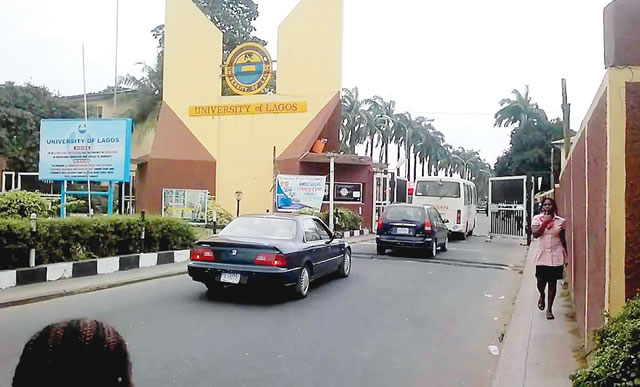
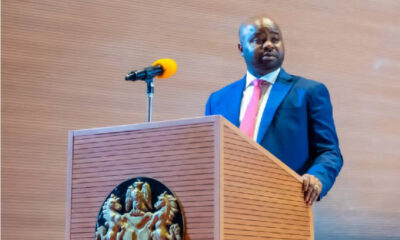
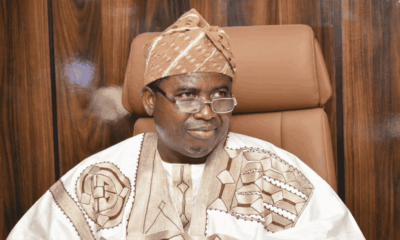
Muyiwa Falaiye, the University of Lagos’ Deputy Vice-Chancellor (Management Services), has emphasized the need of diplomacy in settling disputes inside academic institutions, cautioning that communication is still the best method for handling disagreements in academic settings.
Falaiye gave a talk on the topic of “Diplomatic Engagements for Economic Development: Exploring Opportunities and Tackling Challenges” at the UNILAG Master of Diplomacy and Strategic Studies yearly lecture series.
While conflict is unavoidable in human interaction, particularly in academic contexts, the professor of African Socio-Political Philosophy pointed out that the true difficulty is in how such differences are handled.
He asserts that “universities, as centers of diverse opinions and interests, must prioritise dialogue, negotiation, and tolerance to prevent crises and ensure stability.”
“While competition for resources and influence makes conflict an inevitable part of human interaction, the real challenge lies in how such conflicts are managed,” he stated.
He emphasized that diplomacy offers a methodical framework for settling conflicts amicably and that its applicability goes beyond international relations to include institutional and interpersonal interactions.
The globe still uses diplomacy rather than force to settle disputes, Falaiye continued, pointing out that even in cases of fierce rivalry, conversations frequently decide outcomes.
“Global peace over the decades has mostly been sustained not by military might, but by the consistent efforts of diplomats who manage conflicts, balance competing interests, and create room for dialogue even among adversaries.”
The don emphasized that peaceful coexistence depends on the commitment to prioritize negotiation over confrontation and encouraged students and aspiring diplomats to embrace logical participation and constructive discourse.
Prof. Eghosa Osaghae, Director-General of the Nigerian Institute of International Affairs, also spoke and emphasized the wider role of diplomacy in promoting national development, especially through economic engagement.
Osaghae stated that economic diplomacy is the cornerstone of Nigeria’s foreign policy, pointing out that without a solid economic foundation, no nation can achieve significant worldwide influence.
He stated, “The greatest strength any country can have is its economy,” adding that countries with strong economics typically create cultures that are more stable and prosperous.
He went on to say that diplomacy is still a crucial instrument for peacefully accomplishing national goals, frequently succeeding in situations when force is ineffective.
The NIIA DG said that individuals, the corporate sector, and the diaspora are increasingly playing important roles in furthering national objectives, demonstrating how modern diplomacy has transcended governmental actors.
Salim Aljaberi, the Consul General of the United Arab Emirates, revealed that the UAE intends to strengthen its business connections with Nigeria and invest roughly ₦4.5 billion throughout Africa.
In order to facilitate travel for tourists, business professionals, and investors, direct flights between the UAE and Lagos will soon resume, according to Aljaberi, who also mentioned that Nigerian visa procedures had been streamlined.
In order to promote infrastructure development and increase investment prospects, he also revealed plans to collaborate with Nigerian real estate stakeholders.
Mudasiru Akanbi Ilupeju, the dean of the Faculty of Arts, stated in his remarks that the lecture series was intended to promote intellectual engagement and link scholarly conversation with developing international diplomatic trends.
He said, “Our objective is to establish a setting where difficult concepts can be discussed and fresh viewpoints can flourish.”



Suspects confessed to $6.23m fraud in Emefiele trial – Witness

Edo Assembly confirms Bello as EdoGIS MD

Warm sunshine to follow scattered showers as UK temperatures climb to 24°C this week

Zulum’s commissioner joins gov race, picks APC nomination form

CVR 2nd phase: Participate in claims, objections — INEC tells registered voters

When I had nothing, she handled the bills for seven years and never complained â Actress Seun Osigbesan’s husband praises her as she turns 40

Israeli strikes kill Hamas commander, others in Gaza

 World2 days ago
Trump abruptly cancels peace talks with Iran in Pakistan: "We have all the cards"
- Breaking18 hours ago
Man falls asleep after r@ping 89-year-old woman in South Africa
- World2 days ago
Alleged gunman wrote that he expected more security at White House Correspondents' Dinner
- World1 day ago
Trump humiliated as major NATO leader tears apart US plan in Iran war
- Business2 days ago
Dangote refinery 1.4mbpd expansion to create 95,000 jobs
- World1 day ago
Adult content creator accused of using 5-year-old girl to attract men for cash
- Business2 days ago
No new tax on vehicles – NRS
- World3 days ago
Donald Trump rushed to safety after suspected gun shots at White House dinner