World
Rare Dartford Warbler makes remarkable comeback in Britain 60 years after near extinction

This Video Is Trending Right Now
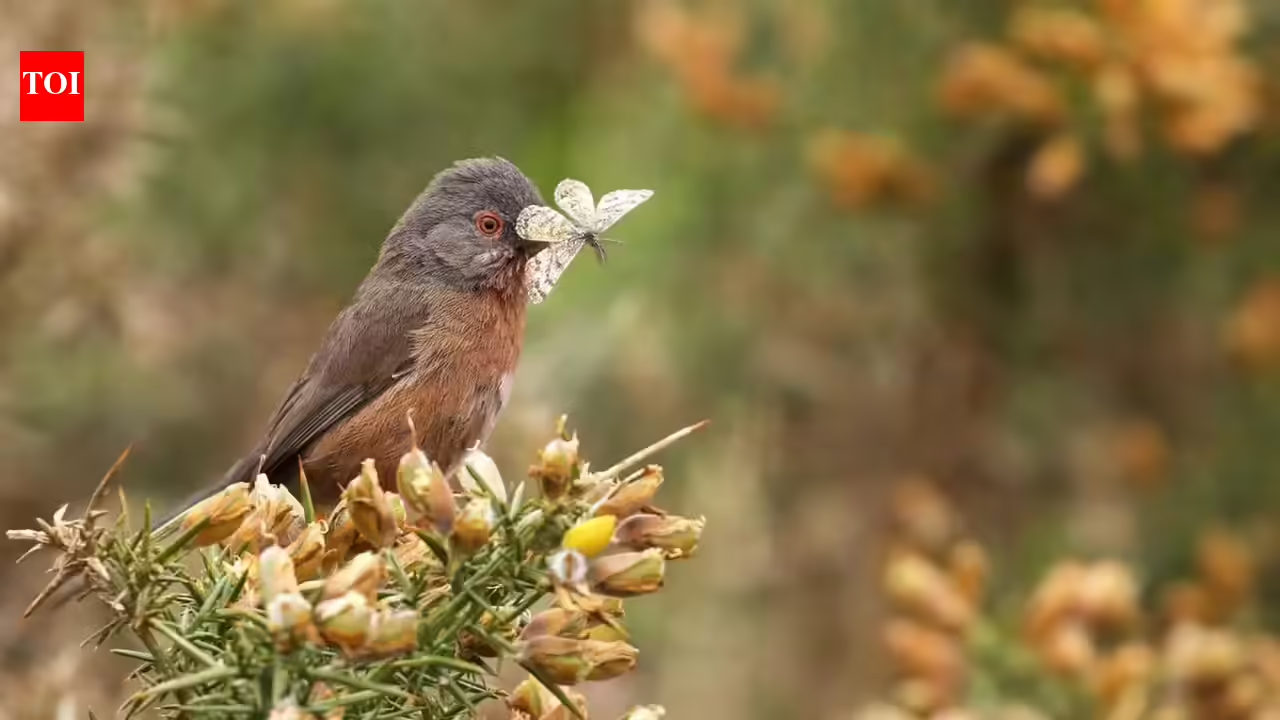
Six decades ago, the future of one of Britain’s most distinctive birds looked bleak. A series of harsh winters pushed the Dartford warbler to the edge of extinction, leaving conservationists fearing the species could disappear from the UK altogether.Today, however, the story could hardly be more different.New surveys show the Dartford warbler, a small long-tailed bird known for its reddish-brown plumage and scratchy song, has made a remarkable recovery across Britain. Once reduced to just a handful of breeding pairs, the species is now thriving in many heathland habitats, making it one of the UK’s most notable wildlife conservation success stories.Experts say the recovery reflects decades of habitat restoration, targeted conservation work and climate changes that have helped the bird expand beyond some of its traditional strongholds.The comeback offers rare good news for British wildlife at a time when many other bird species continue to face significant pressures from habitat loss, development and environmental change.
How a rare UK Bird avoided extinction
The Dartford warbler’s decline became particularly severe after the brutal winter of 1962-63, one of the coldest recorded in modern British history.The species depends heavily on lowland heathland habitats dominated by gorse and heather. Unlike many birds, Dartford warblers rarely migrate far from their breeding grounds, making them especially vulnerable to prolonged periods of snow and freezing temperatures.Following the severe winter, the UK population crashed dramatically, leaving only a tiny number of surviving pairs concentrated mainly in southern England.Conservation organisations, land managers and environmental agencies subsequently began extensive efforts to protect and restore heathland landscapes. Areas once threatened by agriculture, forestry expansion and development were gradually brought under improved management.Over the following decades, populations slowly recovered. More recent surveys have shown the bird expanding into new regions, including areas where it had previously disappeared.Researchers say warmer winters have also played a role by reducing the large-scale mortality events that historically devastated populations.
UK bird’s remarkable comeback
Experts credit much of the recovery to the restoration of Britain’s heathlands, one of the country’s rarest and most threatened habitats.Organisations including RSPB, Natural England and numerous local conservation groups have spent decades improving heathland management through controlled grazing, vegetation management and habitat protection.These efforts have not only benefited Dartford warblers but also a range of other species including nightjars, woodlarks, reptiles and rare insects.Conservationists say the bird has become a powerful symbol of what long-term environmental investment can achieve.Researchers involved in monitoring programmes note that the recovery did not happen overnight. Instead, it reflects years of coordinated conservation planning, scientific monitoring and public support.Many heathland sites across southern England now support healthy breeding populations, something that would have seemed unlikely during the species’ darkest period in the 1960s.
New risks for Britain’s birds
While warmer winters have generally helped Dartford warbler numbers grow, scientists caution that climate change presents both opportunities and challenges.Milder weather may allow the species to survive in areas that were previously too cold. At the same time, increasingly frequent droughts, wildfires and extreme weather events could create fresh pressures on fragile heathland ecosystems.Environmental experts warn that conservation success should not lead to complacency. Britain’s wildlife continues to face significant threats from habitat fragmentation, urban expansion and changing land use patterns.The Dartford warbler’s recovery nevertheless provides a rare example of a species moving in the right direction at a time when many conservation reports focus on decline.For conservationists, the bird’s return demonstrates that sustained habitat protection, scientific management and long-term commitment can reverse even the most dramatic wildlife losses.More than 60 years after coming perilously close to disappearing from Britain, the Dartford warbler is once again becoming a familiar sight across the heathlands it has called home for centuries.


Arsenal vs PSG: Why Champions League final will kick off by 5pm

Scientists develop 'smart paint' that reflects 97% of sunlight and could reduce AC use during heatwaves

Aisha Yesufu alleges irregularities in NDC FCT senate ticket process

How NDC senatorial primary was conducted in closed room – Aisha Yesufu opens up

Italian police arrest two Nigerians over gang-rape of tourist

Countdown to 2026 FIFA World Cup: The Chivalrous Knights of Jordan ready for global stage

Wike-backed PDP suspends Bode George, 23 others

 Breaking2 days ago
Last-minute power game deepens as Kwankwaso plans to unveil Comrade Abdussalam as Kano NDC governorship candidate
- News2 days ago
Your phone has an expiry date – here’s how to find it
- News2 days ago
Full list of Samsung phones that will get the Android 17 update
- Breaking3 days ago
A prayerful man who doesn’t cheat and lie – Nigerian acid attack survivor reveals what she wants in a partner
- Politics3 days ago
Governor Okpebholo Reaffirms Commitment to Child Protection at 2026 Children’s Day Celebration
- Breaking3 days ago
Matthew Perryâs assistant who is accused of concealing evidence allegedly drove the late actorâs car at 4AM shortly after his de@th
 Politics3 days ago
Omo-Agege quits APC amid Delta crisis
- World2 days ago
Marco Rubio says no more Ebola patients will be allowed into U.S.