National
Why price of cooking gas keeps increasing — LPGAR

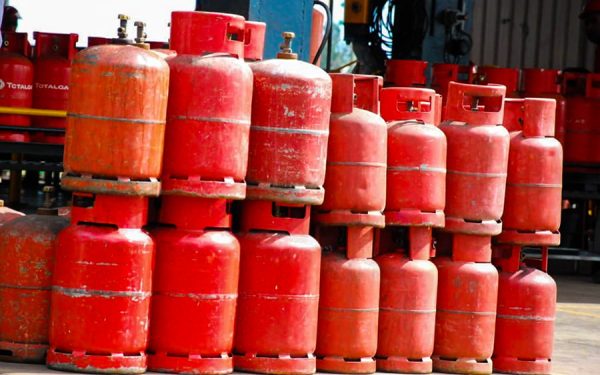
The Liquefied Petroleum Gas Retailers Association of Nigeria (LPGAR) has revealed that the persistent rise in cooking gas prices across the country is driven by foreign exchange instability, high depot prices, and rising distribution costs.
The Chairman of LPGAR under the Nigeria Union of Petroleum and Natural Gas Workers (NUPENG), Ayobami Olarinoye, said this.
He disclosed this in an interview with the News Agency of Nigeria (NAN) on Tuesday in Lagos.
Olarinoye said the country’s dependence on imported Liquefied Petroleum Gas (LPG) continued to expose the market to exchange rate volatility, which directly impacted landing costs at the ports.
According to him, the weakening Naira has pushed up import costs, while limited local supply has further tightened product availability.
He said: “High depot prices remain a major challenge.
“Since Nigeria imports a huge chunk of LPG, a weak naira directly translates to more expensive gas at the ports.”
Olarinoye added that high transportation costs, driven largely by diesel-powered trucks, had further increased retail prices nationwide.
“Moving LPG across the country depends heavily on diesel-powered trucks, and rising diesel prices continue to inflate the final price retailers pay before selling to consumers,” he said.
He stressed that retailers were not responsible for arbitrary price increases, noting that competition at the retail level limits excessive pricing.
He said: “LPGAR does not support arbitrary pricing.
“Our members operate at the last mile and are fully aware of consumer frustration.”
Olarinoye explained that retail margins remain slim, adding that final prices largely reflect procurement costs from depots.
On safety and regulation, he said the association conducts regular checks to ensure compliance with standards set by the Nigerian Midstream and Downstream Petroleum Regulatory Authority (NMDPRA).
He said: “We carry out regular safety and compliance checks to ensure only operators who meet minimum standards are allowed to sell LPG.
“This also helps to discourage quacks in the sector.”
Olarinoye explained the government policies affecting the sector as mixed, noting that while the removal of VAT on LPG imports provided initial relief, gains were offset by currency depreciation.
He said subsidy removal on petrol also increased the demand for LPG as households and businesses switched to gas-powered alternatives.
To address rising costs, he called on the Federal Government to mandate Nigeria LNG and other domestic producers to sell LPG in naira to local off-takers.
He also urged stricter regulation of depot operators to prevent hoarding and sudden price increases, as well as improved infrastructure to reduce logistics costs.
Olarinoye advised Nigerians against switching to unsafe alternatives such as firewood and charcoal, warning of health and environmental risks.
“People should not compromise safety because of the current hardship,” he said.
He said significant price relief would depend on exchange rate stability, improved domestic supply, and reduced logistics constraints.

Elon Musk’s Starlink comes to air travel: American Airlines to transform in-flight internet experience by 2027

Go back home, stop giving excuses – Peter Obi to Tinubu

World's tallest rollercoaster demolished after it closed for good – first opened in 2005

WHO issues major update over new hantavirus case in Europe

High street sports chain with 31 stores plunges into administration

Woman and her two children escape from terrorist enclave in Borno

UCL final: We are convinced – Arteta speaks on Arsenal vs PSG clash
- Breaking2 days ago
Repentant Boko Haram members are given N3m payoff after rehabilitation and placed on monthly salary of N50,000- man whose father was k!lled by the insurgents alleges (video)
- National1 day ago
Fallen Nation: While Terrorists Kill Nigerian Soldiers, General Bolaji Salami Builds Hotel and Laugh
- News3 days ago
Full list of countries that replaced withdrawn teams in FIFA World Cup
- World21 hours ago
Iran 'downs US drone' and 'shoots at American F-35 jet' as WW3 fears explode
- Breaking23 hours ago
2027: Jonathan eligible to contest elections — Court rules, awards N21m fine against lawyer
- World3 days ago
NATO jets scrambled as Putin launches horror 'nuclear missile without warhead' on Ukraine
- World2 days ago
Iran's supreme leader is holed up in undisclosed location, U.S. intel says
- National2 days ago
Breaking: Eid-ul-Adha: FG declares two-day public holiday

