News
Auditor-General flags weak accountability across MDAs

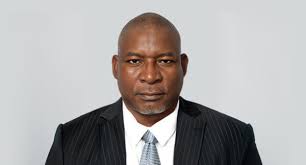
The Auditor-General for the Federation, Dr Shaakaa Chira, has raised concerns over persistent weaknesses in accountability and financial management across government institutions, citing weak internal controls, capacity gaps and delays in responding to audit observations by some Ministries, Departments and Agencies.
Chira disclosed this in an interview with The PidomNigeria on Wednesday, where he outlined the challenges facing public sector auditing and efforts by his office to strengthen transparency and accountability in the management of public resources.
According to him, weak accountability structures remain one of the biggest obstacles to ensuring compliance with financial regulations across government institutions.
“One of the major challenges is the persistence of weak internal control systems in some public institutions. In certain cases, there are also capacity gaps, delays in responding to audit observations and inadequate appreciation of the importance of compliance with established regulations,” he said.
The Auditor-General noted that the vast scale of government operations compared to available oversight resources has further complicated efforts to enforce accountability and compliance across MDAs.
“Another challenge is the scale of government operations relative to available resources for oversight. Nevertheless, we continue to engage MDAs, provide professional guidance and advocate stronger accountability mechanisms to improve compliance and safeguard public resources,” he added.
Chira said his office had intensified efforts to strengthen public financial management through capacity building, adoption of international standards and enhanced collaboration with key stakeholders.
He explained that since assuming office, the Office of the Auditor-General for the Federation has focused on strengthening its institutional capacity to effectively carry out its constitutional mandate.
“Since assuming office, we have focused on strengthening the capacity of the Office of the Auditor-General for the Federation to effectively discharge its constitutional mandate.
“We have intensified capacity-building programmes for auditors, strengthened forensic audit capabilities, promoted compliance with international auditing standards and enhanced collaboration with key stakeholders, including the National Assembly, professional bodies and development partners,” he said.
The Auditor-General added that the office was implementing its Strategic Plan 2024–2028 to improve audit quality, institutional effectiveness and accountability in public resource management.
“We have also pursued the implementation of our Strategic Plan (2024–2028), which is aimed at improving audit quality, enhancing institutional effectiveness and promoting greater accountability in the management of public resources. Through our audit reports and recommendations, we continue to identify weaknesses in financial management systems and encourage corrective actions across government institutions,” he said.
On the role of technology in modern auditing, Chira said his office had embraced digital tools and data analytics to improve efficiency and strengthen fraud detection capabilities.
“The auditing profession is evolving rapidly, and our office has embraced the need for technological transformation. We have continued to strengthen the use of digital audit tools, data analytics and modern audit methodologies to improve the effectiveness and efficiency of our work,” he said.
According to him, technology enables auditors to analyse large volumes of data, identify unusual patterns and detect potential risks faster than traditional audit methods.
“Technology enables auditors to analyse larger volumes of data, identify unusual patterns and detect potential risks more quickly than traditional methods. It also improves the quality of evidence gathering and enhances the overall reliability of audit outcomes,” he added.
The Auditor-General further stressed the importance of transparency in rebuilding public confidence in government financial management, noting that citizens must have access to credible and understandable information about how public funds are managed.
“Public trust is strengthened when citizens have access to credible and understandable information. Our office remains committed to publishing audit reports and making our findings available through appropriate channels,” he said.
He added that the office was strengthening stakeholder engagement and public communication to make audit findings easier for ordinary Nigerians to understand.
The Federal Government, through the Minister of Finance and Coordinating Minister of the Economy, Wale Edun, had earlier said it would strengthen fiscal reporting, budget transparency and data integrity following recommendations by the International Monetary Fund, as it welcomed the Fund’s largely positive assessment of Nigeria’s economic reforms.






South Africa Mining Sector Jolted By Government Chrome Tax, With Beneficiation Proposals
Quote of the day by Malcolm X: “Usually when people are sad, they don't do anything. They just cry over their condition. But when they get angry…”

British botanists tortured and fed to crocodiles by ISIS-linked gang – killers convicted

Ghana Government Offers Tax Incentives for Factories Outside Accra

Rising costs hinder boat acquisition, group laments
Rising costs hinder boat acquisition, group laments

NCAA speaks as aircraft lands on road, takes off + Video

 National3 days ago
Exclusive: Inside Union Bank’s Boardroom Storm And Crumbling Bank, MD Yetunde Oni Acquires N1.9 Billion US Home Barely One year in Office
- World3 days ago
Russia burning as Ukraine launches massive attack with 'more than 50 explosions'
- World2 days ago
Horror as woman gang raped in field after being knocked unconscious
- World2 days ago
Pope Leo denounces what he calls "scourge" of sexual abuse by Catholic clergy
- Breaking2 days ago
"Before HIV vs living with HIV" – Man writes as he shares his photos before and after HIV diagnosis
- Breaking3 days ago
35-year-old woman who has been divorced twice responds to those telling her not to remarry
- News3 days ago
Shettima for Ekiti project inauguration Tuesday
- Breaking17 hours ago
UNIJOS emerges top winner at JAMB Admissions Awards, receives ₦500m grant