National
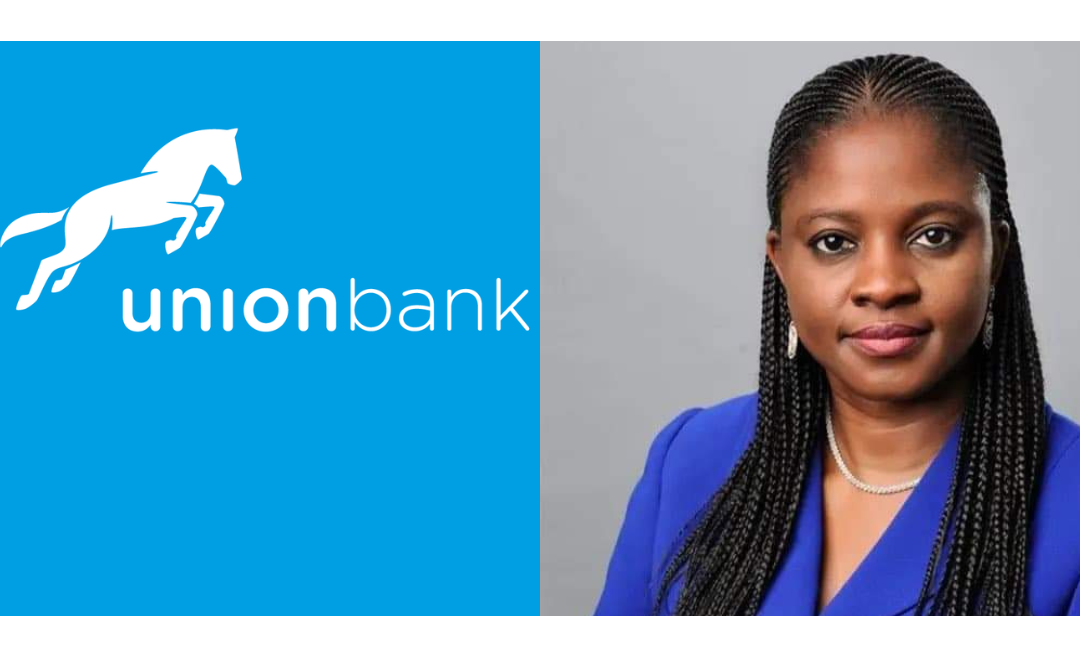
Exclusive: Inside Union Bank’s Boardroom Storm And Crumbling Bank, MD Yetunde Oni Acquires N1.9 Billion US Home Barely One year in Office

Secrets Reporters
For decades, Union Bank of Nigeria, one of the country’s oldest financial institutions, has occupied a familiar place in the Nigerian banking sector, carrying the weight of history, public trust, and institutional memory. But behind that long-standing identity, the bank has in recent years been caught in a web of ownership disputes, regulatory intervention, court battles, debt controversies, and questions around corporate governance.
The crisis did not begin with the latest court ruling. It is rooted in the ownership changes that followed Titan Trust Bank’s acquisition of Union Bank. According to Union Bank’s own historical account, Titan Trust Bank became the majority shareholder of Union Bank after regulatory approvals were secured and the transaction was completed in June 2022. The bank also stated that Titan Trust Bank later fulfilled the statutory and regulatory requirement to execute a mandatory takeover offer to remaining shareholders in November 2023.
Those transactions marked a major turning point in the history of Union Bank. A relatively young bank had taken control of one of Nigeria’s oldest banking institutions. But the acquisition, which was initially presented as a corporate restructuring and consolidation move, later became part of a broader regulatory and legal controversy.
On January 10, 2024, the Central Bank of Nigeria dissolved the board and management of Union Bank, alongside the boards of Keystone Bank and Polaris Bank. The apex bank said the action became necessary over alleged non-compliance with provisions of the Banks and Other Financial Institutions Act, 2020. It cited corporate governance, regulatory, and operational concerns as the basis for the intervention.
Following the dissolution, the CBN appointed a new management team for Union Bank. Yetunde Oni was named Managing Director and Chief Executive Officer, while Mannir Ubali Ringim was appointed Executive Director. The CBN’s decision placed the bank under a new leadership structure and effectively changed the direction of its management.
While the bank continued normal operations under the CBN-appointed management, fresh questions later emerged over ownership, board authority, and the legality of the regulator’s action. These questions came to a head on March 25, 2026, when a Federal High Court sitting in Lagos reportedly nullified the CBN’s January 2024 intervention in Union Bank.
The court held that the CBN acted outside its statutory powers when it dissolved the board and management of the bank. The court also ordered the reinstatement of the former board and management and set aside decisions taken by the CBN-appointed leadership. The ruling further restrained the apex bank and its appointees from taking further steps in relation to the bank, including actions connected to recapitalization.
The Central Bank of Nigeria has since filed an appeal against the judgment. In its appeal, the apex bank argued that the lower court erred in law by holding that it acted outside its powers. The appeal means the legal dispute over control of Union Bank is not yet concluded.
In the middle of this unresolved regulatory and legal crisis, documents reviewed in a property report prepared on June 2, 2026, show that a residential property in the United States was acquired in the names of Oluwatobi Oni and Yetunde Oni one year after she was appointed Managing Director of Union bank by CBN
The property is located at 2500 Old Largo Road, Upper Marlboro, Maryland 20772, in Prince George’s County, United States. According to the property report, it sits on a seven-acre lot and has a living area of 6,088 square feet. It is listed as a single-family residence built in 1988, with two stories, eight bathrooms, an attached garage, a fireplace, a deck, a pool, and other residential features.
The timing of the acquisition raises public-interest questions because it came at a period when Union Bank was still under CBN-appointed management and while the bank remained at the centre of unresolved ownership, regulatory and governance disputes. When our correspondent put a call across to her to get a clarification on the property acquisition, her number was busy and we were unable to get across to her.
Beyond the property acquisition, Union Bank has also been linked to a long-running debt dispute involving Senator Jimoh Ibrahim, NICON Investment Limited and Global Fleet Oil & Gas Limited. Court filings and public reports show that AMCON had alleged that NICON Investment and Global Fleet obtained loan facilities of N26 billion from Union Bank sometime in 2008 and 2009.
According to reports on the matter, AMCON claimed the facility was secured with a £125 million fixed deposit held in NICON Investment’s account with Union Bank. After the loans allegedly became non-performing, Union Bank transferred the debt to AMCON. AMCON later said that, as of November 30, 2020, the outstanding loan with accrued interest had risen to about N69 billion.
The dispute has traveled through different courts for years. In December 2021, the Court of Appeal in Lagos dismissed an appeal filed by Jimoh Ibrahim challenging the seizure of his assets and the freezing of accounts over the alleged N69.4 billion debt. The appellate court upheld an earlier Federal High Court order authorizing AMCON to take over the assets.
However, the matter took another turn in 2025 when Union Bank acknowledged a High Court judgment involving Senator Jimoh Ibrahim, NICON Investment Limited, Global Fleet, and the bank. Union Bank said it strongly disagreed with the judgement and had instructed its lawyers to file an appeal. The bank also maintained that it had transferred the relevant debt obligations to AMCON and insisted that its actions were in line with applicable laws and banking practice.
There are also separate allegations that former directors and owners of Union Bank concealed huge losses, exposed the bank to foreign loan risks, and left behind unpaid charges running into hundreds of billions of naira. One report alleged that more than N250 billion in losses was hidden, while a $300 million foreign loan was allegedly taken without adequate protection, leading to further losses and unpaid charges.
Union Bank is grappling with a complex multi-layered crisis that spans disputed ownership tied to the Titan Trust Bank takeover, questions over the legality of the Central Bank of Nigeria’s intervention, concerns about the bank’s management during the intervention period, unresolved legacy debt disputes involving Jimoh Ibrahim, NICON, and Global Fleet, and fresh public scrutiny surrounding a United States property acquisition linked to the current managing director and another listed owner.
On September 1, 2025, Union Bank and Titan Trust Bank officially completed their merger, with Titan Trust Bank absorbed into Union Bank. The merged entity continued under the Union Bank brand. The merger was presented as a move to strengthen operations, expand customer access, and consolidate both institutions into one bank.


NWFL playoff: Nasarawa Amazons floor Bayelsa Queens to maintain title push

Gwynne Shotwell, the 'glue' executing Musk's lofty SpaceX ambitions
Gwynne Shotwell, the 'glue' executing Musk's lofty SpaceX ambitions

Shettima’s planned visit to Ekiti shows Tinubu’s confidence in Oyebanji – APC
Charity begins at home: Hungary lawmakers vote unanimously to cut own salaries by 40%

LAWMA vows action after officers attacked in Lagos

Iran halts strikes on Israel after Trump tells both sides to ‘stop shooting’

 Breaking2 days ago
I slept with 50 men daily – 16-year-old Nigerian girl recounts how she was trafficked to Ghana by neighbour and forced into pr0stitution
 Breaking3 days ago
Woman shares flimsy reason that made her breakup with her boyfriend who was âperfectâ
- Breaking1 day ago
Innocent people are being sacrificed on the altar of power – Actress Ini Edo speaks on the heightened insecurity in Nigeria
- Breaking2 days ago
Elon Musk could be the worldâs first trillionaire in weeks
- Business3 days ago
NNPC donates MRI machine to Kano hospital
- Breaking2 days ago
US removes 180 religions from its recognized faiths list
- News2 days ago
West Ham co-chair David Sullivan resigns
- Breaking2 days ago
Astronauts told to shelter on spacecraft after air leaks are found on ISS