Society
CBN reports N17.4tn surge in FG borrowing

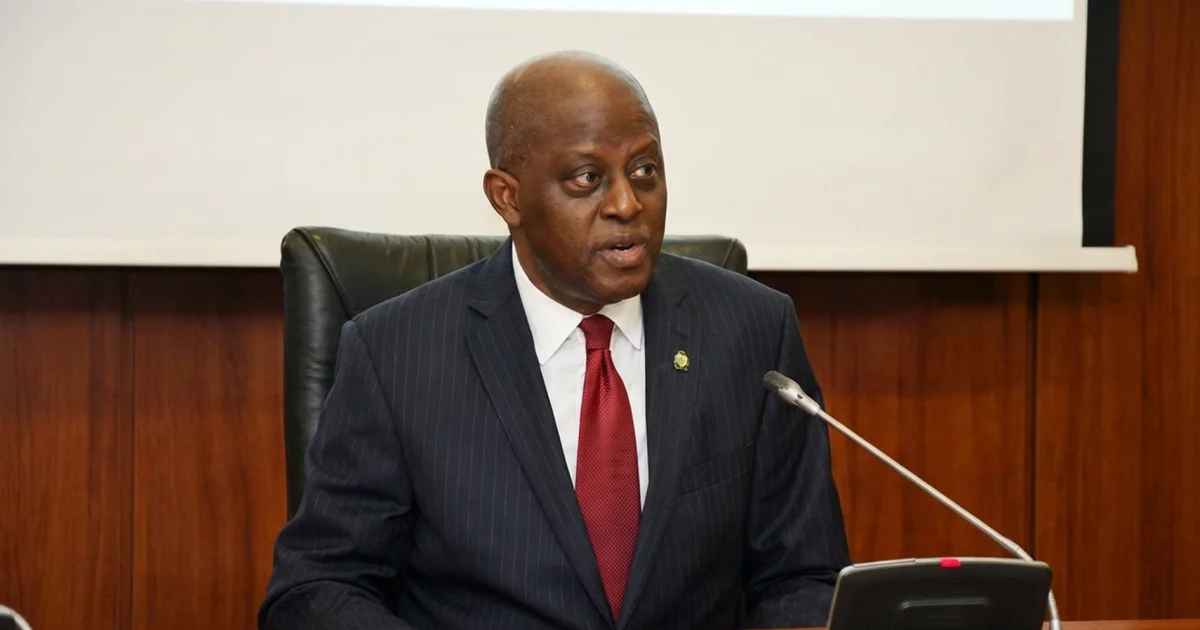
Fresh data released by the Central Bank of Nigeria reveals that credit to the Federal Government rose sharply over the 12 months ending in May 2026.
The surge highlights an aggressive public sector appetite for borrowing despite the prevailing tight monetary conditions in the country.
According to the CBN’s latest monetary and credit statistics on Wednesday, total credit to the government climbed to N40.38tn in May 2026, up from N22.99tn recorded in the corresponding period of 2025. This marks a year-on-year increase of N17.39tn (approximately N17.4tn), representing a massive 75.6 per cent rise in lending exposure to the public sector.
On a month-on-month basis, the government’s borrowing momentum showed no signs of slowing down, expanding by N779.70bn in just 30 days from the N39.60tn reported in April 2026.
Banking sector data indicate that commercial and merchant lenders are continuing to allocate significant liquidity towards government securities. Rather than channelling funds into the wider economy, financial institutions have heavily favoured low-risk instruments like Federal Government bonds and treasury bills to help finance ongoing fiscal operations.
This steady rise in public sector credit reflects a strategic shift by fiscal authorities to seek alternative funding sources through domestic debt issuance, moving away from direct CBN financing.
In stark contrast to the government’s aggressive borrowing, credit to the private sector grew modestly in May 2026. Lending to businesses and households ticked up to N81.04tn, compared to N80.59tn in April, reflecting a highly cautious approach by lenders and a slower expansion of credit to the real economy. Despite this sluggish monthly growth, private sector credit remains dominant in absolute terms, sitting at roughly 2.01 times the level of public sector credit for May.
Economic analysts and financial experts suggest that the data clearly underscores a persistent tilt towards public sector borrowing, driven by the government’s need to fund its fiscal deficit. While the banking system remains liquid, economists caution that if financial institutions continue to prioritise high-yield government debt, it could permanently “crowd out” productive private industries. Without access to affordable credit, local businesses and manufacturers may struggle to expand, potentially slowing overall economic growth.
The apex bank has not released a detailed sectoral breakdown of private credit allocation for the period under review.
However, the overarching trend points towards a banking sector heavily recalibrating its risk dynamics to favour government obligations over the real economy.


North Carolina Enacts Sweeping Ban on Litigation Financing, Setting New Regulatory Precedent

Tiktoker Peller hits back at Rapper Ycee after rapper linked âPeller cultureâ to Nigeriaâs âOlodo uprisingâ

We’re rebuilding Abuja, restoring hope in governance – Tinubu

Why didn’t he resign when Anambra experienced catastrophic insecurity?- Nasarawa gov takes on Peter Obi over calls for President Tinubu to resign

Three people confirmed dead, 17 others injured in Lagos building collapse

Białośliwiu train crash LIVE: Two trains collide in horror smash in Poland

Speakers back state police bill, promise thorough review

 Society15 hours ago
I am proud to be a Virgin and I will remain a virgin till I die because I want to be a good example to my Children-39-Year-Old Woman
- Investigation3 days ago
He said he wanted to sleep with me, but I told him I am a married woman – Lady in viral video being ass@ulted by a man in Abia speaks
- Investigation3 days ago
"Please. It will look as if it’s my fault. His family doesnât like me" Young wife, 18, assaulted by husband begs for him not to be arrested and reveals she regrets marriage (videos)
- Breaking3 days ago
He said he wanted to sleep with me, but I told him I am a married woman – Lady in viral video being ass@ulted by a man in Abia speaks
- Investigation2 days ago
New photo of 10-year-old boy severely b@ttered by his guardian in Anambra
- World2 days ago
Russia launches nuclear drill in UK's backyard as Kremlin 'advocates use of atomic bomb'
- Society1 hour ago
Lady Mob-Attacked in Market, Stripped Totally Nak£d Over Accusation of Theft of GH¢40,000
- Investigation3 days ago
âSeek help from usâ â NDLEA tells Nigerians battling Drug addiction