Breaking
Critics of Iran deal are fools — Trump fires back

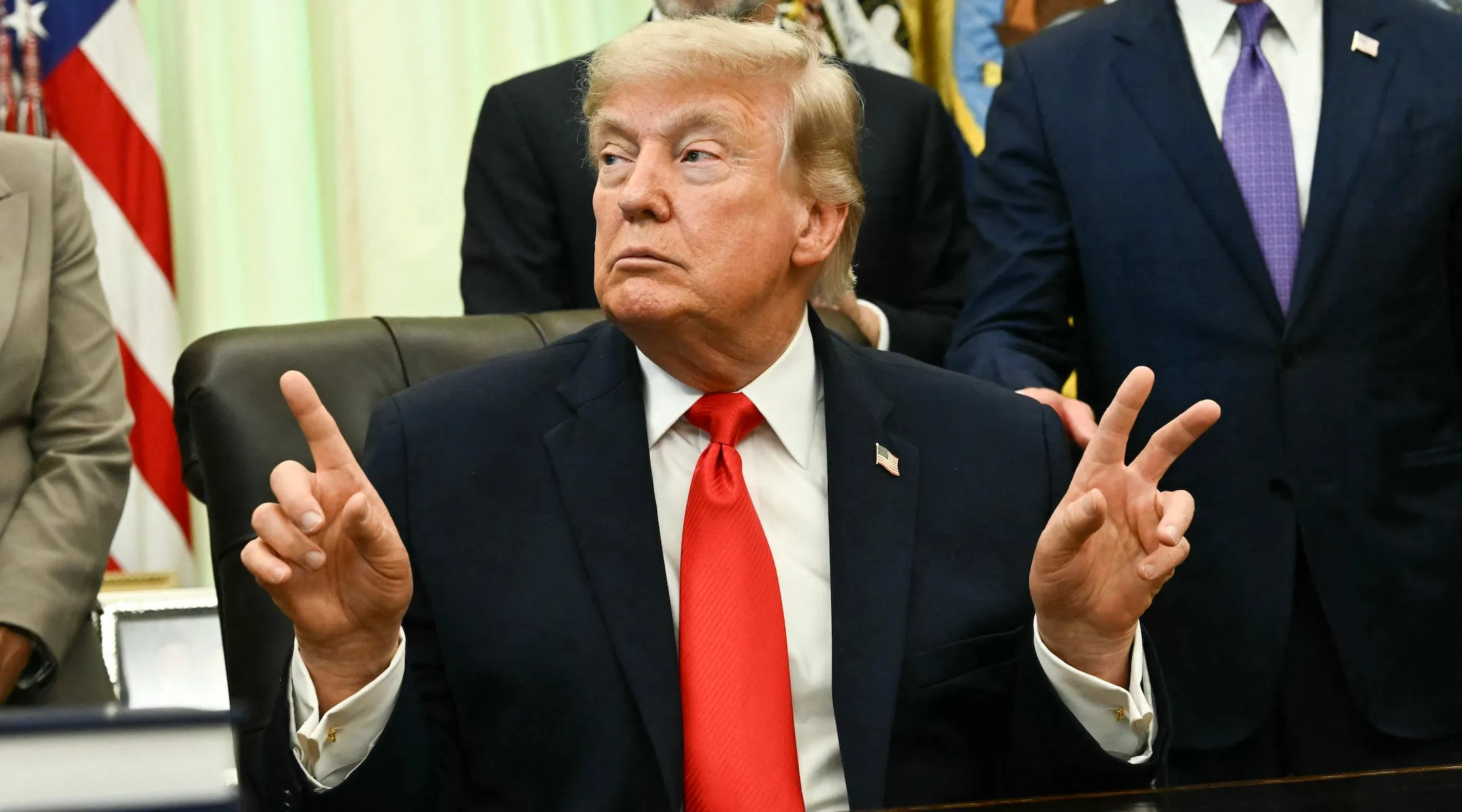
United States President Donald Trump on Thursday strongly defended the ceasefire agreement signed with Iran, dismissing criticism that his administration had granted significant concessions to Tehran in exchange for ending months of conflict.
Trump described opponents of the deal as “fools” and insisted that the agreement represented a major diplomatic victory that had prevented further bloodshed, stabilised global energy markets and opened the door to lasting peace in the Middle East.
The U.S. president made the remarks as American and Iranian officials prepared for talks in Switzerland aimed at finalising the implementation of the ceasefire agreement reached earlier this week.
The deal, which formally ended the war between the United States and Iran, has attracted criticism from some lawmakers, foreign policy analysts and political opponents who argue that Tehran emerged from the conflict with many of its strategic assets intact.
Under the agreement, Iran secured sanctions relief, access to billions of dollars in previously frozen assets and the lifting of restrictions on its ports and trade activities. The accord also leaves Iran’s ballistic missile programme largely untouched while allowing the country to retain its stockpile of enriched uranium under international supervision.
Critics have argued that the outcome falls short of several objectives Trump had outlined at the start of the conflict, including the dismantling of Iran’s missile capabilities and the removal of its enriched uranium stockpile from Iranian territory.
Responding to those concerns, Trump maintained that the agreement achieved its primary objective of ending the war while securing commitments from Iran not to pursue nuclear weapons.
“People criticising this deal are fools,” Trump reportedly said, insisting that diplomacy had delivered results that prolonged military action could not guarantee.
The president argued that the agreement provided stronger safeguards against nuclear proliferation while avoiding further military escalation that could have destabilised the region and disrupted the global economy.
The ceasefire agreement extends a temporary truce already in place and provides a 60-day window for both sides to negotiate a permanent settlement.
It also includes provisions for the reopening of the Strait of Hormuz, one of the world’s most important oil transit routes, and measures aimed at reducing tensions across the Middle East.
The upcoming talks in Switzerland are expected to focus on the implementation of the agreement, verification mechanisms for Iran’s nuclear commitments and the timetable for sanctions relief.
Iranian officials have also defended the accord, describing it as a diplomatic success that protected the country’s sovereignty while securing economic benefits for its citizens.
The agreement marks one of the most significant diplomatic engagements between Washington and Tehran in decades and has been welcomed by several world leaders who see it as an opportunity to reduce tensions in a region long plagued by conflict.
However, questions remain about whether both sides can overcome decades of mistrust and translate the temporary ceasefire into a lasting peace.
With negotiations set to begin in Switzerland, attention is now shifting from the battlefield to the negotiating table, where diplomats will attempt to resolve the outstanding issues that continue to divide the two longtime adversaries.


The requirements for El-rufai’s release are incredibly difficult â Sanusi

Fire outbreak at a popular bank on Lagos Island

Teenagers go on trial accused of sword murder of Amen Teklay (15) in Glasgow

Man Jailed After Neighbours Discover Nearly 50 Bags of Human Waste Outside Home
Teenagers go on trial accused of sword murder of Amen Teklay (15) in Glasgow

Dubai police recovers Rs 76k lost by tourist in mall, sends it to her home country

Man arrested in Poland over killing of Putin’s critic

 Investigation3 days ago
"If bandits kidnap my wife, I won’t pay ransom. I’ll remarry because they would have slept with her" – Nigerian man
- Investigation3 days ago
16-year-old family member of Boko Haram terrorist escapes and surrenders to troops in Borno
- World2 days ago
Horror as woman 'gang-raped by men with handmade weapons' who 'dragged her from home'
- Investigation1 day ago
Dad, are you also leaving us? Congolese man married to South African woman addresses xenophobic individuals after his son’s heartbreaking question
- Investigation2 days ago
"Anytime Yul Edochie appeared on TV, Judy would tell me she loved him" â Actress Judy Austin’s ex-husband breaks down, shares marriage photos
- National2 days ago
A’Court Upholds N197m Damages, Awards 20% Interest Against Nigerian Bottling Company Over Obanikoro’s Crash
- News7 hours ago
Bandits Strike Under Rain Cover, Kill 2 and Make Shocking Abductions in Sokoto
- World2 days ago
Trump slams Israel, praises Iran at G7 summit