National
EU backs local nutrition production to tackle child malnutrition in Nigeria

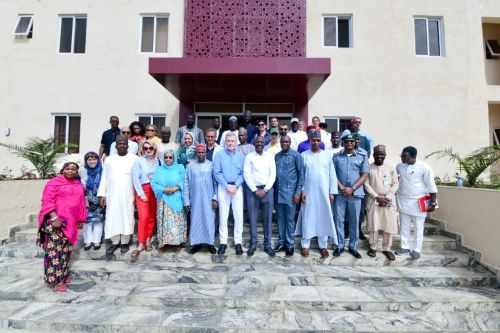
The European Union has reaffirmed its support for local nutrition production in Nigeria as part of efforts to combat child malnutrition and reduce dependence on imported therapeutic foods.
The commitment was reiterated during a visit by the EU Ambassador to Nigeria and ECOWAS, Gautier Mignot, to the NutriK production facility located within the Kano Free Trade Zone.
According to a statement issued by the EU delegation on Wednesday, the visit formed part of broader engagements focused on nutrition, health systems and sustainable livelihoods in northern Nigeria.
The delegation included representatives of EU member states as well as officials from UNICEF.
Speaking during the visit, Mignot emphasised the importance of ensuring that industrial investments translate into tangible humanitarian benefits for vulnerable populations.
He noted that the production of Ready-to-Use Therapeutic Food at the facility illustrates how private investment and development cooperation can help address pressing nutritional challenges.
“The products manufactured here are helping to support vulnerable children while demonstrating how investment and innovation as well as business-friendly conditions created by the Kano authorities contribute to human development and economic growth,” Mignot said.
The ambassador added that the visit was also aimed at strengthening collaboration among stakeholders working to improve nutrition outcomes in Nigeria.
“We came here to learn more about the progress being made, to engage with partners on the ground and to explore how collaboration between Kano, the European Union, UNICEF and the private sector can continue to deliver results,” he said.
The visit also spotlighted the activities of NutriK’s, a French-Nigerian nutrition company and subsidiary of the France-based Nutriset Group, which is working to expand the local sourcing of raw materials used in its products.
Although the company currently relies on imported groundnuts because of quality challenges within the local supply chain, it disclosed that investments are being made to strengthen domestic processing capacity and enable the use of locally sourced inputs in the near future.
Managing Director of NutriK’s, Abdoulkader Yonli, said increased local sourcing would lower production costs and create benefits across the agricultural value chain.
According to him, the initiative would support farmers, processors and manufacturers while improving sustainability within the sector.
Yonli also stressed the company’s commitment to both the treatment and prevention of malnutrition, noting that demand for Ready-to-Use Therapeutic Food in Nigeria continues to exceed current production levels.
Nigeria remains one of the countries most affected by child malnutrition.
According to UNICEF estimates, about two million children in the country are living with severe acute malnutrition, a life-threatening condition that requires urgent therapeutic feeding interventions.
Development partners say expanding local manufacturing capacity, improving agricultural standards and strengthening industrial ecosystems such as the Kano Free Trade Zone are critical to reducing reliance on imported nutrition products and achieving long-term nutrition security.
The EU said its continued support reflects a broader strategy aimed at linking humanitarian assistance with local production systems to ensure nutrition interventions remain sustainable and scalable.


After N2.4 Billion Government House Renovation, Taraba Earmarks Another N1 Billion For First Lady’s Office Amid Infrastructure Gaps

Abdulsalami Says Nigeria Could Have Been Better Off If Buhari and Idiagbon Stayed Longer

Has Sri Lanka recovered from its economic collapse? Three years after the crisis

Police arrest suspect for beheading 18-month-old baby in Ondo

Diezani Cleared as London Jury Delivers Verdict in High-Profile Corruption Case

UK court clears Diezani Alison-Madueke of all bribery charges

Passenger Dies During Benue Journey as Transport Company Searches for Family

 Investigation2 days ago
"If bandits kidnap my wife, I won’t pay ransom. I’ll remarry because they would have slept with her" – Nigerian man
- Politics2 days ago
Governor Okpebholo congratulates Edo Queens, reaffirms commitment to sports development in Edo State
- Investigation2 days ago
16-year-old family member of Boko Haram terrorist escapes and surrenders to troops in Borno
- Breaking3 days ago
âYou should have taken me instead. You are a jealous Godâ – Singer, Niniola continues to mourn her deceased husband, Michael Ndika
- Breaking3 days ago
‘Racket dressed up as reform’: Atiku tackles Tinubu over ₦4tn power sector debt plan
- World1 day ago
Horror as woman 'gang-raped by men with handmade weapons' who 'dragged her from home'
- National2 days ago
A’Court Upholds N197m Damages, Awards 20% Interest Against Nigerian Bottling Company Over Obanikoro’s Crash
- World3 days ago
Butler Missouri plane crash LIVE: All 11 passengers and pilot believed dead