World
Gwynne Shotwell, the 'glue' executing Musk's lofty SpaceX ambitions

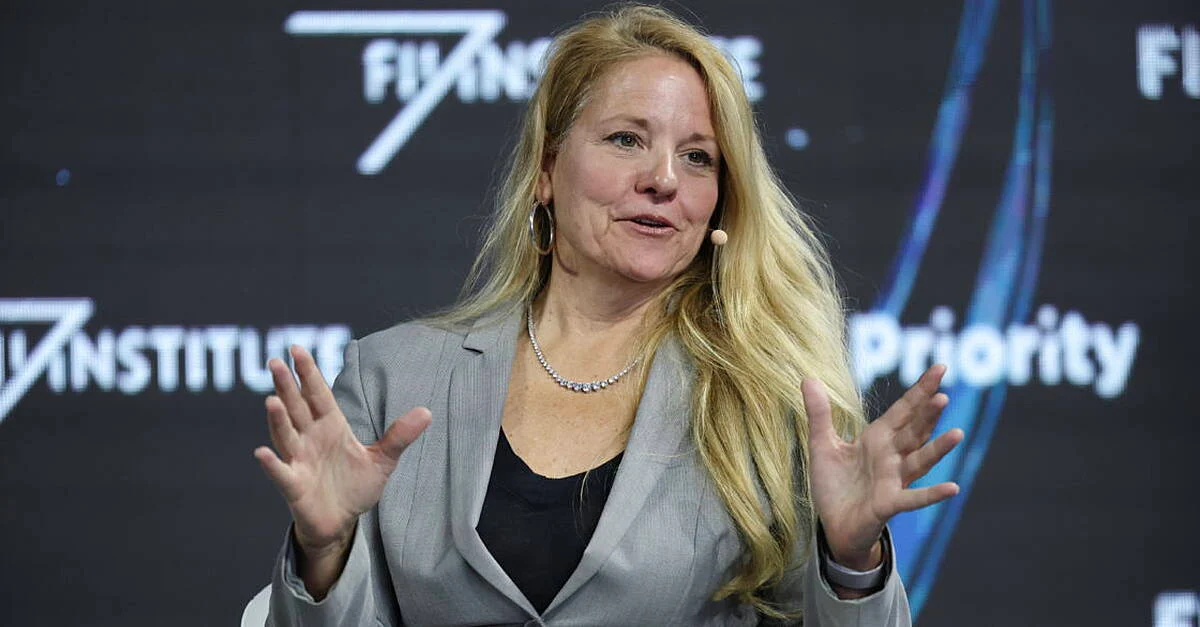
When SpaceX goes public on Friday with what is expected to be a record-setting IPO, it will cap two decades of founder and CEO Elon Musk‘s ambition to transform rocketry, satellite communications and humanity’s reach into space.
Each step of the way, there has been a guiding hand largely out of view: the company’s president, Gwynne Shotwell, who has spent 24 years focused on building and selling SpaceX through her engineering expertise and dealmaking instincts. Along the way, colleagues say Shotwell, 62, developed a more elusive skill: managing Musk himself.
She frames her job in simple terms, telling Time magazine earlier this year that she wants to be “helpful to Elon” and “add value”. But SpaceX veterans and industry observers see her as a key figure at the space industry leader, whose rise has made her one of the world’s most powerful female executives.
“She was a bridge between what Elon wanted and what could be done,” said Jim Cantrell, an early SpaceX executive who helped recruit Shotwell.
In that way, she fits a familiar corporate mold: the steady lieutenant translating an outsized founder’s vision into execution, in the tradition of figures like Tim Cook to Apple’s Steve Jobs or Sheryl Sandberg to Meta’s Mark Zuckerberg.
SpaceX’s lofty goals
“When Elon says something, you have to pause and not blurt out ‘Well, that’s impossible,’” Shotwell said at a 2018 TED conference.
“You zip it, you think about it and you find ways to get it done. I’ve always felt like my job was to take these ideas and turn them into company goals, to make them achievable.”
Colleagues said Shotwell built a reputation for exacting standards and making difficult personnel decisions, while still maintaining loyalty and keeping teams aligned. One former employee said she could deliver tough feedback “and it would taste like honey”.
That balancing act will be tested further post-IPO as SpaceX embarks on more difficult goals, ones that have investors willing to value the company at a lofty $1.75 trillion. In the run-up to the listing, Musk has posted relentlessly on his social media platform X about a sweeping new vision that extends beyond rockets into artificial intelligence and space-based data centers.
Shotwell’s focus has been more conventional: pitching Starlink at a telecom gathering in Barcelona, courting policymakers in India as the service seeks regulatory approval, and talking to Washington officials about the implications of AI’s growing energy demands.
SpaceX did not respond to requests for comment or for an interview with Shotwell.
‘The glue’
A mechanical engineer educated at Northwestern University, Shotwell began her career at Aerospace Corporation in California, integrating commercial technologies with government and military space programmes.
She joined SpaceX in 2002, the year it was founded, and quickly became its commercial engine. Her industry relationships opened doors with government agencies, contractors and early customers when Musk was still unknown in the space sector.
She secured launch contracts even before SpaceX reached orbit, helping build its credibility. The breakthrough came in 2008, when SpaceX won a $1.6 billion Nasa contract to resupply the International Space Station, which helped steady SpaceX after a string of Falcon 1 failures that left the company short of cash.
Musk responded by promoting her to president and chief operating officer. Her remuneration has grown with SpaceX’s successes. Last year her compensation rose to $85 million, with the bulk from stock awards, according to the IPO filing. By comparison, Boeing CEO Kelly Ortberg’s pay package was valued at $9.4 million in 2025, despite the aerospace giant’s revenue more than quadrupling SpaceX’s.
We all drank the champagne.
In 2010, SpaceX secured a deal with satellite operator Iridium that was, at the time, the largest space launch contract won by any commercial entity. Former founding engineer Tom Mueller recalled hearing the news at a remote test site: “We all drank the champagne.”
Often dressed in dark blazers and jeans, Shotwell projects an engineer’s understated confidence rather than the flashiness associated with C-suite executives, said former employees, one of whom described her as “the glue” holding the company together.
Ex-colleagues recalled her habit of walking into mission control or onto the factory floor to ask highly specific questions, from astronaut training simulations to manufacturing processes.
SpaceX’s next phase will hinge on Shotwell’s specialty: execution. Starlink, the satellite broadband network Shotwell helped commercialize, accounts for most of the company’s profit, and it is funding SpaceX’s hefty capital expenditures on artificial intelligence and speculative bets such as data centers in orbit and lunar cities.
Those ambitions, as well as its need to support Nasa’s Artemis program to return astronauts to the Moon, and expand Starlink globally, will test whether the operating discipline Shotwell brought to rockets can extend to a far broader enterprise.


Dangote Named Africa’s Most Admired Brand for 8th Consecutive Year

Chimamanda’s son: Lagos AG, Coroner kick against bid to halt inquest

Govt alone can’t fund education, says Uba Sani
Chimamanda’s son: Lagos AG, Coroner kick against bid to halt inquest

FCMB Collect – Smarter Digital Collections for Nigeria’s Growing Businesses

QUEENS PALM SUPPORT INITIATIVE DELIVERS HEALTHCARE, HOPE, AND EMPOWERMENT TO OVER 500 RESIDENTS IN AJEGUNLE THROUGH MAIDEN REACH 1000 INITIATIVE

LASTMA decries increasing cases of hit-and-run accident

 Breaking2 days ago
I slept with 50 men daily – 16-year-old Nigerian girl recounts how she was trafficked to Ghana by neighbour and forced into pr0stitution
 Breaking3 days ago
Woman shares flimsy reason that made her breakup with her boyfriend who was âperfectâ
- Breaking1 day ago
Innocent people are being sacrificed on the altar of power – Actress Ini Edo speaks on the heightened insecurity in Nigeria
- National7 hours ago
Exclusive: Inside Union Bank’s Boardroom Storm And Crumbling Bank, MD Yetunde Oni Acquires N1.9 Billion US Home Barely One year in Office
- Breaking2 days ago
Elon Musk could be the worldâs first trillionaire in weeks
- Business3 days ago
NNPC donates MRI machine to Kano hospital
- Breaking3 days ago
US removes 180 religions from its recognized faiths list
- News2 days ago
West Ham co-chair David Sullivan resigns