National
Gov. AbdulRazaq becomes forum of African regions’ president

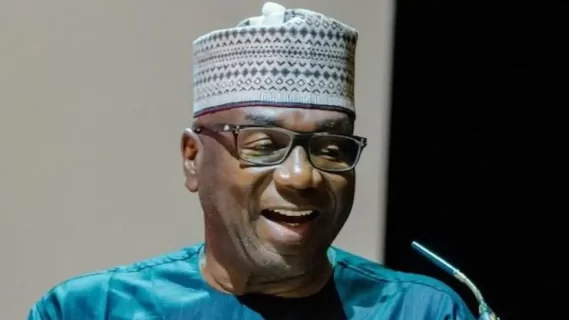
Kwara State Governor and Chairman of the Nigeria Governors’ Forum (NGF), AbdulRahman AbdulRazaq, has been elected as the President of the Forum of African Regions (FORAF).
Governor AbdulRazaq was elected alongside four regional vice presidents representing Central Africa, North Africa, East Africa, and Southern Africa, further strengthening the forum’s continental leadership structure.
The election occurred on Monday in Tangier, Morocco, during the United Cities and Local Governments (UCLG) World Congress, placing a key Nigerian leader at the forefront of African regional governance.
A statement issued by Deputy Chief Press Secretary, Government House, Ilorin, Mashood Agboola, confirmed the development on Wednesday.
According to the statement, the new leadership is expected to advance decentralisation, regional cooperation and socioeconomic development across African regions.
The statement reads, “The mandate of the Forum of Governors Regions/States of Africa is to accelerate socioeconomic development, deepen decentralisation and devolution, and position subnational governments as key drivers of continental integration and sustainable development.”
The statement added that AbdulRazaq will work alongside newly elected vice presidents: Central Africa – Mr. Ousmanou Oumarou (Association of Regions of Cameroon); North Africa – Ms. Mbarka Bouaida (Association of Regions of Morocco); East Africa – Mr. Peter Anyang’ Nyong’o (Kisumu County, Kenya); and Southern Africa – Mr. Panyaza Lesufi (Gauteng Province, South Africa).
“The body said it is poised for a renewed governance to amplify the voice of African regions and strengthen decentralised cooperation across the continent,” it added.
Reacting to his election during a session at the congress, AbdulRazaq stressed the importance of collaboration among African nations and subnational governments in achieving sustainable growth.
“It has often been observed that geography has constrained economic integration in parts of Africa.
“However, history has also shown that visionary leadership, strategic investment, and regional cooperation can overcome geographical barriers,” he said.
He noted that infrastructure and connectivity remain key tools for overcoming developmental challenges across the continent.
He said, “Around the world, nations have reduced the limitations imposed by geography through infrastructure, transport corridors, canals, and other forms of connectivity that link people, markets, and opportunities.”
AbdulRazaq added that Africa can achieve similar progress through cooperation and investment in connectivity.
He stated, “Africa has the capacity to do the same. By working together, investing in connectivity, and strengthening partnerships among our cities and regions, we can create sustainable linkages that support trade, innovation, environmental stewardship, and inclusive growth.”
He further urged African leaders to adopt a shared vision of integration and development.
“Tangier and Cape Town should not merely be seen as distant points on a map, but as anchors of a connected African future.
“This vision is achievable if we act collectively and embrace the spirit of cooperation that this Congress represents,” he said.
The FORAF leadership is expected to focus on strengthening ties among African regions and promoting policies that enhance sustainable development and economic integration across the continent.
See Complete Details,Videos Here..

BREAKING: Senate dumps electronic voting, adopts manual process on State Police bill

Nancy Isime Says She Keeps Financial Details Private in Relationships

Jose Mourinho names the best club in the World

Iranian negotiators resort to reading Art of the Deal to understand Donald Trump

Actress Nancy Isime reveals why she may never have children

âThis is how I lost everything, I’m so tiredâ â Business owner laments after being evicted by landlords twice

2020 World Cup: Messi speaks on playing for Argentina

 Investigation2 days ago
He said he wanted to sleep with me, but I told him I am a married woman – Lady in viral video being ass@ulted by a man in Abia speaks
- World1 day ago
Russia launches nuclear drill in UK's backyard as Kremlin 'advocates use of atomic bomb'
- Breaking2 days ago
He said he wanted to sleep with me, but I told him I am a married woman – Lady in viral video being ass@ulted by a man in Abia speaks
- Investigation20 hours ago
New photo of 10-year-old boy severely b@ttered by his guardian in Anambra
- Investigation2 days ago
Actress, Angela Okorie responds after facing backlash for burning outfit she wore to late colleague, Alexx Ekuboâs funeral
- Investigation2 days ago
âSeek help from usâ â NDLEA tells Nigerians battling Drug addiction
- Investigation2 days ago
"Please. It will look as if it’s my fault. His family doesnât like me" Young wife, 18, assaulted by husband begs for him not to be arrested and reveals she regrets marriage (videos)
- Investigation1 day ago
Those who called Jonathan clueless are now in Power â Pastor Ayo Oritsejafor