World
Native Americans remember victory at Little Bighorn with horse races and dancing

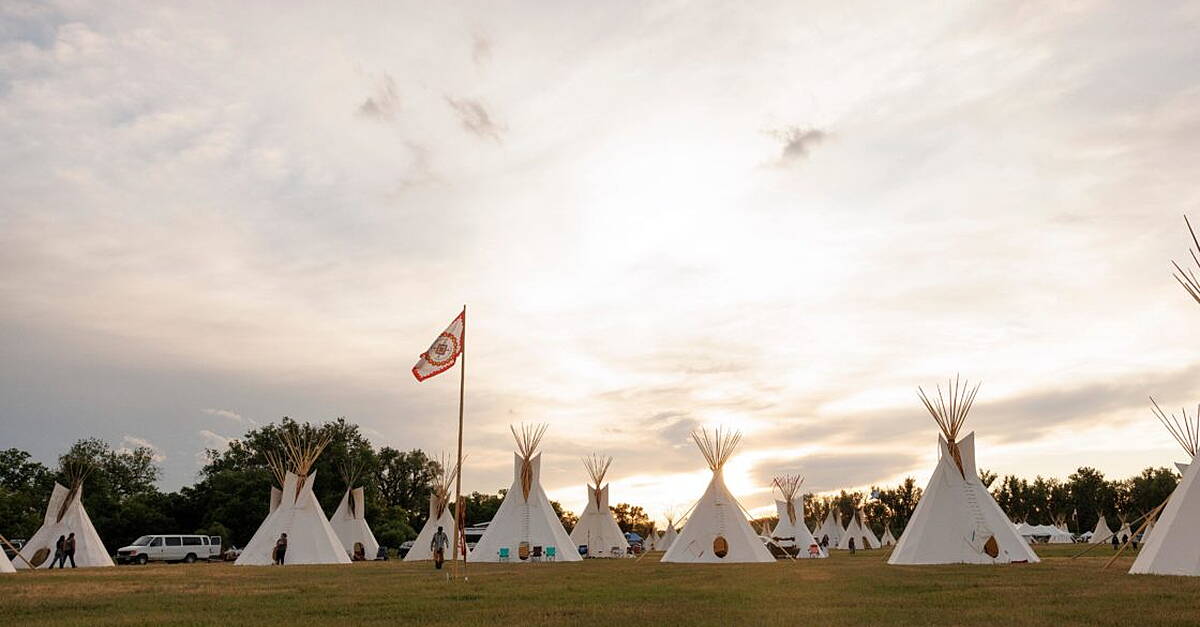
Thursday marks the 150th anniversary of the Battle of Greasy Grass, known to many as the Battle of Little Bighorn.
For Native American tribes, it is a time to commemorate one of the most famous and symbolically charged events in American history.
Allied tribes came together on that hot day in June 1876 near the banks of the Little Bighorn River in present-day Montana, to hand the US army a rare defeat as they fought to preserve their way of life in the face of westward expansion.
Lt Col George Armstrong Custer and more than 200 of his troops were killed.
The quiet wind-swept prairie of rolling hills and grassy ridges is coming alive again this week as the battle will be re-enacted.
Riders from the Cheyenne River Reservation in South Dakota and elsewhere are travelling hundreds of miles to the Crow Agency area in Montana to mark the occasion.
A sunrise pipe ceremony was planned on Thursday and families are being encouraged to share their oral histories.
At the Standing Rock Sioux Reservation in North Dakota, horse races and traditional songs and dances are planned.
Gathering at the battlefield area in Montana means “we’re still here”, said William Good Bird, a traditional singer from the Spirit Lake Dakota Nation in North Dakota, who woke up the camp where hundreds of people were gathered from numerous tribes with a song and drumming.
“Today I am celebrating the victory of our people, celebrating my life as a human being and my spot on this earth,” he said.

The discovery of gold in the Black Hills in what is now South Dakota by a Custer expedition just years earlier spurred a military campaign against Great Plains tribes that aimed to push them on to reservations, or what were known then as agencies, said historian Dakota Goodhouse.
There were bigger, longer battles and other Native victories between March 1876 and June 1877, but Mr Goodhouse said only the Battle of Greasy Grass, named by Native Americans for the slick grass along the river, gained national recognition because the commanding officer was killed.
At the time, the Lakota were one of the largest and most powerful tribal nations, with strong leaders in Sitting Bull and warriors like Crazy Horse.
Native warriors quickly overwhelmed Custer’s men as the US forces were spread miles apart over the hilly area.
News of Custer’s defeat stunned Americans, who were celebrating their country’s centennial.
The federal government accelerated efforts to subdue resistance, bringing years of hardship and upheaval for Native Americans.

Crazy Horse was killed in 1877, and starvation brought about the surrender of others in 1881.
Sitting Bull did not surrender as history books tell it, said Jon Eagle Sr, a former Standing Rock tribal historic preservation officer from the Hunkpapa band of the Oceti Sakowin.
“Our people say that he looked at his son Crow Foot and said, ‘My boy, if you live, you can never be a man in this world because you can never own a gun or a pony’,” Mr Eagle said.
“I think that he understood that things were going to change for his children, his grandchildren and those not yet born.”
Sitting Bull was killed with about a dozen other people when Indian agency police attempted to arrest him in 1890.
Biographer T. J. Stiles described Custer as one of the most distinguished combat officers in the army at the end of the Civil War.

But he said the “Boy General” with his long hair and flamboyant battlefield wardrobe often bristled at the chain of command and did not take to the management side of leadership.
“Custer was someone who whenever he got into the frying pan, he immediately started looking for the fire,” he said.
In 1873, Custer was assigned to lead the Seventh Cavalry at Fort Abraham Lincoln, near present-day Bismarck, North Dakota.
From there, he led military expeditions, including one that confirmed the gold in the Black Hills, a sacred place to the Lakota.
Seen in the US as a tragic hero and remembered for his military feats, Custer could also be considered progressive even as the federal government sought to displace Native Americans and stamp out their languages through boarding schools, Mr Goodhouse said.
He learned to speak Arikara and Lakota and became fluent in Plains Indian sign language.
Still, as many Americans are celebrating the 250 years since the signing of the Declaration of Independence, for many Native Americans it is not a reason to rejoice.
“It’s just a mark to me of 250 years of injustice to the Native people,” Crow tribal member and re-enactment coordinator Jim Real Bird said.
Mr Eagle agreed: “That’s one of the things that we always tell our people when we come together, is they failed at their attempts to rub us out. We’re still here as ancient people deeply connected to our environment.”
For more than 30 years, re-enactments featuring hundreds of warriors have marked the anniversary near the battlefield.
The choreography is based on Northern Cheyenne oral history and highlights horsemanship and language preservation.
“All the other things that are Native American don’t mean nothing if you don’t know your language,” said Real Bird.
Thousands of people are expected to camp out over the course of a few days. They will hold prayer gatherings, relay races, horse rides and parades.
The National Park Service also is holding anniversary events at the battlefield national monument.
At Standing Rock, Eagle said there are races to honour the horse nation that carried their ancestors to victory 150 years ago.
The commemoration also includes oskate, a traditional celebration of oral histories, victory songs and tribal dancing.
“It’s just an opportunity for us to share with the generations coming behind us that they’re descendants of a very powerful nation and ancient people that are still here despite everything that was done to us,” said Mr Eagle, whose great-great-grandfather, Sunka, fought that day.
His father, Charging Thunder, also was there.
Mr Goodhouse recalled stories his grandfather would tell him of their ancestors who were in the Hunkpapa camp when troops attacked.
His grandfather’s great-grandfather, Striped Face, was shot but mounted his horse and joined the fight.
“There’s this kind of energy there that still lives on because we have this direct narrative that was handed down,” he said.


âWe’re rewarding people for doing dumb things onlineâ â Rapper Ycee speaks on âOlodo uprisingâ and Peller culture

Turaki faction of PDP hails Gov Nwifuru for calling out Wike

T.J. Miller arrested for allegedly calling in fake bomb threat

Many trapped as three-storey building collapses in Lagos

Data Protection Deficiencies Threaten CBN’s Local Data Hosting Mandate for Financial Sector

Court fixes July 2 for actor Emeka Ikeâs N10bn suit against Wikeâs aide Lere Olayinka

'I don't know, mayor of a town?' Trump's first remarks on UK PM frontrunner Andy Burnham

 Society17 hours ago
I am proud to be a Virgin and I will remain a virgin till I die because I want to be a good example to my Children-39-Year-Old Woman
- Society3 hours ago
Lady Mob-Attacked in Market, Stripped Totally Nak£d Over Accusation of Theft of GH¢40,000
- Investigation3 days ago
"Please. It will look as if it’s my fault. His family doesnât like me" Young wife, 18, assaulted by husband begs for him not to be arrested and reveals she regrets marriage (videos)
- Breaking3 days ago
He said he wanted to sleep with me, but I told him I am a married woman – Lady in viral video being ass@ulted by a man in Abia speaks
- World2 days ago
Russia launches nuclear drill in UK's backyard as Kremlin 'advocates use of atomic bomb'
- Investigation2 days ago
New photo of 10-year-old boy severely b@ttered by his guardian in Anambra
- Investigation3 days ago
âSeek help from usâ â NDLEA tells Nigerians battling Drug addiction
- Investigation2 days ago
Those who called Jonathan clueless are now in Power â Pastor Ayo Oritsejafor