Breaking
New research identifies pathways to scale maternal nutrition support for 7.8million pregnant women in Nigeria

A new research report has identified critical financing, affordability and supply-chain challenges that must be addressed to successfully scale up Multiple Micronutrient Supplementation (MMS) for an estimated 7.8 million pregnant women in Nigeria annually.
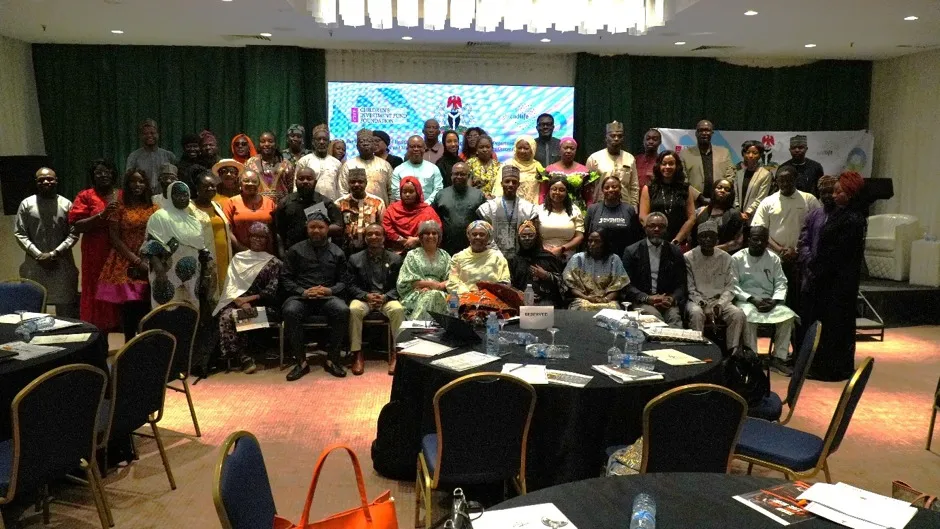
The findings were unveiled in Abuja during a stakeholders’ meeting convened by the Federal Ministry of Health and Social Welfare, Sight and Life, and the Development Research and Projects Centre (dRPC).
The study, commissioned by Sight and Life with support from the Children’s Investment Fund Foundation (CIFF) and conducted by dRPC, examined the landscape for introducing and expanding MMS as part of efforts to improve maternal nutrition outcomes across the country.
Presenting the findings, Lead Researcher, Dr. Stanley Ukpai, said Nigeria’s planned scale-up of MMS is being hindered by fragmented financing mechanisms, affordability challenges for women and inadequate supply levels.
According to him, while the government has demonstrated commitment to improving maternal nutrition, policy ambition alone will not be sufficient unless financing, access and supply constraints are addressed simultaneously.
Ukpai noted that Nigeria records approximately 7.8 million pregnancies every year and continues to grapple with a high burden of anaemia among pregnant women.
He explained that MMS provides a broader range of essential nutrients than conventional iron and folic acid supplements and enjoys strong acceptance among women when it is available, affordable and properly explained.
However, he said the study found that long-term nationwide scale-up would require stronger public financing, targeted support for low-income women and a more reliable supply chain.
“Financing for MMS remains inconsistent and heavily dependent on donor support. Women are willing to use MMS, but many cannot afford it consistently, while current supply levels remain significantly below what is required for national coverage,” he said.
The study recommends institutionalising financing for MMS, protecting affordability through public subsidies and fair-pricing measures, and strengthening long-term supply through improved procurement systems and support for local manufacturing.
Speaking at the event, Executive Director of Nutrition at CIFF, Anna Hakobyan, said the research provides important evidence and practical insights to guide Nigeria’s efforts to integrate micronutrient supplementation into broader maternal and child nutrition strategies.
“The findings offer valuable lessons that can support sustainable approaches to improving maternal and child health outcomes across the country,” she said.
In her presentation, Country Programme Manager for Sight and Life, Mrs. Zainab Abubakar, said the research was designed to support the Federal Ministry of Health and Social Welfare and its partners in scaling up maternal nutrition commodities such as MMS.
She said the study generated evidence on how existing health financing systems can better support the introduction and expansion of MMS programmes nationwide.
According to her, limited funding, weak inclusion of maternal nutrition services in health insurance schemes and heavy reliance on out-of-pocket spending continue to limit equitable access to maternal nutrition interventions.
“The assessment identified practical pathways for sustainable MMS financing, highlighted implementation bottlenecks and produced recommendations to help policymakers and development partners align financing decisions with national health priorities and scale-up goals,” she said.
Also speaking, the Special Adviser to the President on Health, Dr. Salma Ibrahim Anas, described maternal nutrition as a critical component of Nigeria’s health and development agenda.
She noted that maternal nutrition directly influences the survival, health and future potential of both mothers and children.
According to Anas, scientific evidence supporting the effectiveness of MMS is already well established, adding that the focus should now shift from proving its benefits to ensuring effective and equitable implementation at scale.
Earlier, the Director of Nutrition at the Federal Ministry of Health and Social Welfare, Mrs. Adegbite Olufunmilola, said the Federal Government has taken deliberate steps to institutionalise MMS within the nation’s healthcare system.
She cited the integration of MMS into national maternal nutrition and antenatal care guidelines as part of efforts to strengthen maternal health services.
Olufunmilola said ongoing health sector reforms and renewal initiatives present an opportunity to reinforce the policy, financing and implementation structures required for successful scale-up.
She identified public budget allocations, health insurance mechanisms and other domestic financing options as potential sources of sustainable funding for MMS programmes.
She also highlighted local manufacturing as a strategic opportunity to strengthen supply security and ensure long-term sustainability.
While acknowledging the Federal Government’s commitment to improving nutrition outcomes, she stressed the need for stronger implementation efforts at both national and subnational levels.
She called for deeper collaboration among government agencies, development partners and private sector stakeholders to ensure that proven maternal nutrition interventions such as MMS reach women across the country.
The event featured panel discussions on financing and policy frameworks, demand equity and consumer behaviour, as well as supply-chain dynamics and market structures. Participants identified practical actions that federal and state governments can take to accelerate the adoption and nationwide scale-up of MMS for pregnant women in Nigeria.


Hajj: Kaduna commences screening of luggage

Ukraine drone strike kills one, hits oil facility in Russia

Group honours Defence Minister, DSS DG, others

Flood: Jigawa to deploy amphibious excavators to dredge Hadejia River

Two PWDs in NDLEA net over illicit drug trade in Abia, Rivers

SDP, Obidients seek electoral reforms before 2027 polls

Gunmen abduct Ondo traditional ruler

 World2 days ago
Horror as girl, 12, 'gang raped by 5 classmates' at birthday party
- World2 days ago
Horror as bodies of 29 unborn babies discovered buried at a family home
- Breaking3 days ago
Two brothers beat each other to de@th after satanism accusation sparks de@dly fight
 News3 days ago
Benue Youths Rescue Kidnapped Victims, Detain Suspects in Community Operation
- World2 days ago
Escalation in attacks between U.S. and Iran
- Breaking1 day ago
Fight breaks out between student, hostel staff and Rev. Sister at Coal City University
- Business21 hours ago
Wema Bank’s 5 for 5 Rewards Delivers ₦17.96 Million to 273 Customers in One Month
- News3 days ago
Serena Williams’ comeback ends after Mboko injury withdrawal