Breaking
Nuhu Ribadu: The man they cannot write off, by Awaal Gata

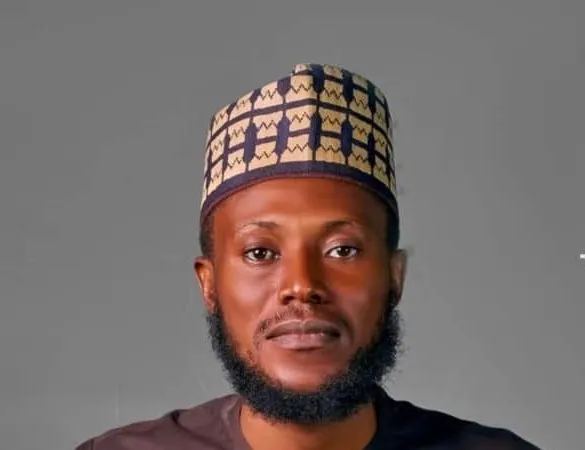
In his two-part Daily Trust series, Northern Lessons from The Fall of Nuhu Ribadu, the columnist Suleiman A. Suleiman could not have been more wrong. The central error of the essay is that it mistakes an appointment for a burial and misunderstands the currency of power itself. Politics, at its highest level, is not sustained by noise, ethnic panic, or newspaper prophecy. It rests on two rare assets: shared trust and proven competence. Mallam Nuhu Ribadu possesses both. This is why every attempt to read the appointment of a Special Adviser on Homeland Security as a referendum on him collapses under the weight of facts.
Daily Trust, sadly, has increasingly made itself a convenient hub for the practice of character assassination against Ribadu, and one wonders why. This pattern defines much of its coverage of the man. Whenever his name appears, the instinct too often is to search for scandal, inflate disagreement, or stretch political conjecture beyond factual reporting. In recent months, the paper has hosted or amplified a succession of Ribadu-centred narratives: the supposed “fall” of Ribadu, the “poetic irony” of his fall, the alleged confusion between ONSA and the new Homeland Security office, the El-Rufai-Ribadu quarrel, and the sensational reporting around allegations of poison procurement and phone-tapping. A newspaper has the right to scrutinise public officers. It does not have the right to convert scrutiny into obsession.
The first falsehood in Suleiman’s argument is the assumption that proximity to the President is exhausted by bureaucratic exclusivity. President Bola Ahmed Tinubu’s trust in Ribadu did not begin in 2023. It goes back to the politics of risk, when Ribadu, hounded by the Yar’Adua establishment and driven into a difficult political wilderness, was embraced by the Tinubu-led Action Congress of Nigeria and made its presidential candidate in 2011. That was no casual gesture. It was a political investment in a man whose integrity and courage had already acquired national meaning. Suleiman overestimates the fragility of that trust because he underestimates the long memory of politics.
The Homeland Security appointment is also no proof of displacement. Serious states do not treat complex security emergencies as a one-man theatre. Nigeria inherited a multilayered breakdown: terrorism in the North-East, banditry in the North-West, farmer-herder conflicts, kidnapping syndicates, separatist violence, illegal mining networks, and transnational arms flows. Adding a specialised adviser to strengthen internal security coordination does not abolish the National Security Adviser. It widens the architecture. The real question is whether Nigeria’s security machinery is being adapted to realities too complex for inherited structures.
On that score, Ribadu has not been a ceremonial occupant of office. Under his watch, security agencies have intensified both kinetic and non-kinetic operations. Thousands of hostages have been freed. Bandit leaders in Kaduna, Zamfara and Katsina have been eliminated. Ansaru elements in Kaduna have been arrested. Large groups of abducted citizens have been recovered from terrorist enclaves. These gains do not mean Nigeria is secure. No honest person would say that. They show that the man whom Suleiman declares fallen has remained active in the arena.
The clearest evidence of Ribadu’s continuing value is the recent Nigeria–United States security situation. What could have become a brutal diplomatic confrontation was gradually turned into collaboration. There was massive pressure in Washington to frame Nigeria as a country incapable of protecting Christians and to push punitive responses against Abuja. The situation could easily have hardened into hostility. Ribadu instead led Nigeria’s engagements with Congress, the White House, the State Department, the National Security Council and the Pentagon. By January 2026, he again led the Nigerian side at the first session of the U.S.–Nigeria Joint Working Group. Soon after, the United States pledged to deliver outstanding military equipment, including drones, helicopters, spare parts and support systems. That is not the profile of a discarded official. It is the work of a trusted national security manager with international networks and diplomatic credibility.
Suleiman’s second error is his attempt to turn the northern political establishment against Ribadu by singling him out as the cause of Mallam Nasir el-Rufai’s travails. This is a hatchet job. El-Rufai is not a helpless victim of Ribadu. He is, largely, a victim of his own words, his own overreach, and his own taste for incendiary politics. When a former governor publicly claims knowledge of phone-tapping involving the National Security Adviser, that is no Ribadu conspiracy. It is a national security matter. When allegations concerning public funds, terrorism financing, wiretapping, and other investigations arise around a former governor, it is intellectually lazy to reduce them to one man’s vendetta.
Suleiman’s larger thesis is even more dangerous. He wants Ribadu to play divisive regional politics. He mourns the refusal of Ribadu to become a regional warlord in Abuja. This is precisely where Ribadu differs from the caricature being drawn of him. His public life has always rested on pan-Nigerian credentials. As EFCC chairman, he did not build a northern agency or a southern agency. He built a national anti-corruption institution. He confronted power across regions. He offended thieves in every tongue. He acquired enemies not because he failed to understand Nigeria, but because he understood that public office loses meaning once it becomes ethnic insurance.
To say Ribadu “failed to grasp the dynamics of federal politics under Tinubu” is therefore not analysis. It is projection. It reveals more about the author’s narrow reading of power than about Ribadu’s place in government. The politics Suleiman recommends is the old politics of regional hostage-taking. Every appointment is read as ethnic conquest, every disagreement as sectional humiliation, and every administrative change as tribal warfare. That politics has produced nothing but bitterness, suspicion and elite blackmail.
Ribadu’s loyalty to President Tinubu has been visible and costly. He has defended the administration when silence would have been easier. His “Tinubu Gains” remarks attracted attacks, but they also showed an appointee willing to take political bullets for the President and the Presidency. He has been one of the most visible northern hands in this government, representing it at home and abroad on some of its most sensitive security questions. Remove Ribadu from the equation and the claim of northern visibility in the administration becomes even weaker.
His integrity is not newly manufactured. As pioneer chairman of the EFCC between 2003 and 2007, his tenure gave Nigeria’s anti-corruption campaign institutional visibility, high-profile prosecutions and international recognition. One may criticise aspects of that era, but one cannot erase the fact that Ribadu entered national memory as a man willing to confront entrenched interests at real personal cost.
The obsession with him by certain quarters is itself a sign of relevance. Irrelevant men do not attract this volume of coordinated attention. The Homeland Security appointment may add a new layer to Nigeria’s security structure, but it does not remove Ribadu from the centre of the administration’s security thinking. He remains trusted, experienced, networked, battle-tested, and very much in the arena.
The lesson from Ribadu’s story is different from the one Suleiman offers. Northern politicians do not need to retreat into sectional trenches. In a country as fragile as Nigeria, the most valuable public servants are those who can cross camps, build trust, retain competence, and turn confrontation into collaboration. On that test, Ribadu has not fallen. His critics have only revealed how little they understand the grammar of power.
Awaal Gata is a media practitioner and public affairs analyst, and writes from Abuja.


Kano police arrest 187 suspected thugs, drug dealers, recover 270 weapons

Footballer Christian Eriksen hospitalised after collapsing in friendly against Ukraine (Video)

Court adjourns re-arraignment of National Assembly officials in N337m fraud case

H-1B $100,000 fee struck down as illegal: What happens next?

Lagos 2027: APC unveils Damilola Sonayon-James as Hamzat’s running mate

Liverpool cult hero Origi retires from football at 31

Tinubu swears-in minister of Power, Foreign Affairs

 National9 hours ago
Exclusive: Inside Union Bank’s Boardroom Storm And Crumbling Bank, MD Yetunde Oni Acquires N1.9 Billion US Home Barely One year in Office
 Breaking3 days ago
I slept with 50 men daily – 16-year-old Nigerian girl recounts how she was trafficked to Ghana by neighbour and forced into pr0stitution
- Breaking3 days ago
Woman shares flimsy reason that made her breakup with her boyfriend who was âperfectâ
- Breaking2 days ago
Innocent people are being sacrificed on the altar of power – Actress Ini Edo speaks on the heightened insecurity in Nigeria
- Breaking2 days ago
Elon Musk could be the worldâs first trillionaire in weeks
- World13 hours ago
Russia burning as Ukraine launches massive attack with 'more than 50 explosions'
- Breaking3 days ago
US removes 180 religions from its recognized faiths list
- News2 days ago
West Ham co-chair David Sullivan resigns