News
OOU don seeks preventive health education to reduce medical costs

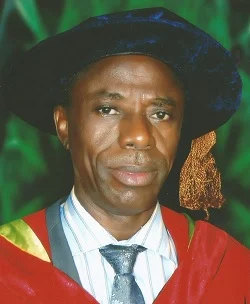
A Professor of Health Education at Olabisi Onabanjo University, Prof. Olufemi Kalesanwo, has called for a paradigm shift in Nigeria’s healthcare system, urging policymakers and citizens to prioritise preventive health education over medical treatment.
Kalesanwo made the call on Wednesday while delivering the university’s inaugural lecture titled “Health Education Knowledge and Practice: Pathways to a Healthy Lifestyle,” at the OGD Lecture Theatre.
The lecture, regarded as a landmark event, was the inaugural lecture delivered by the Health Education Unit of the Department of Human Kinetics and Health Education, Faculty of Education.
The professor, who is also the first alumnus of the department to attain the rank of professor, used the occasion to reflect on his academic journey and highlight what he described as critical gaps in Nigeria’s public health system.
Speaking during the lecture, Kalesanwo lamented that despite significant advancements in medical science, preventable diseases continue to pose serious health challenges due to inadequate health literacy among citizens.
According to him, health education remains the most effective strategy for preventing diseases and promoting healthy living.
“Medical care treats diseases, but health education prevents them,” he said.
The don stressed the need for governments at all levels to provide the necessary infrastructure and facilities that would enable citizens to adopt healthy lifestyles.
“Our government should make facilities available and affordable for people to use. For instance, many of our schools do not have access to water, yet we are talking about hygiene. How can they maintain proper hygiene without water?” he asked.
He explained that genuine health education goes beyond acquiring knowledge and requires practical application.
“If you desire a healthy lifestyle, you must become health educated. Health education is a combination of knowledge and practice. If you are knowledgeable but do not practise what you know, you are only health-informed. Everyone of us should aspire to be health educated,” he added.
Speaking with journalists after the lecture, Kalesanwo said the choice of the topic was informed by the need to create awareness and reduce the burden of healthcare costs on Nigerians.
“As health educators, our philosophy is anchored on the saying that prevention is better than cure. We do not want people spending huge amounts on healthcare expenses that could have been avoided. The rationale behind this lecture is to create awareness and encourage people to take preventive actions,” he said.
The professor also expressed concern over the shortage of health education professionals in the country, attributing the situation partly to the migration of trained personnel abroad.
“There are enormous opportunities for students studying Health Education. One of the challenges we face is that many graduates leave the profession shortly after graduation. We train them here, but developed countries recognise and value their expertise, so they attract them with better opportunities,” he stated.
He urged students in the discipline to pursue excellence and distinguish themselves professionally.
“Once they distinguish themselves, they will not need to search for jobs. Opportunities will come looking for them. I am a living example of that,” Kalesanwo said.
He reiterated the importance of strengthening health education as a tool for disease prevention and national development, noting that a healthy population remains critical to achieving sustainable growth.







Funke Akindele, Oby Ezekwesili, Ini Edo others attend Alex Ekubo’s service of songs

US launches more air strikes against Iran after Trump threats

Florida man blames wrongful arrest on "error-prone" AI facial recognition

Adeleke escapes harm as rally stage collapses in Ijebu-Jesa

Bill Gates faces hours of questioning over Jeffrey Epstein ties

‘He’s fed up’ – Petit names Chelsea player who wants to leave as Alonso arrives

Desperate search in California for missing girl, swept away by rip currents

 National3 days ago
Exclusive: Inside Union Bank’s Boardroom Storm And Crumbling Bank, MD Yetunde Oni Acquires N1.9 Billion US Home Barely One year in Office
- World3 days ago
Russia burning as Ukraine launches massive attack with 'more than 50 explosions'
- World2 days ago
Horror as woman gang raped in field after being knocked unconscious
- World2 days ago
Pope Leo denounces what he calls "scourge" of sexual abuse by Catholic clergy
- Breaking2 days ago
"Before HIV vs living with HIV" – Man writes as he shares his photos before and after HIV diagnosis
- Breaking3 days ago
35-year-old woman who has been divorced twice responds to those telling her not to remarry
- Business3 days ago
Reps recover N521m VAT from CBN
- News3 days ago
Shettima for Ekiti project inauguration Tuesday