National
Reps bar first-term members from occupying Principal officers positions

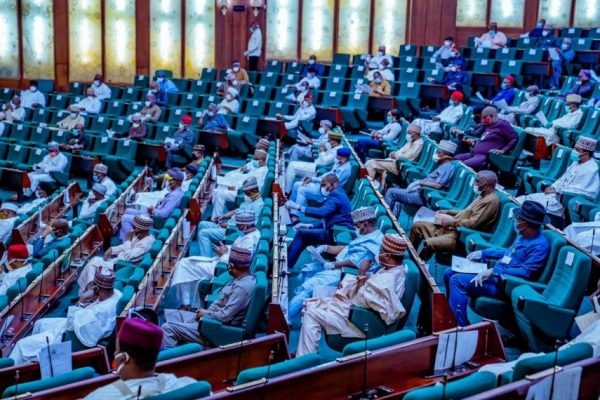
The House of Representatives on Wednesday adopted a formal interpretation of its Standing Orders defining “cognate legislative experience” as the completion of at least one full four-year term in the National Assembly, a move that ruled out first-term lawmakers from occupying principal offices.
The resolution was passed sequel to the adoption of a motion sponsored by Hon. Babajimi Benson, titled “Need for a precise definition of Order 7, Rule 15 of the Standing Orders of the House of Representatives.
Leading the debate on the motion, Hon. Benson recalled that the House Rules stipulate that only members with cognate legislative experience are eligible for appointment as principal officers but noted that the term had remained undefined.
According to him, “the House is aware that global parliamentary best practices rule out first term-parliamentarians from holding Principal Offices and reserve Principal Offices for experienced legislators to promote institutional memory, deepen understanding of legislative processes, and enhance competence in constitutional interpretation and intergovernmental relations.
“The House is also aware that the 10th Senate has recently specifically defined ‘cognate legislative experience’ to mean ‘Senators who have completed at least one full four-year term’ adding that those with
multiple previous terms must have served in the immediate Past Assembly.
“The House is cognizant of the need to prioritize institutional memory, deepen parliamentary stability and continuity, legislative experience, minimise avoidable turbulence and promote matured representation in the comity of international parliamentary associations,” he noted.
Following ithe adoption of the motion, the House resolved that cognate legislative experience, as contemplated under Order 7, Rule 15 of its Standing Orders, shall mean members who have completed at least one full term in the House of Representatives.
The lawmakers further declared that no alternative interpretation of the term exists beyond the definition adopted by the Chamber.
Shortly after the resolution was passed, member representing Abua/Odual and Ahoada East Federal Constituency of Rivers State, Hon. Solomon Bob, raised concerns that the motion could inadvertently limit the Speaker’s powers to interpret the House Rules.
“This motion is not necessary. We are, in fact, restricting your powers to interpret our Rules,” Hon. Bob argued.
Responding, Speaker Abbas Tajudeen who presided over he session, acknowledged the concern but maintained that the House had the authority to collectively determine the meaning of its Rules.
“I understand, but I cede that power to the House,” he said.
Full Details,Videos Here...

Collapsed bridge disrupts movement, economic activities in Taraba communities

The 341% Lesson: Why it’s time to permanently believe in ‘Made-in-Nigeria’, by Perpetual Oyibo

Human Rights Watch accuses Rwandan soldiers, M23 fighters of killing, torturing captured civilians in DR Congo

Manhunt launched as Nigerian man escapes from prison van in London
Manhunt launched as Nigerian man escapes from prison van in London

“I pray she’s my wife”: Sneako shares his thoughts on Kai Trump as viral video grabs internet attention

L.A. Rams’ Alaric Jackson arrested for felony domestic v!olence

 National2 days ago
Exclusive: Inside Union Bank’s Boardroom Storm And Crumbling Bank, MD Yetunde Oni Acquires N1.9 Billion US Home Barely One year in Office
- World2 days ago
Russia burning as Ukraine launches massive attack with 'more than 50 explosions'
- World2 days ago
Horror as woman gang raped in field after being knocked unconscious
- Breaking3 days ago
I was forced to sleep with 20 men daily – 18-year-old Benue girl recounts escape from s3x traffickers in Mali
- Breaking2 days ago
"Before HIV vs living with HIV" – Man writes as he shares his photos before and after HIV diagnosis
- World2 days ago
Pope Leo denounces what he calls "scourge" of sexual abuse by Catholic clergy
- Breaking2 days ago
35-year-old woman who has been divorced twice responds to those telling her not to remarry
- Breaking3 days ago
Netizen claims newly wedded woman declared missing in Abuja left her matrimonial home after discovering her husband has two children with different women