Society
‘Seafarers vital to Nigeria’s economic growth’

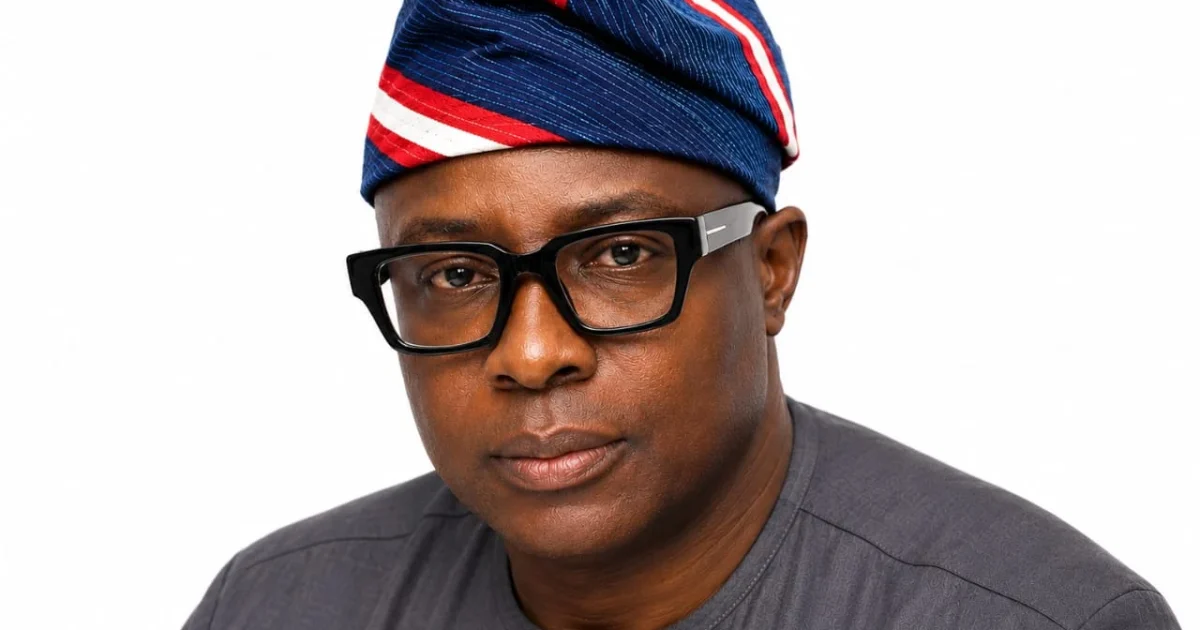
Former Nigerian Chapter President of the African Shipowners Association, Captain Ladi Olubowale, has described Nigerian seafarers as more than just participants in the maritime industry, stressing that they are strategic national assets whose skills and expertise are critical to economic growth, international trade, energy security, national development, and the achievement of Nigeria’s maritime aspirations.
Olubowale made this known in a document obtained by The PidomNigeria over the weekend ahead of the 2026 Day of the Seafarer, scheduled for 25 June and themed, “Carrying World Trade. Carrying the Risks.”
Every year on 25 June, the global maritime community comes together to celebrate the Day of the Seafarer, an initiative of the International Maritime Organisation dedicated to recognising the extraordinary contribution of seafarers to global trade, economic development, and the functioning of modern society.
Speaking further, Olubowale explained that this year’s theme is both timely and profound, stressing that it acknowledges a reality that is often overlooked: “while seafarers are responsible for moving the world’s trade, they also bear enormous risks and sacrifices in the process. They endure long periods away from their families, physical and mental strain, operational hazards, security threats, uncertainty, fatigue, and the immense responsibility of ensuring that global supply chains remain uninterrupted.”
“These men and women are not merely workers within the maritime sector; they are strategic national assets whose expertise contributes directly to economic growth, international trade, energy security, national development, and the realisation of Nigeria’s maritime ambitions.”
According to him, behind every vessel that arrives safely at port, every cargo delivered across oceans, and every supply chain sustained during times of global uncertainty, there are seafarers whose dedication makes it possible.
Olubowale lamented that, despite their indispensable role, seafarers often remain among the least visible contributors to economic development.
He emphasised that the global disruptions experienced in recent years demonstrated clearly that seafarers are essential workers, adding that while nations closed borders and industries slowed, seafarers continued to work under difficult circumstances to ensure the uninterrupted movement of goods across the world.
Olubowale, who is the United Kingdom Ambassador of the International Seafarers’ Welfare and Assistance Network, maintained that as Africa’s largest economy and one of the continent’s most strategically positioned maritime nations, Nigeria’s maritime future depends significantly on the quality, competence, and sustainability of its maritime workforce.
He noted that at the centre of that workforce are Nigerian seafarers, adding that no maritime nation can be built without seafarers.
Olubowale, who is also the Group Managing Director/Chief Executive Officer of Seamate Maritime Integrated Services Limited, pointed out that throughout history, the world’s leading maritime nations have shared a common characteristic: “they invested deliberately and consistently in maritime human capital. The maritime success of countries such as Norway, Singapore, Greece, Denmark, Japan, South Korea, and the Netherlands was not built solely on infrastructure, ports, ships, or regulations. It was built on the strength of their maritime professionals.
“No maritime nation can build a strong maritime domain without strong seafarers. Ships alone do not create maritime nations, ports alone do not create maritime nations, policies alone do not create maritime nations.”
He mentioned that the long-term success of Nigeria’s maritime sector and blue economy will ultimately depend on its ability to develop, empower, retain, and continuously support indigenous maritime professionals capable of competing on a global scale.
Olubowale stated that for Nigeria to become a leading maritime nation in Africa, local capacity development must move from aspiration to action.
He reiterated that the future of the nation’s shipping industry, port system, offshore sector, coastal trade, marine services, and blue economy depends on the strength of its maritime workforce.
“As Nigeria advances its Blue Economy agenda, it is important to recognise that the success of the Blue Economy will not be determined solely by investments in infrastructure, marine resources, ports, or shipping assets. Its success will ultimately be determined by the availability of skilled maritime professionals capable of creating value across shipping, fisheries, marine logistics, offshore energy, coastal tourism, marine technology, ocean governance, and maritime security,” Olubowale stated.


Update: 10 rescued from Lagos building collapse

CGC tenure extension crucial for reform consolidation — Group

In Pictures: Twin earthquakes rock Venezuela

NNPP open to alliance with other parties in 2027 — Kano chairman

Bayer proposes $7.2 billion settlement to resolve weedkiller cases

Rivers: Fubara visits site of collapsed building [PHOTO]

Some ‘prophecies’ could signal mental health conditions – Doctor warns

 Society12 hours ago
I am proud to be a Virgin and I will remain a virgin till I die because I want to be a good example to my Children-39-Year-Old Woman
- Investigation3 days ago
He said he wanted to sleep with me, but I told him I am a married woman – Lady in viral video being ass@ulted by a man in Abia speaks
- Investigation3 days ago
"Please. It will look as if it’s my fault. His family doesnât like me" Young wife, 18, assaulted by husband begs for him not to be arrested and reveals she regrets marriage (videos)
- Breaking3 days ago
He said he wanted to sleep with me, but I told him I am a married woman – Lady in viral video being ass@ulted by a man in Abia speaks
- Investigation2 days ago
New photo of 10-year-old boy severely b@ttered by his guardian in Anambra
- World2 days ago
Russia launches nuclear drill in UK's backyard as Kremlin 'advocates use of atomic bomb'
- Investigation3 days ago
Actress, Angela Okorie responds after facing backlash for burning outfit she wore to late colleague, Alexx Ekuboâs funeral
- Investigation3 days ago
âSeek help from usâ â NDLEA tells Nigerians battling Drug addiction