Society
Why marketers are slow in adjusting fuel pump price — Finance minister

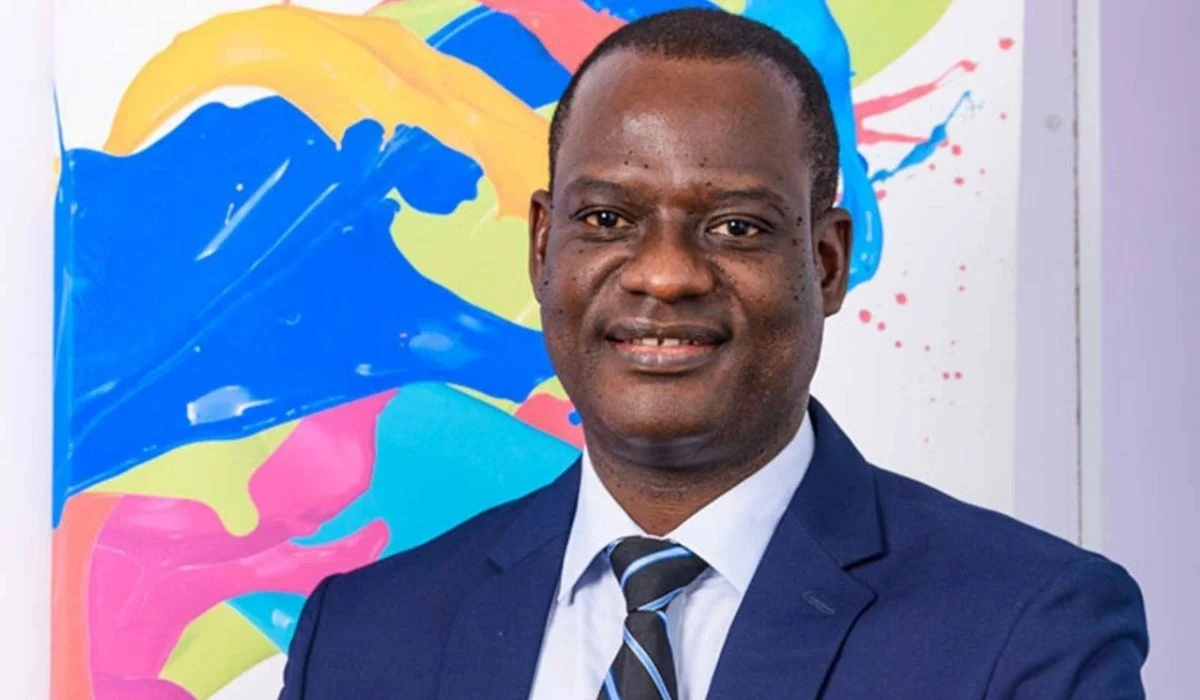
The Minister of Finance, Taiwo Oyedele, explained the apparent reluctance of petroleum marketers to lower the price of Premium Motor Spirit, despite a decline in crude oil prices.
During a press conference following the Federal Executive Council meeting on Monday, the Finance Minister noted that marketers often hesitate to reduce prices because they need to sell off existing inventories that were purchased at higher costs.
He assured Nigerians that the Federal Government is committed to finding a balance between protecting consumers and ensuring that businesses remain commercially viable.
He disclosed that two relevant regulatory agencies, the Federal Competition and Consumer Protection Commission (FCCPC) and the Nigerian Midstream and Downstream Petroleum Regulatory Authority (NMDPRA) were working to address the concerns of ordinary Nigerians on alleged exploitation by marketers.
He also recalled various interventions by the Tinubu administration to mitigate the biting effect of high fuel prices, Oyedele listed the suspension of the payment of Value Added Tax (VAT), excise duty and the surcharge on petroleum products, amongst measures taken by the Tinubu administration.
He appealed to transport operators, whom he noted are beneficiaries of the government investments under the CNG programme, including subsidised vehicle conversion kits and other incentives, to reciprocate the government gestures by charging commuters reasonable fares.
Oyedele earlier disclosed that the Federal Government has taken a decision at the Federal Executive Council (FEC) meeting to commit total sum of $2.96 billion, €200 million and ₦215 billion to accelerate investments in transportation, agriculture, power, infrastructure and micro, small and medium enterprises (MSMEs).
He noted that the ₦215 billion will be used to complete outstanding investments under the Presidential Compressed Natural Gas (CNG) Initiative, covering the procurement of CNG buses, electric vehicles, CNG-powered tricycles and the establishment of vehicle conversion centres across the country.
According to the minister, the approvals would enable the government to complete the remaining components of the programme, which is designed to reduce transportation costs for Nigerians and provide affordable alternatives to petrol-powered vehicles.
To boost the power sector, the FEC equally approved a $160 million financing facility for rural solar energy projects in Niger State, comprising $150 million from the Islamic Development Bank and $10 million counterpart funding from the Niger State Government.
Oyedele said the initiative would expand access to clean energy and improve electricity supply in underserved communities.


Iran war has cost Americans $1,000 per household, economist estimates

Three sisters above age 100 are recognised by GWR as world’s longest-living trio of sisters with combined age of 316 (video)

US seizes 400 sites illegally streaming World Cup matches

Borno: Troops rescue 10 NECO candidates, teachers abducted by ISWAP terrorists

Rescue teams continue to find survivors of Venezuela earthquakes

Trump confirms US, Iran will meet for New Talks in Qatar after strikes threaten cease-fire

Princess Kate hikes 3 mountains to raise money, awareness for cancer

 Breaking2 days ago
UNBELIEVEABLE: Video of A Fat Wife Beating And Flogging Her Slim Husband Sparks Debate Online Among Couples and Youths
- Investigation1 day ago
âThe Islamic Republic of Iran will no longer exist!â Trump threatens amid fragile ceasefire
- Investigation1 day ago
Emerging facts points to his innocence – Harrison Gwamnishu shares update on man brutally beaten after being accused of N2m theft in Enugu
 Breaking10 hours ago
Forget about body count. Sometimes itâs better to marry a lady who has gone into the world and experienced life than to marry one who hasnât- Nigerian doctor’s advice to men sparks debate online
- Investigation3 days ago
"The moment I started posting my fiancé online, women flooded his DMs" â Married woman shares screenshots, calls out women who messaged her husband while they were engaged
- Investigation1 day ago
ISWAP fighterâs wife surrenders to troops with her two-month-old baby in Borno
- Investigation1 day ago
Iran vows to unleash âhellâ on US bases after fresh attacks as Trump warns regime will âno longer existâ if war restarts
- Investigation1 day ago
Former MLB star Gorkys Hernandez’s wife d!es in Venezuela earthquake