World
A campaign eliminated billions of sparrows to protect crops in 1958; the birds' disappearance accidentally triggered one of history's most devastating locust plagues

This Video Is Trending Right Now
A campaign intended to protect China’s food supply became one of history’s starkest examples of ecological miscalculation. In 1958, Mao Zedong’s government targeted sparrows under the nationwide Four Pests Campaign because the birds were believed to consume valuable grain. Millions of citizens were mobilised to destroy nests, break eggs and drive the birds from the skies. The strategy overlooked a crucial part of the food chain: sparrows also consumed insects that damaged crops. As bird populations plummeted, agricultural pests faced fewer natural predators, contributing to worsening infestations and adding further pressure to China’s struggling farms during the catastrophic Great Leap Forward.
Why China declared war on sparrows in 1958
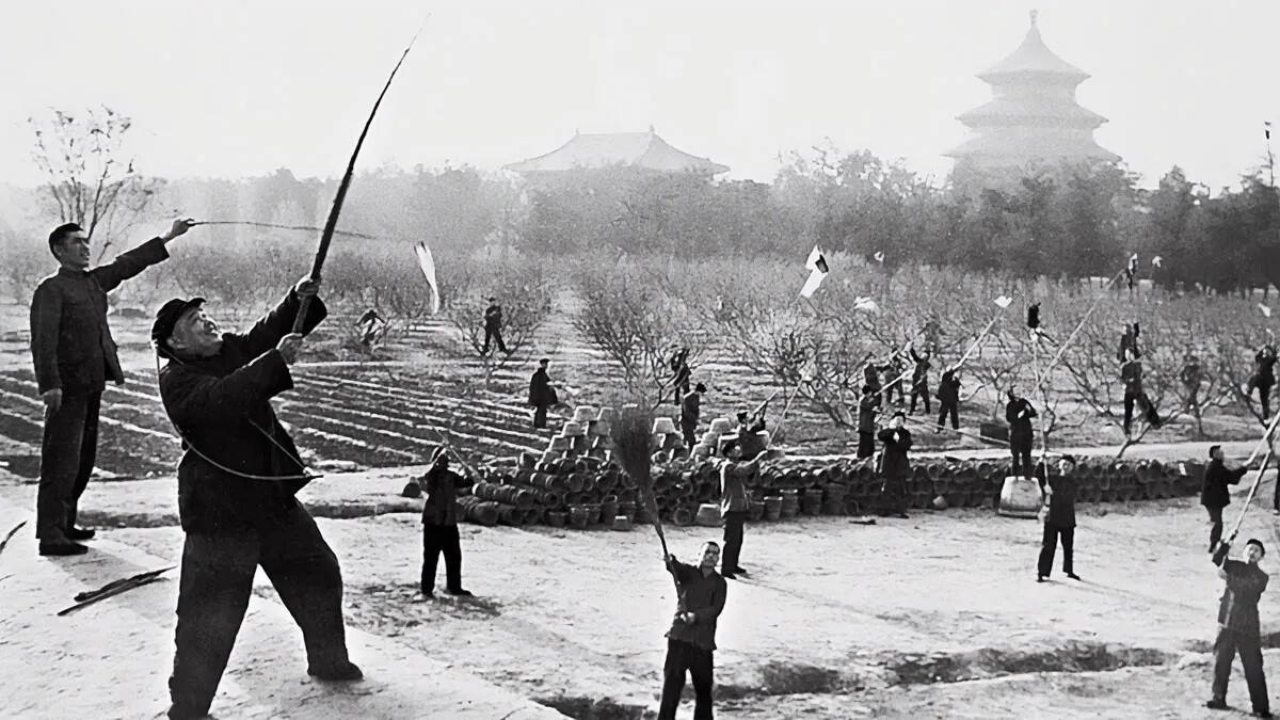
The campaign emerged during the Great Leap Forward, Mao’s ambitious programme to rapidly transform China’s economy and increase agricultural and industrial production. Sparrows were classified alongside rats, flies and mosquitoes as pests that authorities believed should be eliminated.The reasoning appeared straightforward. Sparrows ate grain, so killing them would theoretically leave more food for people. What followed was an extraordinary mass mobilisation involving citizens, workers and students across the country.People destroyed nests and eggs, while crowds used drums, pots and pans to continuously frighten birds. Prevented from landing and resting, some sparrows eventually collapsed from exhaustion. The campaign severely reduced their numbers, although precise estimates of how many were killed remain uncertain.
The ecological mistake that allowed pests to multiply
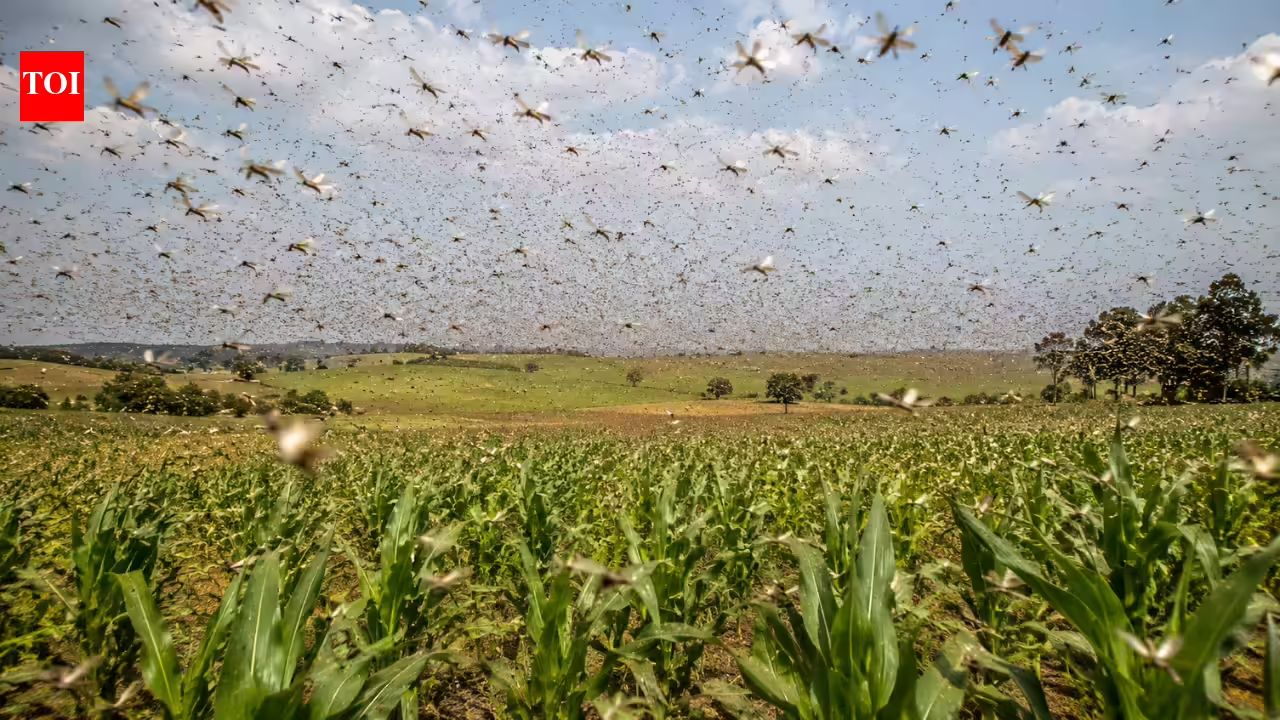
The strategy failed to consider the sparrow’s wider place in the food chain. Along with seeds and grain, the birds consume insects, particularly when feeding their young.With fewer sparrows hunting them, crop-eating insects faced less natural predation. Historical accounts associate the decline in bird populations with worsening outbreaks of agricultural pests, including locusts, which placed additional pressure on already vulnerable farmland.The episode demonstrated a basic ecological principle: removing one species can produce unexpected consequences elsewhere in an ecosystem. A bird viewed primarily as a competitor for food had also been providing a natural form of pest control.It is important, however, not to overstate the connection. Although sparrow eradication is widely cited as contributing to increased pest problems, evidence does not establish that it alone caused a single record-breaking locust plague.
China’s farms were already facing a much larger crisis
The environmental disruption occurred during one of the most turbulent periods in modern Chinese history. The Great Leap Forward introduced sweeping changes to agriculture and rural life, including widespread collectivisation and the diversion of labour towards industrial projects.Agricultural production was further affected by unrealistic targets and inaccurate reporting. Local officials facing political pressure sometimes exaggerated harvest figures, creating a distorted picture of how much food was actually available.State grain procurement continued even as shortages became increasingly severe in some regions. Combined with broader policy failures and difficult environmental conditions, these decisions contributed to a catastrophic decline in food availability.The added pressure from agricultural pests therefore arrived when China’s farming system was already under enormous strain.
The Great Chinese Famine followed
From roughly 1959 to 1961, China experienced the Great Chinese Famine, one of the deadliest humanitarian disasters of the 20th century. Estimates of excess deaths vary considerably, but historians generally place the toll in the tens of millions.The famine cannot be attributed solely to the killing of sparrows. Scholars identify policies associated with the Great Leap Forward, collectivisation, grain procurement, distorted production data and political failures among its principal causes. Weather and natural disasters also affected agricultural conditions.The ecological consequences of the Four Pests Campaign are better understood as one contributing problem within this much larger catastrophe. Increased pressure from crop pests may have further damaged harvests at a time when food production and distribution were already in severe crisis.
China eventually reversed the campaign against sparrows
Authorities eventually recognised that eliminating sparrows had produced unintended consequences. By 1960, sparrows were removed from the Four Pests list, with bedbugs taking their place as a target.The reversal highlighted how the original policy had underestimated the complexity of agricultural ecosystems. Sparrows had been judged largely by the grain they consumed, while their role in controlling insect populations received insufficient attention.The campaign had attempted to simplify nature into categories of useful and harmful species. Its failure demonstrated that animals considered pests can still perform important ecological functions.
A lasting lesson about interfering with ecosystems
China’s campaign against sparrows remains a cautionary example of the risks involved in large-scale environmental interventions based on incomplete ecological understanding.Food webs depend on relationships between predators, prey, plants and other organisms. Removing a species can produce consequences that extend far beyond the original target, sometimes creating new problems instead of solving existing ones.The episode does not mean wildlife or agricultural pests should never be managed. Rather, it highlights why modern pest control increasingly relies on scientific research and integrated approaches that consider entire ecosystems.What began as an attempt to protect grain ultimately demonstrated a powerful lesson: changing one part of nature can set off a chain of consequences that is difficult to predict or reverse.


Kim Kardashian and Kris Jenner’s longtime bodyguard di£s in car accident

Kogi Abduction: Gov Ododo Receives Rescued Principal, NECO Official, Students

Heartbroken Wife Breaks Down on Live Video, Claims Husband Welcomed Baby With Side Chick

APGA Reveals Why It Backed Tinubu for 2027

Britain makes bombshell decision on tanks stationed on NATO border

Army Builds Schools, Town Halls as Questions Grow Over Nigeria’s Deepening Security Crisis

How 'roadless rule' protects drinking water for 25M Americans

 Society2 days ago
35-Year-Old Man Breaks Down In Tears Like A Baby At Roadside After Wife Reportedly Goes Missing At Kasoa Market
- Investigation2 days ago
Suspected ISWAP logistics supplier arrested with food items bound for terrorists in Borno
- National2 days ago
JUST IN: Senate to give N10million each to families of security operatives, teachers killed in Oriire rescue
- News2 days ago
Retiree’s Pension Jumps From N18,000 To N206,000 After Government Reform
- Investigation2 days ago
R Kelly officially asks President Trump to end his 30-year prison sentence for s 3x crimes
- National1 day ago
2026 Ballon d’Or: Top 4 players to win award ahead of World Cup final
- Investigation2 days ago
âThereâs nothing more absurd than the âEmi Lokanâ sloganâ â Falz knocks slogan of current administration
- Investigation3 days ago
âHow do you tell a 13-year-old girl you like her?â â Lady confronts man over alleged advances towards her younger sister