Investigation
US limits length of Visas for students and journalists

_1784276204.jpg)
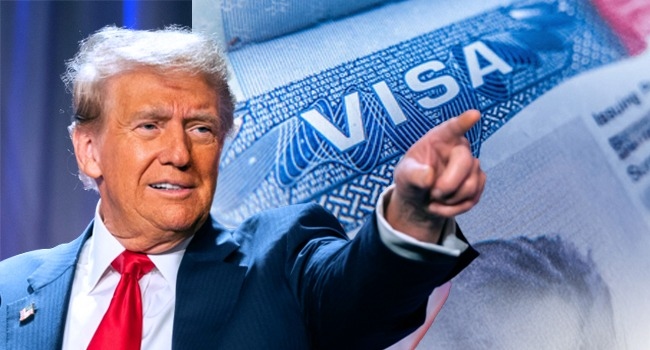
The administration of President Donald Trump has finalized regulatory updates that enforce rigid boundaries on the duration of stay permitted for international students and foreign journalists.
The development represents the latest policy move aimed at tightening legal immigration frameworks in the country.
Under the revised guidelines, which are projected for implementation as early as September, international scholars entering on student visas will be allowed entry strictly for the duration of their academic studies, capped at a hard maximum of four years.
For international media personnel, the newly established limits permit an initial stay of only 240 days. While correspondents are allowed to request subsequent 240-day extensions, Chinese journalists face a much stricter cap of just 90 days.
This regulatory adjustment aligns with a broader systemic push on immigration that has remained a cornerstone of the administration’s policy agenda, running alongside intensive interior enforcement campaigns in key metropolitan areas and added hurdles for those seeking legal citizenship paths.
Before the finalized rules were published, the Department of Homeland Security (DHS) processed nearly 22,000 public comments following the initial proposal of these student and journalist restrictions in August 2025.
Despite the significant feedback, the department proceeded with the final regulations with very few modifications. During the initial proposal phase, the DHS argued that the changes were necessary to prevent foreign nationals from continually extending their academic stays to remain in the country indefinitely as “forever students”.
The agency maintained that the traditional open-ended system, which has governed student admission durations since the late 1970s, hindered its operational capacity to adequately track visa holders. According to official statistics, the United States hosted over 1.1 million international students during the 2023–24 school year, leading global enrollment numbers and injecting more than $50 billion into the domestic economy in 2023 alone.
Academic associations and higher education advocacy groups have heavily criticized the policy shift. The Presidents’ Alliance on Higher Education and Immigration expressed deep concern, stating that the new regulation “weakens the ability of US colleges and universities to attract top talent.”
Numerous academic institutions have already noted a decline in international applicant numbers following earlier policy decisions, which included the cancellation of thousands of student visas and the halting of billions of dollars in federal research grants.
Similarly, international diplomatic bodies and global media agencies, such as the Embassy of Japan, had appealed to the DHS to preserve admission periods ranging from two to five years for foreign correspondents assigned to American bureaus.
However, these appeals, along with requests to implement expedited processing times and put caps on application fees for journalists, were turned down by the department.
Although similar visa duration limits were originally proposed toward the conclusion of the President’s first term, the subsequent administration under Joe Biden did not move forward with the plan. The newly finalized regulation is now slated for review by the Republican-led Congress.


Kim Kardashian and Kris Jenner’s longtime bodyguard di£s in car accident

Kogi Abduction: Gov Ododo Receives Rescued Principal, NECO Official, Students

Heartbroken Wife Breaks Down on Live Video, Claims Husband Welcomed Baby With Side Chick

APGA Reveals Why It Backed Tinubu for 2027

Britain makes bombshell decision on tanks stationed on NATO border

Army Builds Schools, Town Halls as Questions Grow Over Nigeria’s Deepening Security Crisis

How 'roadless rule' protects drinking water for 25M Americans

 Society2 days ago
35-Year-Old Man Breaks Down In Tears Like A Baby At Roadside After Wife Reportedly Goes Missing At Kasoa Market
- Investigation2 days ago
Suspected ISWAP logistics supplier arrested with food items bound for terrorists in Borno
- National2 days ago
JUST IN: Senate to give N10million each to families of security operatives, teachers killed in Oriire rescue
- News2 days ago
Retiree’s Pension Jumps From N18,000 To N206,000 After Government Reform
- Investigation2 days ago
R Kelly officially asks President Trump to end his 30-year prison sentence for s 3x crimes
- National1 day ago
2026 Ballon d’Or: Top 4 players to win award ahead of World Cup final
- Investigation2 days ago
âThereâs nothing more absurd than the âEmi Lokanâ sloganâ â Falz knocks slogan of current administration
- Investigation3 days ago
âHow do you tell a 13-year-old girl you like her?â â Lady confronts man over alleged advances towards her younger sister