National
Again, Abuja Indigenes decry historical injustice, seek Tinubu, NASS intervention

The Network of Journalists on Indigenous Issues (NEJII) has called on President Bola Tinubu and the National Assembly to enact a law protecting the economic, political and cultural rights of Abuja Original Inhabitants (AOIs), warning that decades of neglect could fuel future unrest if left unresolved.
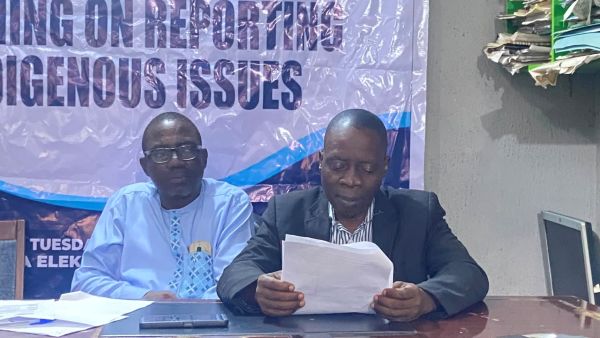
The group made the appeal on Tuesday during a media conference in Lagos ahead of the United Nations International Day of the World’s Indigenous Peoples, observed annually on August 8.
Speaking at the event, NEJII Coordinator, Adewale Adeoye, said the indigenous ethnic nationalities of the Federal Capital Territory (FCT) had suffered historical injustice since Abuja became Nigeria’s capital in 1976.
He said the President should transmit an Executive Bill to the National Assembly to guarantee the rights of the Abuja Original Inhabitants, including dedicated funding for education and healthcare.
According to him, the proposed legislation should also reserve employment opportunities in public and corporate institutions for indigenous people, preserve their languages by introducing them into primary and secondary school curricula in the FCT, and protect their ancestral worship sites and sacred groves.
Adeoye warned that the situation facing the indigenous communities had become a serious concern.
“The situation of indigenous people in the Federal Capital Territory is a ticking time bomb. In a country characterised by growing violence, banditry and terrorism, we do not want to see another form of violent resistance coming from any part of the country, not to talk of Abuja, the Federal Capital which presents one of the first images of Nigeria to every foreign visitor,” he said.
He added that Nigeria’s current security challenges were partly the result of authorities failing to address legitimate grievances before they escalated.
The group also expressed concern over what it described as the continued marginalisation of the Abuja Original Inhabitants.
“We are deeply concerned about the Abuja Original Inhabitants for so many reasons. Nigeria is currently the epicentre of various violent agitations.
“These protests that are now violent mostly began as harmless, fair and peaceful agitations,” Adeoye said.
Among its demands, NEJII called for a judicial commission of inquiry into alleged historical land seizures and the forceful acquisition of ancestral lands by successive military and civilian administrations.
It also urged the Federal Capital Territory Administration to reserve a percentage of its annual budget for the education of indigenous children and the preservation of their cultural heritage through an Abuja Indigenous Peoples Endowment Fund to be managed by representatives of the eight indigenous ethnic groups.
The group further called for the establishment of an Abuja Metropolitan Police drawn from indigenous communities, the promotion of cultural symbols reflecting the history of the original inhabitants, and greater political inclusion ahead of the 2027 general elections.
According to NEJII, the estimated 2.5 million Abuja Original Inhabitants remain excluded from electing state governors and members of state houses of assembly and are denied opportunities linked to state of origin.
The organisation also painted a grim picture of living conditions in many indigenous communities, citing poverty, lack of potable water, inadequate schools, poor roads and limited access to electricity despite their proximity to the nation’s capital.
Adeoye said the indigenous communities had remained peaceful despite decades of hardship because of their belief that the government would eventually respond to their concerns.
“For close to half a century, the Indigenous peoples of Abuja have lived through the tunnel of death and human misery characterised by land seizure, mass displacement, arrests, intimidation and all sorts of marginalisation,” he said.
He added, “Their land was taken away. The beautiful streams and sacred forests that linked them up with their ancestors were destroyed. Little or no compensation was paid. Land owners for generations have for 50 years become tenants on their own land.”
NEJII argued that the peaceful agitation of the Abuja Original Inhabitants deserves urgent attention, saying timely dialogue with the Federal Government remains essential for conflict prevention and sustainable peace in the Federal Capital Territory.
The conference, supported by the Resource Centre for Human Rights and Civic Education (CHRICED) and the MacArthur Foundation, was attended by media practitioners from print, online and broadcast organisations as well as representatives of the Abuja Original Inhabitants.


Court grants ex-Taraba Gov. Ishaku permission for medical trip abroad

Police uncover syndicate linked to N1b vehicle fraud in Lagos

Military action against Iran formally restarted last week, Trump told lawmakers

World Cup: ‘They’re a pleasure to watch’ – Fernandez names team to win trophy

Tinubu to deliver 10,000 housing units across 14 states, FCT

Engineering must remain driving force of Nigeria’s development — Yilwatda

Astronomer's name deciphered from ancient Mayan ruins for first time

 Investigation1 day ago
Each and every one of you is guilty РDanish aid worker Anja Ringgren Lov̩n slams Nigerians filming malnourished child accused of being a witch in viral video
- National3 days ago
At Last, Fresh Video Showing How Some Of The Terrorists Was Arrested During Rescue Of Oyo Schoolchildren Emerged [WATCH HERE]
- News2 days ago
Army officer killed during rescue of kidnapped Oyo pupils, teachers buried
- Investigation3 days ago
Become a presidential candidate before you challenge me to a debate – Peter Obi replies Minister of Works, Dave Umahi (video)
- National3 days ago
Ondo varsity lecturers begin indefinite strike over unpaid salaries
- Investigation3 days ago
Please help poor Nigerians. The burden is heavy on government – First lady, Remi Tinubu appelas to Davido, Asake, Burna Boy (video)
- National20 hours ago
Gbajabiamila: I borrowed N400 million to buy appointment in Tinubu’s government, says Adeyemi
- National3 days ago
Kano university probes alleged misconduct involving lecturer