News
AI shouldn’t replace creativity in music — Jaywon


Singer, Oluwajuwonlo Iledare, aka Jaywon, tells TEMITOPE ADETUNJI about his career and other issues
When you look at where the industry is today, what excites you the most, and what concerns you?
What excites me the most is seeing Nigerian music become truly global. Today, our music is played on the biggest stages in the world, and it is a proud moment to see institutions such as the Grammys recognise afrobeats with its own category. Social media has also changed everything. Before, artistes depended heavily on radio and television, but now talented people can promote themselves directly and reach audiences worldwide.
My biggest concern is the rapid growth of artificial intelligence in music. AI itself is not bad; it is a tool. We should use it to improve our creative process, not replace creativity. My concern is that, if it is not used responsibly, it could water down the value of music because creating music is becoming easier than ever. The challenge will always be preserving genuine talent, artistry and originality.
Looking back, when was the exact moment you realised music wasn’t just a passion but something you wanted to pursue professionally?
That’s one part of me I’m still battling with because I’m one of the few people who see music as a passion first, not just a career. I do it because I love it, not simply because it pays the bills.
Money or no money, my creative process and my love for music never change. It’s a way of life for me. Money has never been my priority; the music always comes first. That’s why I make sure my songs are uniquely crafted and can stand the test of time.
Walk us through the first major breakthrough in your career?
That would be when I performed at the Kennis Music Easter Fiesta and the whole crowd went crazy for me. Afterwards, I saw Baba Keke (Kenny Ogungbe) backstage asking who had just performed, and people kept telling him they didn’t know me.
He later spoke to me, collected my number, and we met afterwards, where he offered me a record deal. Back then, if Kennis Music signed you, you automatically became a star. That was the defining moment for me.
Which song, project or collaboration marked the biggest turning point in your career, and why?
There are lots of songs, but immediately we put out the collaboration I wrote and created for Essence, everything changed because it was different and unique, and people did not see that coming from me as a new artiste. Immediately we put it out and the fans went crazy, I just knew I was going to be here for a long time because I know I have more music like that in me.
What determines who you choose to work with at this stage of your career?
Good music comes first. If the music is good, I’ll work with you.
People who know me understand that good music is the first thing I consider before collaborating with anyone. Like I said, it isn’t about money. That’s why I work with many up-and-coming artistes. If the music is good, I’m ready.
How have you navigated moments of doubt, setbacks or reinvention without losing momentum?
If you know my story, you’ll understand that even getting this far is a miracle. So, why would I allow myself to be derailed by things I can’t control?
I simply do my best, take my time creating quality music that only someone like me can create, then leave the rest to God and nature.
Do you think the industry treats independent artistes differently from those backed by major labels?
You can’t control how people treat you, but you can control who you are and the quality of your work.
Don’t focus on the negative side of things. Stay aware, but don’t let it affect your work ethic because those challenges will always exist. Having a major structure behind you doesn’t automatically mean you’ll do better.
I’ve been independent for more than 10 years, and by God’s grace, I’m still here doing great things. Don’t stop, and don’t envy anybody. Your journey is different.
Many fans compare artistes from your era with today’s Afrobeats stars. Do you think that comparison fair?
It depends on the perspective. Comparisons are natural, but the industry today is completely different from what it was when we started.
Our generation came up without streaming platforms, TikTok, Instagram or smartphones. We relied on physical distribution, radio, television and word of mouth.
So while comparisons can be flattering, we’re operating in two different ecosystems. Every generation faces its own challenges. Today’s artistes deserve credit for maximising the opportunities available to them, just as the older generation deserves respect for building the foundation under much tougher conditions.
There has been a lot of discussion about royalties and compensation for earlier generations of Afrobeats artistes. Do you feel the industry treated you fairly financially in your early years?
I signed a contract with Kennis Music, and they played their part, even though there were areas they could have done better. We tried to strike a balance.
The important thing is that I know better now. I’m still here, which means I can correct what I didn’t know then.
Yes, the industry wasn’t always fair, but part of that was because some of us lacked the necessary knowledge. Ignorance is never an excuse. That’s why people need to ask questions, do their research and understand whatever they’re getting involved in.
Social media has changed how artistes stay relevant. Is talent still the biggest driver of success today, or has visibility overtaken it?
Talent will always be the foundation. There may be shortcuts, but once you get to the top, if you can’t genuinely sing or perform, you’ll eventually be exposed.
Use social media and AI to your advantage, but never stop improving your craft.
You’ve had a few controversial moments where your name came up in public debates, including the back-and-forth with Odumodublvck where your song ‘This Year’ was mentioned. How did that make you feel?
I’m one of the few Nigerian artistes with a song like that, and I’ve been around for almost two decades, so moments like that naturally attract different opinions online.
I didn’t see it as disrespect. Sometimes it’s banter, and sometimes that’s simply how the entertainment space works.
As for Odumodublvck, I actually like him. He’s hardworking and contributing to the industry. I respect his hustle and what he’s building. I wasn’t upset because it never felt personal, and he wasn’t targeting only me. We’re cool now. OD is my guy, and we talk.
‘This Year’ resurfaces every December. How does that make you feel?
It’s a blessing, and I’m grateful to the fans and colleagues who supported the song from the beginning.
Ice Prince was one of them. I also remember him introducing the song to Yvonne Nelson in Ghana back then.
When you create timeless music, it outlives negativity. It stays relevant longer than critics and haters. For that, I’m truly grateful.
You’ve often spoken about respect within the industry. Have there been moments when you personally felt overlooked?
Not overlooked, but I’ve felt disrespected by some artistes who seem to believe the momentum they enjoy today will last forever.
The truth is that what you’re enjoying today may not even be there next year, so it’s better to focus on working hard than disrespecting those who paved the way.
There are already people coming up behind you, ready to take your place, even if you’re signed to a major label like Roc Nation or Sony.
Disrespect is something I don’t tolerate. I stay in my lane and show respect to those who show me respect. If you choose otherwise, I’ll still be here.
There was a time you commented on a photo of Ayra Starr, which generated backlash online. Looking back, do you think your remarks were misunderstood?
Not really. It was simply about the picture, and I have nothing more to say about it.
Another photo of you and Ayra Starr also generated plenty of discussion online after people compared it with a picture she took with Future. What was your reaction to all the interpretations?
Those were promotional strategies. They have the money to pay Twitter influencers to push those conversations. Let them continue.
I think they should spend more time making more music; good music.
You’ve also received criticism in the past for speaking about insecurity. Has that changed how you express your opinions publicly?
No. It’s our country, and nobody can stop us from speaking up. They can only try.
Are you currently working on any new music, and what should fans expect?
I’m currently working with Fiokee, 3Brain and Ugandan-American artiste, Jon Muq, on a new record scheduled for release in July.
It’s a fresh sound that reflects my growth as an artiste, and I can’t wait for fans to hear it.
When people hear your name years from now, what do you hope they’ll remember beyond the music?
I want to be remembered as someone who used his talent to inspire people, bring joy through music and positively impact lives. Beyond the music and the success, that’s the legacy I want to leave behind.





Scientists say coldest 'stars' in Milky Way could actually be alien technology harvesting energy

EPL: Fredrick signs new deal at Brentford, promoted to first team
EPL: Fredrick signs new deal at Brentford, promoted to first team

Talent is entry fee, not ticket to success — King Ereso

Theme park to close doors forever after 52 years – 'unsustainable'

â"Your marriages are not working because you’re l£sbians" Actress Shan George slams married women who are divorcing and blaming their husbands
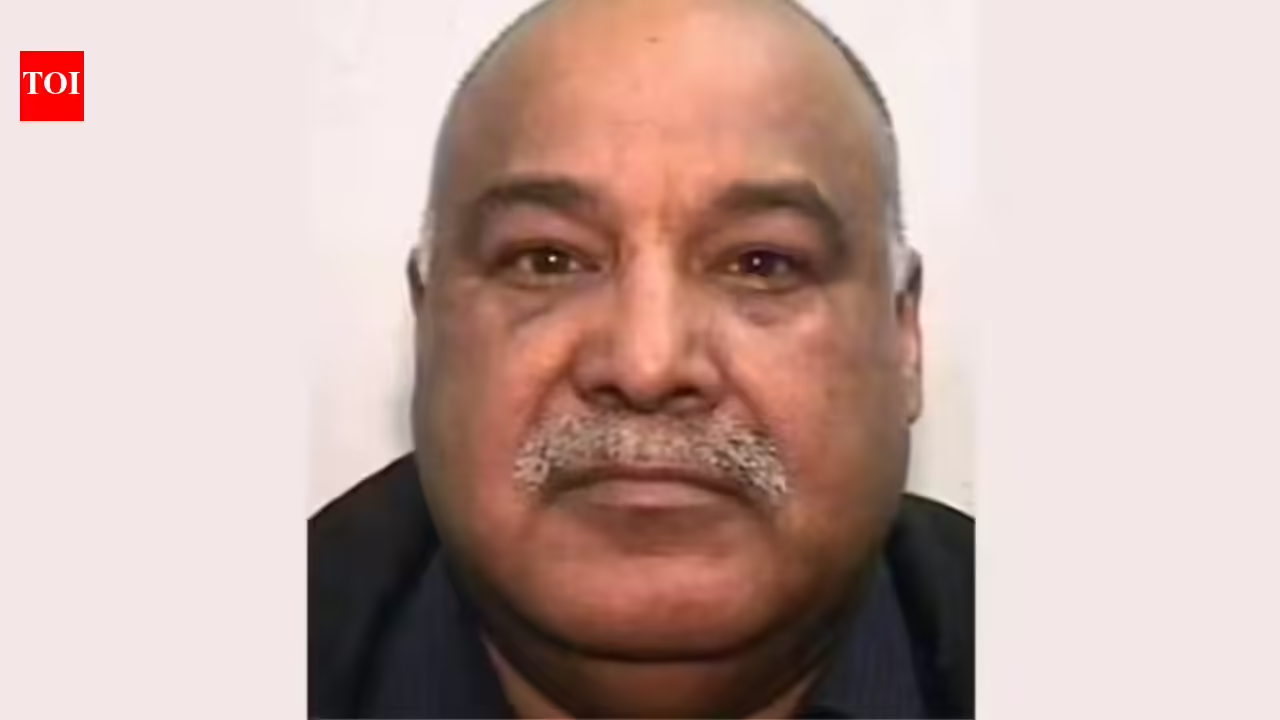
Pak refuses to accept grooming gang leader unless UK hands over political dissidents

 Breaking1 day ago
Mum gives birth in her sleep and nurses don’t find her baby until minutes later under pile of blankets
- Investigation2 days ago
Disturbing comments made by men after man was caught r@ping his wife’s teenage niece in Imo
- Society2 days ago
Madness!! Ghanaian Tiktoker Goes Live On Tiktok To Bath To Gain More Followers And Accumulate Gifts
- Politics3 days ago
Standard, commemorative ₦100 notes remain legal tender, says CBN
- World2 days ago
Horror as woman, 43, abducted from bus stop and gang raped in secluded building
- Investigation3 days ago
Oriflame SkinFest 2.0 Is Here! Itâs Bigger, Bolder, and More Beautiful Than Ever!
- News3 days ago
Senate rejects motion to probe ‘fake’ PFIPC ₦1.3bn budget
- Investigation2 days ago
Actress Nkechi Blessing Sunday clapsback at trolls âsingle shamingâ her