Breaking
Beyond Politics: Why the Arewa Media Summit matters for Nigeria’s Democracy, by Jabir T Usman

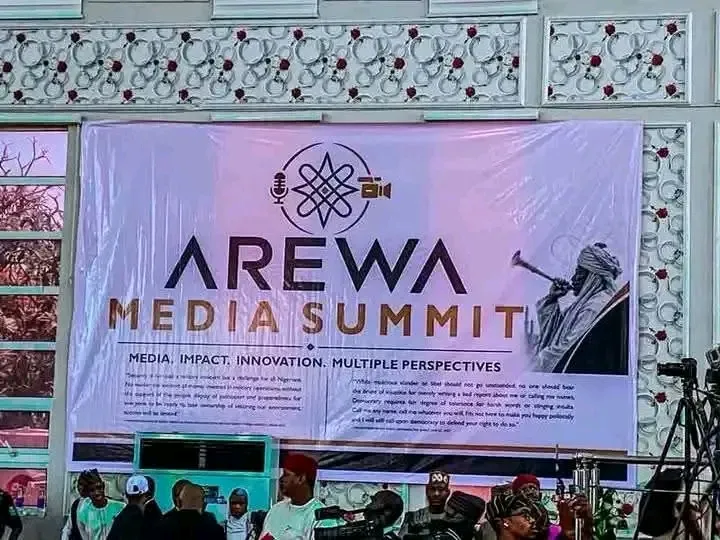
History was etched in gold on Monday, July 6, 2026, as the iconic Coronation Hall of the Kano State Government House became the epicentre of the inaugural Arewa Media Summit, a groundbreaking convergence that has undeniably redefined the standard for media engagement in Nigeria. Drawing an impressive audience of over 1,500 participants at the venue, alongside millions more who followed the proceedings through television broadcasts, radio transmissions, and digital streaming platforms, the event transcended the boundaries of an ordinary summit; it evolved into a transformational movement. It sent an unmistakable and resounding message that the media possesses both the capacity and the responsibility to serve as an indispensable bridge between government and the governed, rising above political divisions, partisan interests, and ideological differences in pursuit of national unity, accountability, and democratic progress.
The architect of this historic gathering, Malam Abdulaziz Abdulaziz, the Senior Special Assistant to President Bola Ahmed Tinubu on Media and Public Enlightenment, has demonstrated a level of journalistic ingenuity that is rare in contemporary public service. To conceive, organise, and execute a programme of this magnitude, one that transcends party lines and regional biases, is a testament to his profound understanding of the media’s role in national development. It is no exaggeration to state that Abdulaziz has, with this single stroke, redefined the possibilities of his office.
The timing of this initiative is particularly significant, coming barely two months after the restructuring of his job description from SSA on Print Media to the broader, more strategic role of SSA on Media and Public Enlightenment. In this short period, Abdulaziz has not only embraced his new mandate but has also expanded its scope, launching a pilot project that will undoubtedly shape public perception and create an enormous, positive impact for the administration of President Bola Ahmed Tinubu. The “Renewed Hope” mantra is no longer just a slogan; it is now a tangible reality being echoed in the nooks and crannies of Nigeria.
The summit was graced by a constellation of powerful dignitaries, showcasing the importance of government places on this initiative. The Executive Governor of Kano State, Alhaji Abba Kabir Yusuf, who declared the summit open, urging on media practitioners to uphold the highest standards of professionalism and patriotism. His deputy, Murtala Sule Garo, was also in attendance, alongside the Honourable Minister of Information and National Orientation, Mohammed Idris, who delivered an inspiring keynote address. The Presidential Spokesperson and Special Adviser to the President on Media and Strategy further added weight to an occasion and gathering of Nigeria’s finest minds.
The summit’s theme, “Government-Citizen Accord: Accountability, Responsibility and Ethical Media Practice,” was far more than a symbolic slogan. It served as a compelling appeal for meaningful action. The technical sessions were exceptionally enlightening, with seasoned media professionals delivering valuable presentations on journalistic ethics and the indispensable role of the press in advancing national progress. From deliberations on tackling misinformation to exploring approaches for responsible digital engagement, the summit provided a comprehensive learning experience, demonstrating how journalism can serve as a powerful instrument for national unity and sustainable development rather than fostering discord.
However, as with any great initiative, there were pessimists who, from the sidelines, attempted to disparage the event. Some cynics dismissed the summit as a gathering of ‘APC’ loyalists, a claim so preposterously unrealistic that it collapses under the slightest scrutiny. As a participant, i can attest to having met numerous individuals from opposition parties and even those without any political allegiance. Their presence was a testament to the summit’s apolitical and inclusive nature, a fact that the naysayers conveniently chose to ignore.
The critics were given a golden opportunity to join the deliberations and contribute to the discourse on policy and governance. Yet, they chose to stay away, only to mock the event from the comfort of their echo chambers. This behaviour is not only laughable but deeply unpatriotic. To refuse a platform where the future of the region and the nation is being discussed and then proceed to deride it is the height of intellectual dishonesty. Their criticisms are baseless, and Nigerians should see them for what they are, a desperate attempt to remain relevant through negativity.
The summit was far more than a platform for speeches, it was the launching pad for decisive action. It was on this historic stage that Abdulaziz unveiled the groundbreaking “Gani Ya Kori Ji” initiative, an ambitious project inspection and public enlightenment programme designed to grant journalists unrestricted, firsthand access to landmark development projects across Northern Nigeria. This bold innovation has the potential to redefine public accountability. By taking media professionals directly to transformative projects such as the Ajaokuta, Kaduna, Kano (AKK) Gas Pipeline, now an impressive 95 percent complete, and the Kano Hydropower Project at Challawa Gorge Dam, the initiative tears down the walls between official narratives and public reality. It empowers journalists to independently verify government claims, report with accuracy, ask probing questions, and meticulously monitor the progress and impact of critical development projects. In doing so, it establishes a powerful new benchmark for transparency, responsible journalism, and citizen driven accountability.
In addition, Abdulaziz utilized the forum to justify the administration’s bold yet indispensable economic reforms, particularly the elimination of the fuel subsidy. He stated that the enormous sums of money once expended on subsidy payments are now being redirected toward vital sectors, including transportation infrastructure, healthcare, education, and student loan programmes. While recognizing the short-term difficulties these policies have created, he reassured Nigerians that the reforms are establishing the groundwork for long term economic prosperity and fiscal resilience. Such transparent and forthright communication is essential for strengthening public confidence and trust.
The summit also addressed the growing concern over the spread of misinformation and fake news, particularly on social media. Abdulaziz advised influencers to use their platforms responsibly, verifying information before publication and avoiding content capable of creating division. The Minister of Information echoed this sentiment, warning that falsehood often travels faster than truth, making professional journalism more important than ever. This is a clarion call for all media practitioners to stand for accuracy and fairness.
It is important to highlight that the Northern region is frequently portrayed through a lens of insecurity, despite its immense contributions to agriculture, commerce, and culture. The summit called for a more balanced narrative, one that honestly reports challenges while also highlighting stories of resilience, creativity, and economic growth. This is a crucial step towards changing the negative perception of the region and showcasing its true potential.
With Abdulaziz Abdulaziz in this pivotal role, the “Renewed Hope” agenda of President Bola Ahmed Tinubu is in safe hands. He is not just an aide; he is a friend to all, an erudite journalist who understands the power of the pen and the microphone. His ability to engage the public and create a positive image for the government is unparalleled. The Arewa Media Summit is just the beginning of what promises to be a transformative era for media government relations in Nigeria.
The communique issued at the end of the summit, which passionately championed a more robust alliance among the government, the citizenry, and the media to advance transparency and strengthen accountability, stands as a bold roadmap for Nigeria’s future. It is a landmark declaration that deserves the careful attention of every patriotic stakeholder committed to the nation’s progress. Equally inspiring was the unwavering commitment to uphold ethical journalism founded on credibility, fact-checking, impartiality, and balanced reporting, a solemn covenant that every media practitioner and public actor must faithfully honour in the collective pursuit of a more transparent and prosperous Nigeria.
The Arewa Media Summit is a landmark achievement that will be remembered as a turning point in Nigeria’s media landscape. It has set a new standard for similar initiatives, proving that when the government engages the media constructively, the greatest beneficiary is the Nigerian people. The pessimists and naysayers may continue their mockery, but history will remember them as the ones who stood on the wrong side of progress.
As the dust settles on this historic event, one thing is abundantly clear: the era of passive engagement is over. Under the visionary leadership of Malam Abdulaziz Abdulaziz, the media is being repositioned as a strategic partner in the quest for a better Nigeria. The “Renewed Hope” is alive, and it is resonating across the length and breadth of the nation.
Jabir T Usman writes from Sabon Gari Tudun Wada Kaduna, [email protected]


Royal families fault omission of Osogbo on Osun Secretariat signage
Royal families fault omission of Osogbo on Osun Secretariat signage

Sen. Sani-Musa hails Tinubu-Shettima 2027 ticket

‘Regional cooperation key to tackling Africa’s security threats’ — Buratai

Puerto Rico’s Supreme Court dismisses claims that singer Bad Bunny used ex’s voice on ‘Pa Ti’

Prince Harry and Meghan meet with King Charles III for first time in over four years

Rains: Enugu State Government tells residents to stay safe

 Breaking2 days ago
Mum gives birth in her sleep and nurses don’t find her baby until minutes later under pile of blankets
- Society3 days ago
Madness!! Ghanaian Tiktoker Goes Live On Tiktok To Bath To Gain More Followers And Accumulate Gifts
- Investigation2 days ago
Disturbing comments made by men after man was caught r@ping his wife’s teenage niece in Imo
- World2 days ago
Horror as woman, 43, abducted from bus stop and gang raped in secluded building
- Investigation3 days ago
Wearing my main chick crown forever – Actress Uche Ogbodo writes hours after estranged husband, Bobbymarrisâ âcrown wifeâ jab
- Investigation3 days ago
Actress Nkechi Blessing Sunday clapsback at trolls âsingle shamingâ her
- News2 days ago
Northern Governors Launch ₦1bn Monthly Security Fund to Fight Insecurity
- Investigation2 days ago
âMan butchered his own mother with a machete then ran into ocean to escape cops