World
Education Department rescinds disparate impact rule, a key tool used to assess school discrimination

This Video Is Trending Right Now
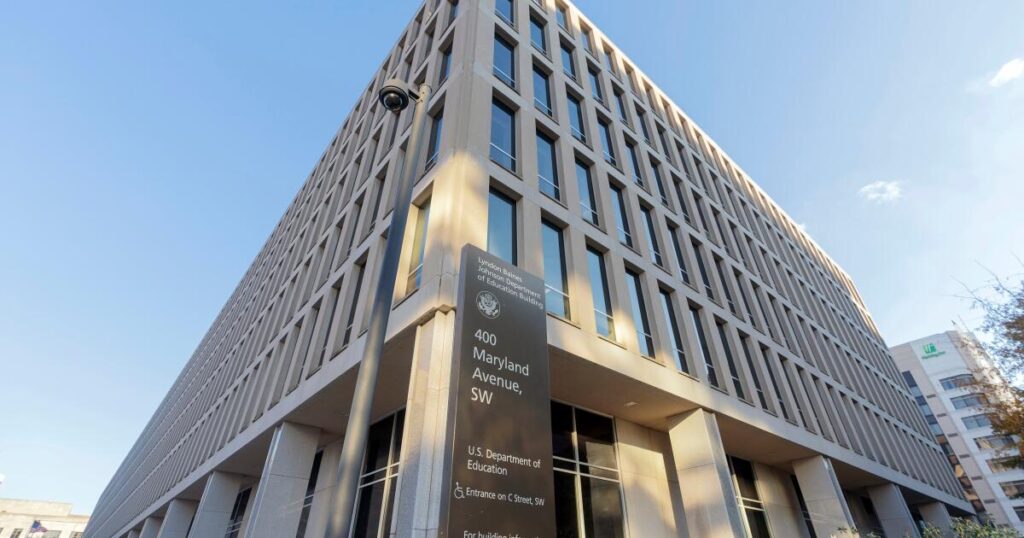
WASHINGTON — The Education Department will no longer consider school policies that disproportionately harm one group of students as discriminatory unless the discrimination is intentional, rescinding a decades-long standard for civil rights enforcement.
In a rule change announced Thursday, the department said it would remove a number of disparate impact provisions from its regulations related to the implementation of Title VI of the Civil Rights Act, which bars discrimination on the basis of race or national origin.
In schools, the standard has most notably been applied to school discipline policies. Across the country, data show Black students have been more likely to receive punishments that remove them from the classroom, such as suspensions, expulsions and transfers to alternative schools.
Racial justice advocates have pushed for policies that would reduce those disparities, and those efforts in turn have drawn opposition from the Trump administration.
In an executive order last year, the White House directed the Education Department to issue new school discipline guidance, and called for a review of organizations that had promoted policies to address disparities in discipline.
In a written statement, the department said that disparate impact had forced schools and universities to engage in racial balancing for fear of federal enforcement.
“With these changes, schools will be empowered to address classroom issues without fearing the federal government will weaponize antidiscrimination laws,” Assistant Secretary for Civil Rights Kimberly Richey said.
Civil rights groups condemned the move. In a letter signed by 60 civil rights and educational advocacy organizations, they emphasized that discrimination is not always explicit, and that courts have recognized this standard for decades.
“Today’s action has no basis in law or morality and is further evidence that this administration is determined to undermine our laws, abandon civil rights enforcement, and deny the existence of systemic discrimination,” they wrote.
The rule was published and took effect immediately without public comment, an unusual step for major regulatory change.
The rule change removes a critical guardrail for students, said Michael Pillera, director of the Educational Opportunities Project at the Lawyers’ Committee for Civil Rights Under Law. If districts know the Education Department will not investigate and enforce a policy that has a discriminatory impact, they may be more likely to continue that practice, he said.
“The concept is you can’t create an unjust and unnecessary barrier that excludes folks on the basis of race. It has essentially the same impact as if you were doing it explicitly,” Pillera said. “That is what this is meant to stop.”
Other federal agencies also have moved away from disparate impact as a legal standard for enforcement. A White House executive order signed last April directed federal agencies to no longer rely on disparate impact analysis when enforcing antidiscrimination laws. The Equal Employment Opportunity Commission, the Justice Department and the Department of Energy rescinded their disparate impact guidance last year.
And in May, fair housing groups sued the Consumer Financial Protection Bureau over its changes to disparate impact regulations, which they said would reverse decades of lending protections and remove the guardrails for preventing discrimination against minorities.
Advocates said that the change would further diminish the Education Department’s role in protecting students of color, in addition to the downsizing and transfer of the Office for Civil Rights and the prioritization of cases that investigate racial equity policies as discriminatory against white students.
The changes to the federal government’s role in civil rights enforcement will have resounding impacts for communities, said Hamida Labi, senior policy counsel at the NAACP Legal Defense Fund.
“This is a part of the Trump administration’s broader overall attack on civil rights,” Labi said. “The schoolhouse doors in 2026 don’t have signs on it that say, ‘whites only,’ but discrimination is still very prevalent. Black students and other students of color are the ones who bear the brunt of that.”
Ma writes for the Associated Press.


Before They Opened a Cafe, Their Partnership Was Already Baked in.

Oil Prices Continue to Rise as Conflict With Iran Drags On

Kidnapping: Ondo community fears delay in prosecution of suspects

Jimothy the raccoon is proof that being weird, feral, and unknowable is the key to winning the internet

Trump-appointed judge hands DOJ its 17th loss as red state rejects voting data gambit

Daily Horoscope: July 24, 2026

Foreign aid can cripple economic growth, Obasanjo warns

 Investigation3 days ago
65-year-old married female teacher blindfolded and tied 10-year-old schoolboy to bed before having s3x with him
- Investigation2 days ago
âBusinesses are dy!ng in South Africa. Nobody is making money – South African man decries low patronage days after anti-immigrant protest
- Investigation3 days ago
"I ‘m fine and healthy" – Video of late Mary Habila debunking her d3ath rumours 3 days before she d!ed at Umahi’s residence
- National3 days ago
CBN opened domiciliary accounts for Gbajabiamila-linked PFIPC on accountant-general’s order before N400 million bribe probe: Cardoso
- National2 days ago
INEC Officials Accused of Demanding ₦2,000 for PVCs in Onitsha [VIDEO]
- Investigation2 days ago
âl did not k!ll him, he d!ed on top of me" – Sani Abacha’s mistress says
- Investigation2 days ago
âThe court should marry her offââ Father of 11 begs Sharia Court to compel 27-Year-Old daughter to marry
- Investigation1 day ago
Married woman humiliated after allegedly being caught cheating on her husband with another man in Kogi community