News
Engineers urge FG to fund modern learning facilities

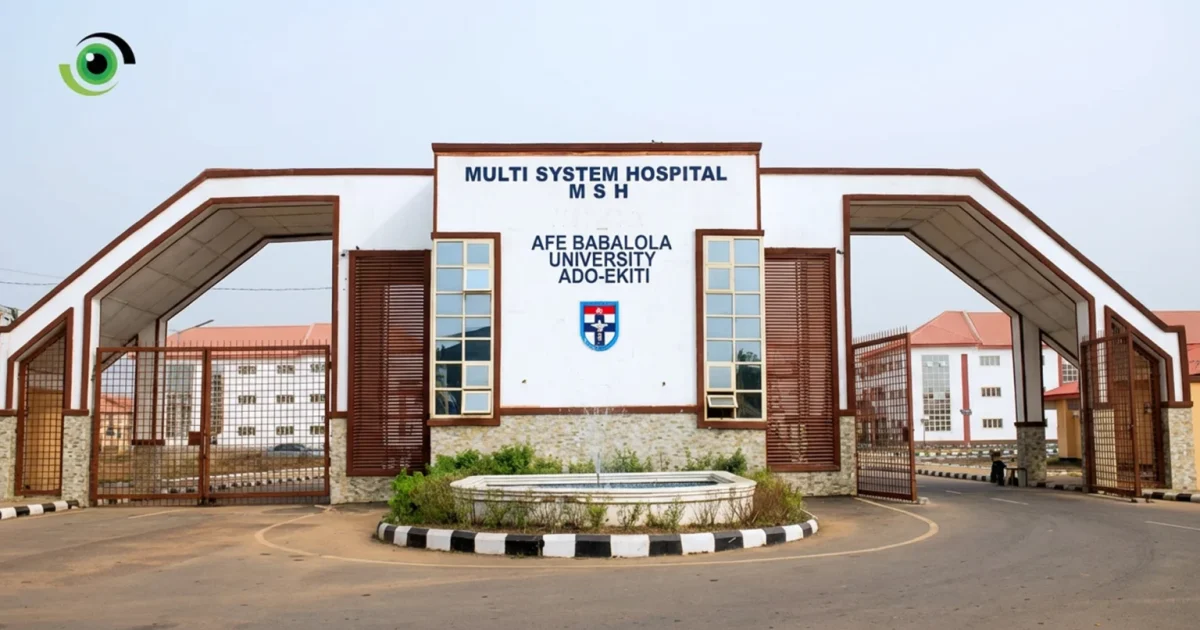
Academics and engineering students of Afe Babalola University, Ado-Ekiti, have called on the Federal Government to increase investments in technology infrastructure and practical engineering education, saying Nigeria must address gaps in hands-on learning to remain competitive globally.
The call followed the return of 37 engineering students and two lecturers of the institution from a 20-day hands-on training programme at Zhejiang Polytechnic University of Mechanical and Electrical Engineering in Hangzhou, China.
Speaking with journalists on Saturday at the Murtala Muhammed International Airport in Lagos, the Provost of ABUAD’s College of Engineering, Professor Moses Onibonoje, said the programme exposed students to advanced engineering technologies and industry practices that are largely unavailable in Nigeria.
He explained that the practical training followed the completion of a three-month theoretical component in Nigeria, enabling the students to integrate easily into the Chinese institution’s learning environment.
He said, “The participants received hands-on training in programmable logic control systems, digital twin technology, robotic arm design, Computer Numerical Control machines, 2D and 3D printing, coordinate milling machines and advanced metrology equipment.
“This is a pioneer programme for the College of Engineering, and the experience has been overwhelming. Our students acquired advanced skills in intelligent manufacturing and intelligent control technologies. They also gained international exposure by working with world-class facilities.”
He added that the programme also exposed the students to China’s work culture, discipline and technological advancement, while commending the Founder and Chancellor of the university, Aare Afe Babalola (SAN), for facilitating the partnership, which he said would create opportunities for future academic exchanges and postgraduate scholarships.
Also speaking, an Associate Professor of Mechanical Engineering, Doctor Imhade Okokpujie, said Nigerian students possess the intellectual capacity to compete globally, but inadequate laboratory and workshop facilities remain a major challenge.
“Our students demonstrated remarkable intelligence and adaptability throughout the programme. They participated in programming, advanced manufacturing and 3D printing exercises. However, if Nigeria must attain global competitiveness in engineering, there must be deliberate investment in modern laboratories and practical learning facilities,” she said.
Some of the students described the training as a life-changing experience.
A 500-level Mechanical Engineering student, Adeniji Opeyemi, said the programme enabled participants to apply theories learnt in the classroom through the use of sophisticated equipment.
“We worked with CNC lathe machines, CNC milling machines, 3D printers and digital twin systems. These are technologies we had learnt theoretically but had never operated before,” he said.
Opeyemi urged the government to equip Nigerian universities with modern engineering facilities, noting that students in China spend more time in workshops and laboratories than in conventional classrooms.
Similarly, a 500-level Mechatronics Engineering student, Judith Obioha, said the availability of sufficient equipment ensured that every student gained practical experience.
She added that participants also learnt basic Chinese language and culture and visited museums during the exchange programme.
The university said the initiative forms part of its efforts to strengthen international collaborations and equip its graduates with skills in automation, robotics and intelligent manufacturing.






Ubi Franklin Reveals His Biggest Life Regret Over Having Children With Multiple Women

NASS to place state police on first-line charge, says Senate

INEC, NIMC Deepen Partnership to Strengthen Voter Register, Digital Identity System

Wildlife expert seeks snake protection laws to curb Lassa fever

Horror as young boy killed by lion after animal ‘teased’ with torches

England vs France Set for World Cup Bronze Medal Battle After Semi-Final Heartbreak

“You Reject Single Mothers in Nigeria but Marry Them Abroad” — Lady Calls Out Nigerian Men Over Alleged Double Standard

 Investigation3 days ago
Each and every one of you is guilty РDanish aid worker Anja Ringgren Lov̩n slams Nigerians filming malnourished child accused of being a witch in viral video
- Society1 day ago
35-Year-Old Man Breaks Down In Tears Like A Baby At Roadside After Wife Reportedly Goes Missing At Kasoa Market
- National2 days ago
Gbajabiamila: I borrowed N400 million to buy appointment in Tinubu’s government, says Adeyemi
- Investigation2 days ago
Veterans demand â¦250,000 Minimum Wage for soldiers
- Investigation18 hours ago
Suspected ISWAP logistics supplier arrested with food items bound for terrorists in Borno
- National19 hours ago
JUST IN: Senate to give N10million each to families of security operatives, teachers killed in Oriire rescue
- Investigation3 days ago
Female teacher admits to having s£x with boy, 16, as she splits from husband who first exposed her misconduct.
- Investigation2 days ago
Twelve people arrested after âextreme right-wing terror threatâ against Islamic event in UK