National
FG Plans Nearly N1tn Spending on SUVs, Empowerment Despite Rising Debt

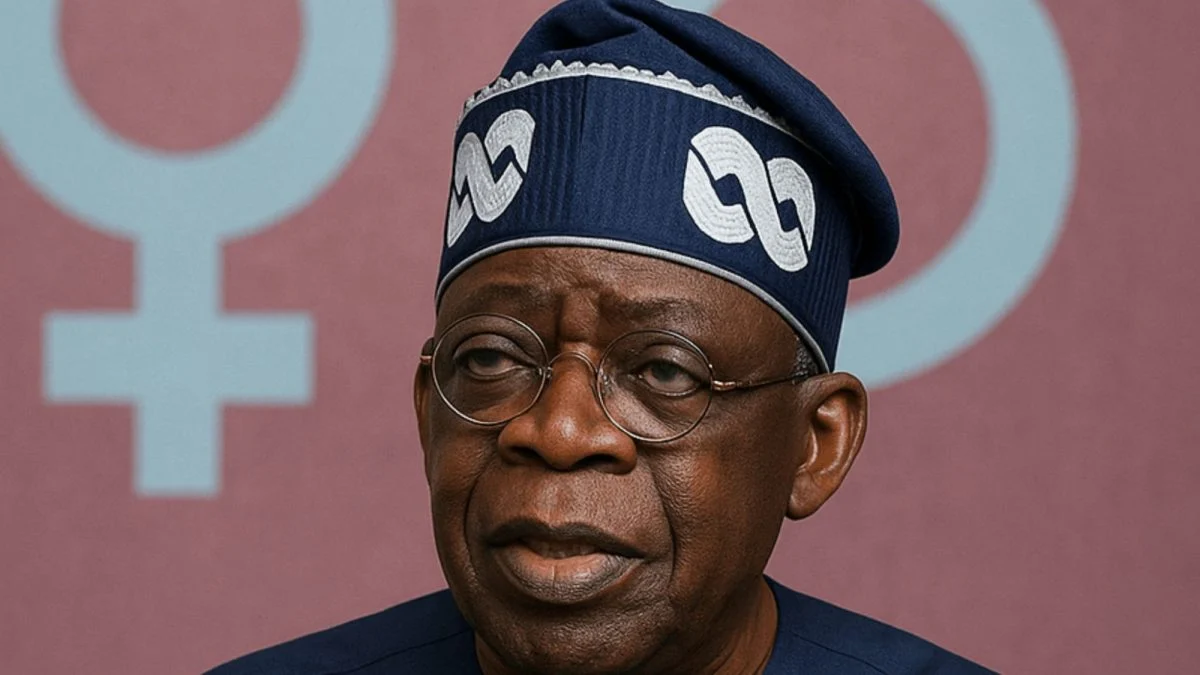
The Federal Government has earmarked N962.83bn for the procurement of Sport Utility Vehicles (SUVs) and empowerment projects in the 2026 Appropriation Act despite growing concerns over the country’s rising debt profile and increased borrowing plans.
The allocation includes N15.13bn for the purchase of 39 SUVs and N947.70bn for 2,579 empowerment projects.
In an analysis of the 2026 budget by civic technology organisation Tracka, the amount allocated for the SUVs and empowerment initiatives is higher than the combined N960.27bn budgeted for seven key federal ministries. According to the organisation, the Federal Ministry of Industry, Trade and Investment received N156.8bn, Housing and Urban Development N145.3bn, Women Affairs N169.39bn, Justice N150.7bn, Livestock Development N177.6bn, Aviation and Aerospace Development N87.3bn, while Petroleum Resources was allocated N73.1bn.
The organisation also raised concerns over what it described as poor transparency in the implementation of the empowerment projects. It revealed that only 70 out of the 2,579 projects have clearly identified locations, making it difficult for citizens and oversight agencies to monitor execution.
Tracka questioned the lack of details, saying, “How can citizens track projects with no stated location? How can oversight institutions verify implementation? How can taxpayers know who ultimately benefits from these allocations?”
According to the findings by the group, the projects are spread across 184 implementing agencies, including institutions that do not ordinarily have mandates to run empowerment programmes. It noted that the Federal Cooperative College, Oji River, was assigned 393 projects worth N127.1bn, while the National Agricultural Development Fund received six projects valued at N89.5bn. The Federal College of Horticulture, Dadin-Kowa, Gombe, was allocated 216 projects worth N88.1bn, while the Federal Cooperative College, Ibadan, received 94 projects valued at N36.9bn.
The budget analysis further showed that the largest single empowerment allocation is N89.09bn for the Renewed Hope Fertiliser Support Programme under the National Agricultural Development Fund. Other major allocations include N14bn for the procurement and distribution of empowerment equipment and utility vehicles through the Federal Cooperative College, Oji River, another N14bn for youth empowerment under the Federal Ministry of Youth Development, and N14bn for youth empowerment and medical outreach under the Ministry of Humanitarian Affairs and Poverty Alleviation.
The budget also contains allocations for buses, tricycles, motorcycles, electric vehicles, sewing machines, fertilisers, vocational equipment, grants and other empowerment items across different agencies and regions.
While acknowledging that empowerment programmes can improve livelihoods when properly managed, Tracka warned that poorly designed interventions often become tools for political patronage rather than genuine development.
It stated, “Let us be clear, there is nothing inherently wrong with empowerment programmes! When well-designed and transparently implemented, they can improve livelihoods, create economic opportunities, and support vulnerable Nigerians.”
The organisation, however, added, “Experience over the years has shown that many poorly defined empowerment projects have become vehicles for political patronage, rewarding loyalists rather than delivering broad-based benefits to citizens. When projects have no clear location, no transparent beneficiary selection process, and are assigned to agencies without the appropriate mandate, public confidence is eroded, and accountability becomes difficult.”
Tracka linked its concerns to the Federal Government’s fiscal position, noting that the 2026 budget is expected to be financed with a deficit of about 46 per cent, meaning a significant portion of spending will rely on borrowing.
It said, “This concern is even more pressing given that the 2026 Budget is projected to be financed with a deficit of about 46 per cent. At a time when government is borrowing heavily to fund public expenditure, every naira should be directed toward investments with clear development outcomes, measurable impact, and value for money, not opaque allocations that citizens cannot effectively track.”
The organisation called for greater transparency in future budgets, insisting that every allocation should have a clearly defined purpose, location, implementing agency, identifiable beneficiaries and measurable outcomes.
The concerns come as the Federal Government recently increased its 2026 borrowing plan to N29.20tn, up from the earlier projection of N17.89tn, following an expansion of the proposed budget to N68.32tn against projected revenues of N36.87tn, leaving a fiscal deficit of N31.46tn.
Economists also questioned the spending pattern. Professor of Economics at Olabisi Onabanjo University, Sheriffdeen Tella, urged the government to ensure empowerment spending supports local production instead of imports.
He said, “Any empowerment should be based on what we produce here. Spending empowerment money to import things simply means that the money is not here, it is not being used here, and it cannot have much positive impact on our economy.”
Lagos-based economist Adewale Abimbola described the allocation as a sign of poor fiscal prioritisation, arguing that infrastructure and human capital development would deliver better long-term economic benefits.
He said, “It shows a lack of prioritisation on the part of the Federal Government. It paints the Federal Government as a poor manager of financial resources.” He added that empowerment programmes should be carefully implemented to ensure they reach genuinely vulnerable Nigerians rather than becoming avenues for waste and abuse.


Tate brothers’ lawyers and prosecutors to set schedule for UK extradition fight

Assembly crisis: OSOPADEC denies role as Speaker’s resignation deadline expires

Security operatives foil attempted vandalism at TCN substation in Bauchi

Someone cosplaying online as Ukraine’s new top general has already fooled thousands

AI and the ‘skinny hamburger, fat bun’ problem — why the future of work needs to look more like a pizza

Top movie directors are rejecting AI. Here’s what they’re worried about.

Mamdani, DSA aim to ‘transform’ America — by pushing barbarism

 News3 days ago
Man Turns ₦270k NELFUND Loan Into First Million
- World3 days ago
Please Don’t Thank Us for the Land
- News3 days ago
Ngozi Nwosu Seeks ₦30m Help for Urgent Surgeries
 Investigation3 days ago
Former p0rn star, Amaranta Hank wins Senate seat in Colombia after campaigning for Adult content creatorsâ rights
- News3 days ago
Five Nigerian Politicians Children Graduate From UK Universities
- Investigation3 days ago
âThey must be held accountableâ â US govt condemns k!lling of nine members of popular cleric, Reverend Dachomoâs family members
- News3 days ago
How to apply for Tunde Onakoya’s ₦250m scholarship, free laptop
- Investigation3 days ago
âAnti-abortion campaigners are not pro-life, they are pro-controlâ â Singer, Olivia Rodrigo shares her views on reproductive rights