World
‘I’m just stuck’: Meet the former OpenAI researcher sitting on $700K of equity that he says is overvalued

This Video Is Trending Right Now
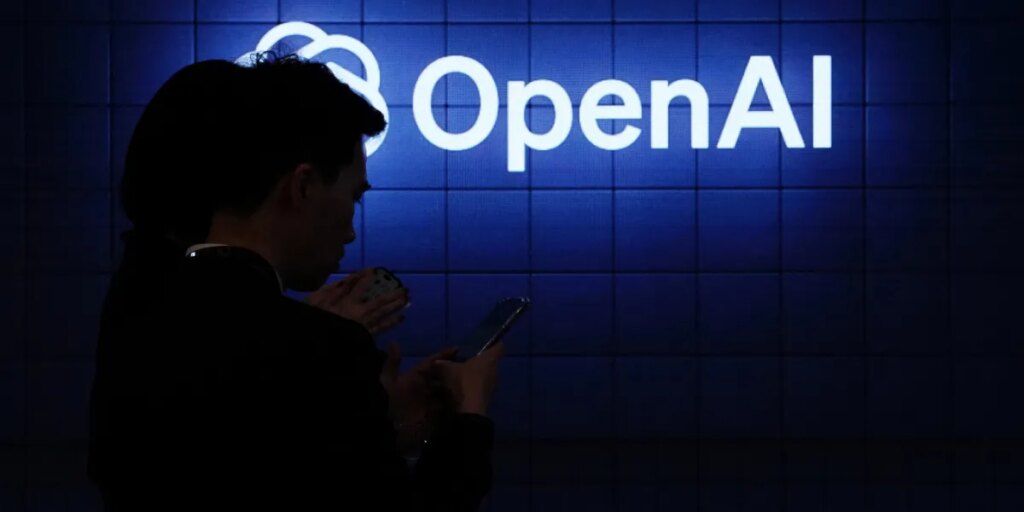
Andrew Ho left OpenAI after eight months on Wednesday, as the former researcher announced on X that he was starting a company to sell high-end reinforcement learning datasets to frontier AI labs. Around 5 a.m. the next morning, still awake, Ho posted some advice for the colleagues he’d left behind: take the money while you can. The frontier labs, he wrote, are overvalued. “I would strongly recommend taking liquidity if you’re eligible for tender offers,” Ho wrote. “It seems somewhat implausible that the valuation is going to, like, 2x after the IPO, but it does certainly seem plausible that it could go down by 50%.” By the time he woke up, the posts had drawn hundreds of thousands of anxious eyes, having arrived in the middle of a tech selloff that had pushed the Nasdaq 100 into correction the day before. “It was kind of remarkable,” Ho said in an interview with Fortune Thursday. He said he has about $700K in shares that he’s not legally allowed to sell until after the IPO and lockup period. “So I’m just stuck,” he said.
So even if he’s talking against his own book, Ho is publicly standing on business. Like most in the industry, he believes that demand for inference will rise dramatically; that there will be a compute crunch soon; that the data center buildout is necessary. But what he’s “paranoid” about is that competition from cheap models is forcing frontier labs onto a faster and faster treadmill of spending, and that revenue will never quite catch up.
Ho doesn’t buy the RSI dream
What Ho describes is what analysts, with a little flourish, like to call a “Red Queen’s race,” where you have to run as fast as you can just to stay in place. Frontier labs are having to pay more and more for each cycle of training, and the advantage it buys is temporary; cheaper competitors like Moonshot’s Kimi can close the gaps for a fraction of the cost through distillation.
Revenue, he added, will almost certainly go up with each model; but the question is, how much? With all the debt frontier labs are taking on, he said, “If you miscalculate even by just a very fine amount, that can be the difference between life or death for a company.”
Most investors and peers at his lab feel okay about this, he added, because they think they’re on the cusp of a breakthrough: RSI, or recursive self-improvement. That’s the idea that an AI system can get good enough at AI research to improve itself, running its own experiments and training its own successors. If each version can build itself a slightly better version, the curve for intelligence could go parabolic, as well as the cost of compute.
But Ho doesn’t buy it. Research, he said, isn’t limited by models’ intelligence; rather, it’s limited by a lack of “research taste.” The models aren’t good at proposing experiments, or at recognizing which results are important and which aren’t. “You can’t reason your way to phenomena,” he said.
Models, Ho added, are extraordinarily good at some things and just bad at adjacent ones, and though the pattern seems random, it’s not. Capabilities have advanced fastest where results are equal to check; a mathematical proof is valid, or it isn’t. A program can compile data, or it can’t. That’s where the billions of dollars of spending have gone, and it’s worked out so far. But everything else that’s harder to verify is still stuck, he said.
And that’s why he left. The low-hanging, verifiable fruit has been picked through, so the next round of gains, as Ho sees it, will come from messier tasks, which is the exact business he’s starting: creating datasets for the judgement-heavy work models still can’t do. His first products will focus on long-horizon scientific reasoning and statistical analysis.
This view puts Ho at odds with the case circulating Silicon Valley social media this week, most prominently from podcaster Dwarkesh Patel, who argued that compute could get 10x more expensive—and thus the labs could make 10x more the revenue—because of RSI. But it puts him more squarely aligned with Wall Street, which sold off 10% of Meta on Wednesday and 8% of Google last week out of fears that the companies funding the AI buildout won’t get their money back. Ho, now speaking more in investor-brain (he has a little background in finance), says the “people making out really happily here are Nvidia and Micron,” since they’re the ones selling the chips to everyone in the race. Labs themselves have two ways out of the Red Queens’s race, Ho added. But both are hard: Labs could build their own chips and break Nvidia’s pricing power. Or they could move up into the application layer and start building and selling more products themselves, like Meta buying Cursor. Right now, Ho argues, the labs capture a fraction of the value their models create in the economy, and that gap is “very undercapitalized at the moment.”
For now, Ho is focusing on fielding the heavy interest in his day-old company, which doesn’t have a name yet, and trying not to think about his locked-up OpenAI equity.
“I see this vested equity, I’m thinking about it, I’m just sort of stressing about what’s going to happen to it,” he said. “It’s this huge proportion of my net worth.”
Most of his former colleagues, he suspects, don’t dwell on it.
“You’re going to work,” Ho said. “Don’t think too hard about these questions. Which is maybe for the best.”


‘Everywhere Go Blur’ – Keyamo Predicts Heavy Defeat for Atiku, Obi in 2027

Osun guber: INEC assures readiness, warns against violence

Cultism, Kidnapping And The Special Security Squad

Farmers allege disappearance of 8,000 bags of Tinubu fertiliser in Taraba

Everyone Is Freaking Out About OpenAI and Anthropic’s Race for Dominance

Accord alleges harassment, arrests of members ahead of Osun governorship election

EDSG Quick Intervention Led To Commencement Of Repair Work Under The Damaged Idogbo Bridge

 Society3 days ago
“We Have Done Everything Possible for Peace, But Adwoa Safo Wants GH¢3.7 Million Before Releasing Our Father’s Body” — Nana Kwadwo Safo Akofena
- Investigation3 days ago
Tinubu will run for third term if Good keeps him alive â Babachir Lawal claims
- Investigation3 days ago
âHeâs my friend, Legendâ â Benzema speaks on Franceâs next Manager Zinedine Zidane
- Investigation2 days ago
âNothing we can doâ- INEC rules out extension of voter registration
- News3 days ago
Group says expansion of Army divisions will enhance security
- News3 days ago
Tanzania charges 61 with terrorism
- Society3 days ago
UNIDO selects Ogun for OGREE waste management project
- Society3 days ago
Lawmaker claims Iran, Turkey plotting regime change in Israel