News
Nasarawa claims major drop in maternal, child death

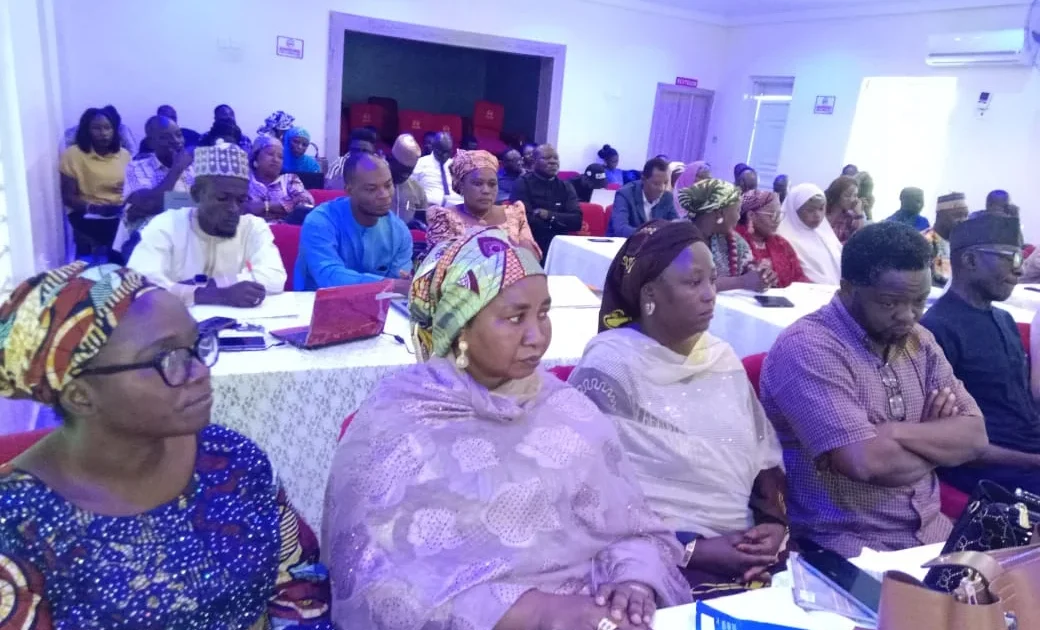
The Nasarawa State Government has said the long-standing issue of maternal and child mortality in Keffi and Nasarawa Local Government Areas has been significantly tackled through sustained policies aimed at improving healthcare delivery for residents.
The Commissioner for Health, Dr Gaza Gwamna, stated this on Wednesday in Lafia, the state capital, during the opening ceremony of the 2026 Joint Annual Review meeting of health workers and partners in the state.
Speaking at the commencement of the two-day stakeholders’ strategic dialogue on health, the commissioner noted that Keffi and Nasarawa LGAs previously had a high burden of maternal and child mortality, but the state government developed policies and strategies that have greatly helped to address the problem.
He said, “Our maternal and child health has improved, and we have seen our enrolment in health insurance also improve. We have seen our surveillance, that is our health security, also improve.
“Where we had a high burden of maternal mortality, like Keffi and Nasarawa, we have been deliberate in implementing some policies that were formulated initially by the Federal Ministry of Health and, of course, we adapted them and have seen great improvement.”
He noted that participants at the 2026 JAR were drawn from across the state, in line with the Federal Government’s efforts to improve healthcare delivery for citizens.
The commissioner further urged health workers in the state to continue building their capacity as they carry out their mandate of ensuring better healthcare delivery.
“We are here to review the performance of the health sector, which we tagged as the Joint Annual Review. So what that means is that everyone in the health sector will come under one umbrella to review our planned activities and see the progress we have made.
“This just started a few years ago so that it helps us to plan ahead. As much as we are reviewing what we planned before, it helps us to prepare ourselves before the next calendar year.
“So far, so good. All the agencies in the health sector are around. The 2026 Joint Annual Review is being coordinated by the Ministry of Health. And we have partners that have joined to support us, led by the World Health Organisation. We also have representatives from the Federal Ministry of Health who have come to witness what we are doing here,” he explained.
He therefore urged participants to pay attention to detail and make useful contributions that would further help boost healthcare delivery across the state’s 13 local government areas.
On his part, the Director of Health Planning, Research and Statistics at the state Ministry of Health, Dr Danjuma Baba, noted that a major challenge hindering the full implementation of health policies in the state was inadequate manpower in healthcare facilities.
“So basically, some of the challenges that are notable and are causing the negative indices to remain high are because some of those programmes do not have the required number of human resources that we need to carry out those functions.
“And so, there is a deliberate effort targeted at ensuring robust recruitment of human resources for health that will manage those programmes and help improve or reverse the negative health indices.
“So basically, financial resources and human resource capacity are what aggregate together to impede some of our performances.”
Meanwhile, Baba commended the Nasarawa State Government under the leadership of Governor Abdullahi Sule for recently employing over 100 nurses and other healthcare workers. He, however, noted that more personnel were needed to better serve residents of the state.
In an interview, the Nasarawa State Sector-Wide Approach Desk Officer, Anna Joshua, explained that the 2026 Joint Annual Review was also aimed at developing a guide for the health sector for the next fiscal year to ensure optimal implementation of healthcare programmes.
“Here in Nasarawa State, we are short of implementing partners; we rather depend on the state government. At the moment, for this second quarter, we have achieved 30 per cent implementation based on the annual operational plan we planned to implement for the second quarter. We are entering the third quarter now.
“And so, the first quarter was 22.3 per cent. You can now see that there is an achievement of over 7 per cent. And if you translate it to resources, to money, and time, it is very huge. However, we are working towards achieving more,” she explained.








Trump’s slimeball lawyer is about to unleash hell after a brazen GOP betrayal

Adeleke, Oyebamiji, Others Sign Peace Accord Ahead of Osun Election

Amupitan inspects Osun LGA offices, says INEC ready for Aug 15 poll

FG won’t negotiate with criminals — Tinubu

Howard Stern’s Ex-Assistant’s Case Crumbles In Court After He Called It A ‘Sham’

“Otti Is Afraid Of Me” – Doris Ogala Dares Abia Governor Over ₦150m Campaign Fee

A SpaceX Rocket Is About to Crash Into the Moon at 5,400 MPH. Then What Happens?

 Investigation3 days ago
Bandits abduct 13 passengers on JosâKano highway, police rescue 9
- Society3 days ago
H1 2026: FCMB Group sustains performance, Reports 99% growth in profit before tax to ₦157.3 billion
- Society3 days ago
“We Have Done Everything Possible for Peace, But Adwoa Safo Wants GH¢3.7 Million Before Releasing Our Father’s Body” — Nana Kwadwo Safo Akofena
- Investigation3 days ago
Tinubu will run for third term if Good keeps him alive â Babachir Lawal claims
- News3 days ago
I prayed my grave wouldn’t be in the forest — Oyo school principal
- Investigation2 days ago
âNothing we can doâ- INEC rules out extension of voter registration
- Politics3 days ago
Okpebholo charges newly trained forest guards to secure Edo forest areas
- News3 days ago
Group says expansion of Army divisions will enhance security