National
Nigeria, AfDB back African mineral value addition, strategic financing

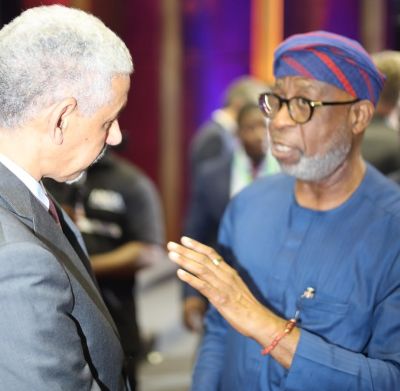
The Federal Government of Nigeria and the African Development Bank (AfDB) have advocated for stronger African control over the continent’s vast mineral resources, advocating data sovereignty, regional collaboration and strategic financing as essential to ensuring that mineral-rich countries in Africa derive greater economic value from their natural assets.
The call was made at the Ministerial Forum on Critical Minerals, Value Chain and Beneficiation: Pathways for African Transformation, where ministers from more than 20 African countries adopted the Abidjan Declaration, a framework aimed at accelerating mineral beneficiation, infrastructure development and investment across the continent.
This was contained in a statement signed by Lara Owoeye-Wise, Special Assistant on Media to the Minister of Solid Minerals Development, on Sunday.
Speaking at the forum, Minister of Solid Minerals Development, Dr Dele Alake, urged African mineral-producing countries to abandon isolated national approaches and embrace regional partnerships capable of unlocking greater value from the continent’s mineral wealth.
Alake said Africa must move beyond exporting raw minerals and adopt practical measures that would guarantee greater ownership and control of its natural resources.
“While the mantra of value addition has ushered in an era of economic independence for mineral-producing nations, we need concrete actionable strategies to take charge and be in full control of our natural assets to ensure total economic freedom,” he said.
The minister, who chairs the Africa Mineral Strategy Group (AMSG), said Nigeria had continued to champion a common continental approach to mineral development, adding that more than 30 member countries of the group were working towards repositioning Africa’s mining sector around value addition.
He also called for Africa to take control of the technical standards used to assess its mineral deposits, describing the long-standing reliance on Australia’s Joint Ore Reserves Committee (JORC) reporting code as outdated.
“For the overall interest of the continent, and to efficiently and effectively safeguard its resources, Africa should take charge of the coding mechanisms utilised to assess its mineral assets,” Alake said.
He advocated the adoption of the Pan African Resource Reporting Code (PARC), developed by the Africa Minerals Development Centre (AMDC), saying the framework would promote transparency, consistency and ethical reporting while reflecting Africa’s unique geological and environmental realities.
Alake further proposed the establishment of a West African minerals processing hub stretching from Lagos to Dakar, modelled after the Lobito Corridor, to enable countries to specialise in processing specific minerals, reduce investment costs and share infrastructure, risks and rewards.
He noted that intra-African trade remained low at about 16 per cent compared to roughly 60 per cent in Asia and 70 per cent in Europe, stressing that stronger regional integration was essential for Africa to maximise its mineral potential.
In his welcome address, AfDB President Dr Sidi Ould Tah described Africa’s vast mineral wealth as a paradox, noting that despite possessing significant deposits of critical minerals, the continent had yet to translate those resources into comparable economic growth.
He also lamented the low level of Foreign Direct Investment flowing into Africa, saying inadequate financing remained one of the biggest obstacles to transforming the continent’s mineral sector.
The forum resolved that African countries should pursue coordinated policies on critical minerals, develop regional infrastructure corridors and strengthen value chains through increased capital mobilisation.
Under the Abidjan Declaration, the African Development Bank committed to deploying its financial instruments, capital mobilisation capacity and technical expertise to support mineral-producing countries, reduce investment risks, finance critical infrastructure and attract greater public and private investment into Africa’s mining sector.
The declaration also urged African governments to build national and regional capacities capable of developing bankable projects, creating sustainable jobs and ensuring that the continent’s mineral resources drive broad-based economic transformation.
The forum brought together more than 20 ministers responsible for mining, energy, industry, natural resources and the green economy, as well as representatives of the African Development Bank, the African Export-Import Bank (Afreximbank), the US Export-Import Bank and mining companies from Germany, Canada and the United States, among others.
At the conclusion of the deliberations, participants reaffirmed the need for stronger African cooperation and greater control over the continent’s mineral resources as essential pathways to ensuring that Africa’s mineral wealth delivers broad-based and sustainable economic transformation.


4 Emo Anthems That Still Hit Every Elder Millennial Right in the Gut

Jigawa unveils 2025–2030 plans to drive local development

Alan Ritchson finally speaks out on viral fight with neighbor: ‘Scariest thing I’ve ever been through’

Makinde’s infrastructure boom will attract foreign investments to Oyo — Expert

I want to be a walking fantasy – Woman says after removing six ribs to get 23-inch âbarbie waistâ

Fuel prices stemming from a war in Iran is reshaping daily life for people in the U.S. and Chile to Turkey and Nepal

‘Fightland’ Review: Starz Boxing Drama Hooks With Punchy First Impression

 Investigation3 days ago
âAnti-abortion campaigners are not pro-life, they are pro-controlâ â Singer, Olivia Rodrigo shares her views on reproductive rights
- Investigation3 days ago
âThey believe Presidency will write resultsâ â Kwankwaso speaks about Governors joining the APC
- Investigation2 days ago
Iâm running for a fourth term as President of the United Statesâ – President Trump
- Investigation17 hours ago
âThe Olodo uprising term was not coined by meâ â Nigerian musician Ycee
- Breaking3 days ago
N210 Trillion: Nigeria’s numbers problem, by Mahmud Nasir Jafar
- News3 days ago
Freshly Commissioned Osun Flyover Damaged Weeks After Opening
- Investigation3 days ago
âI hate when men call women gold diggers. If you can’t afford it, don’t dateâ â Actress Bukky Wright shares her views on relationships
- Investigation3 days ago
âI am in the era of overcoming my fear" – Nigerian acid attack survivor writes as she reveals her amazing transformation after getting a beauty makeover