World
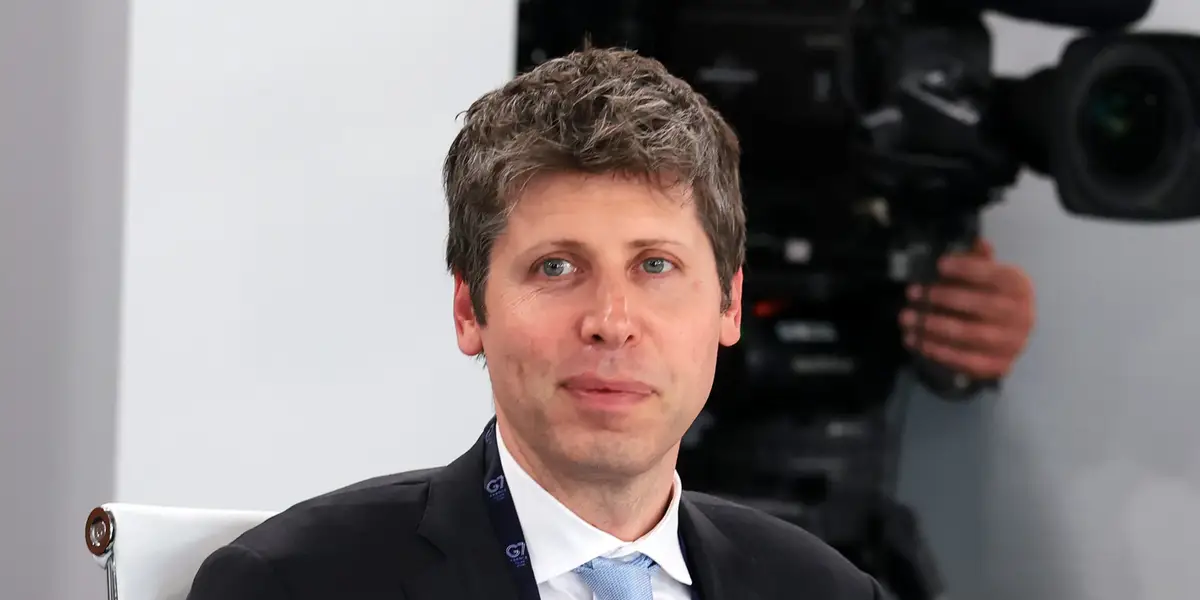
Sam Altman said AI hasn’t led to 4-hour workweeks because people are competitive

This Video Is Trending Right Now
Sam Altman said AI won’t usher in the golden age of the four-day workweek.
In an interview with host Ti Morse on his “Relentless” podcast, released on Saturday, the OpenAI CEO talked about why AI has not led to shorter workweeks for most people.
“Technology, for a long time, has been promising people that they’re going to work less and they’re going to have all this leisure,” Altman said.
He said this trend has played out to some extent, with people having more time for leisure than at previous points in history and a higher quality of life.
“But somehow we never get the promise of the four-hour workweek at mass scale in society,” he said. “And I don’t expect AI to change that.”
He said that as AI drives productivity gains, people are increasingly expecting more of themselves.
“We always want more. We think of new things to do, to create for each other, to want for ourselves. It’s like a relative game. People are very focused on how they’re doing relative to other people,” Altman said.
He said that competition drives the economy and will not stop.
“I think we’re all going to be much busier than we thought we were supposed to be in a post-superintelligence world. We’re still going to complain about it, but secretly we’re going to be happy,” Altman said.
The four-day workweek was an idea that emerged post-pandemic, a tactic to cure employee burnout and give workers more flexibility over their workdays.
In 2023, Business Insider spoke with small businesses that said transitioning to this work model raised employee morale and boosted productivity.
With the C-suite doubling down on five-day return-to-office mandates and promoting the notorious 9-9-6 work culture — working from 9 a.m. to 9 p.m., six days a week — the dream of a four-day workweek has slipped further out of reach.
In the same interview, Altman shared a rather grim checkpoint for AI. He said that “we are now, like, in the singularity,” which refers to a point at which artificial intelligence surpasses human intelligence and begins acting in a rogue manner.
His interview comments followed OpenAI’s latest models breaking out of their sandbox and hacking into a dataset from another AI company.
Still, Altman said the singularity would be “incredible, hugely positive, awesome for the world.”
Read the original article on Business Insider


Man, 22, Arraigned Over Alleged Sexual Assault Of 15-Year-Old In Ajegunle
Men’s coach Gehgeh begs for forgiveness in hilarious video as he reveals what he thinks of men who broke their relationship because of his teachings

McKinsey: Global households got $40 trillion richer in 2025 as the paper wealth economy swelled to $1.8 quadrillion

Six terroristsâ family members surrender to troops in Borno

Students trapped as hostel collapses at Oko Polytechnic in Anambra

Tate brothers’ lawyers and prosecutors to set schedule for UK extradition fight

Assembly crisis: OSOPADEC denies role as Speaker’s resignation deadline expires

 News3 days ago
Man Turns ₦270k NELFUND Loan Into First Million
- World3 days ago
Please Don’t Thank Us for the Land
- News3 days ago
Ngozi Nwosu Seeks ₦30m Help for Urgent Surgeries
 Investigation3 days ago
Former p0rn star, Amaranta Hank wins Senate seat in Colombia after campaigning for Adult content creatorsâ rights
- News3 days ago
Five Nigerian Politicians Children Graduate From UK Universities
- Investigation3 days ago
âThey must be held accountableâ â US govt condemns k!lling of nine members of popular cleric, Reverend Dachomoâs family members
- News3 days ago
How to apply for Tunde Onakoya’s ₦250m scholarship, free laptop
- Investigation3 days ago
âAnti-abortion campaigners are not pro-life, they are pro-controlâ â Singer, Olivia Rodrigo shares her views on reproductive rights