World
This May Be the Most Damning Single Fact in Tesla’s Quarterly Earnings Report

This Video Is Trending Right Now
Tesla’s latest earnings report was very bad news for the company. In the second quarter, it made $1.1 billion in net profit, less than the $1.2 billion it reported a year earlier. Vehicle sales were up, but profits remain about a quarter billion short of expectations, and the automaker’s cash flow is negative for the first time in over two years.
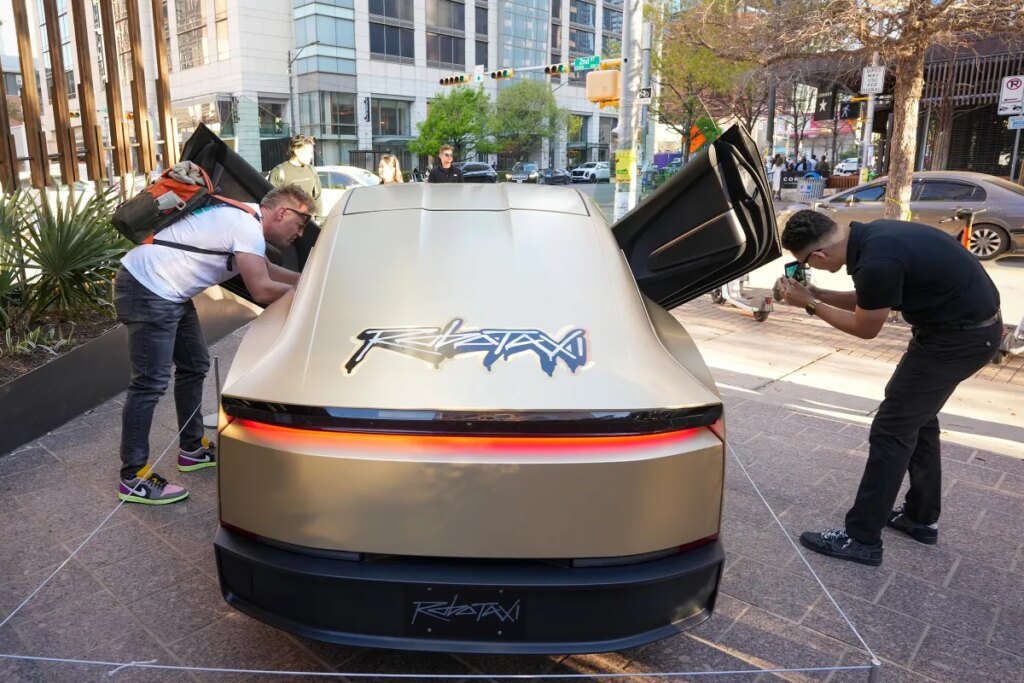
But the real blow has been the slow rollout of its Robotaxi service. Elon Musk has staked his automaker’s future on fully autonomous vehicles, promising investors it would help push Tesla’s valuation to an eyebrow-raising $30 trillion — approximately the gross domestic product of the United States, for perspective.
And importantly, he promised to get this done quickly. Before launching Tesla’s first Robotaxi service in Austin last summer, Musk estimated that over 1,000 of the self-driving cabs would be roaming the streets “within a few months.”
Now, a year later, Tesla doesn’t even have a hundred Robotaxis in operation. And its efforts seem to actually be regressing. According to a new chart the company released Wednesday, the Robotaxi network racked up fewer miles from paying customers in the second quarter than it did in the first.
The chart, which may be the most dismal single aspect of the entire earnings cycle, misleadingly displays this data as cumulative miles to make it appear like the Robotaxi service is steadily growing.
But TechCrunch broke it down, finding that in the first quarter, Tesla’s driverless cabs carrying paying passengers drove around 1.1 million miles, but fell to just 700,000 miles in the second — cratering by over a third.
The misleading chart isn’t the only way Tesla has tried to dress up its stalling efforts. A day before releasing the earnings report, it announced that it was expanding to two more cities in Florida, Tampa and Orlando — without sharing the size of those fleets, Electrek noted.
It should tell you something that Tesla has gone to great lengths to keep the size of its operation under wraps. In June, Bloomberg reported that its fleet size across all cities was just 59 robotaxis. Only third of those are fully unsupervised; the other vehicles have a human safety monitor sitting in the front seats.
It’s also tried to play up its seemingly spotless safety record. Before the report, the official Tesla account on X bragged that there were “0 notable incidents across over 380,000 miles traveled by Robotaxi.”
But Tesla doesn’t define what a “notable incident” is. Its vehicles have regularly been caught driving erratically and at times dangerously. Only a day after launching in Tampa, one of its Robotaxis was spotted blundering the wrong way down a one way street in the city.
Musk has frequently emphasized that he’s “paranoid about safety” to explain why progress has moved slowly, while at the same time promising to scale things up rapidly. In January he projected that the Robotaxis would cover half the US population by the end of the year.
But investors are running out of patience. Tesla shares plunged by 15 percent on Thursday after the earnings were released, in part due to frustration over the Robotaxis’ laggard progress, and another three percent on Friday.
“More is needed to show that Tesla’s capabilities are inflecting” on robotaxis, Barclays analysts said in a note per Reuters, noting that Tesla didn’t provide new expansion targets and “hasn’t met previously laid out targets.”
More on Tesla: It’s Looking Like the Cybertruck Is the Biggest Flop in Automotive History


NDLEA Gets Court’s Nod To Destroy ₦480bn Ogun Meth Laboratory

Adeleke lacks power to suspend NURTW operations in Osun

Why Would Meta Download So Much Porn?

2027: Global community looking up to INEC — Amupitan

Trending video of hair vendor, Slaytitude and his wife

Nigerians abroad can now register births, deaths online — NPC

8 New Movies Our Critics Are Talking About This Week

 Investigation2 days ago
Married woman humiliated after allegedly being caught cheating on her husband with another man in Kogi community
- Investigation3 days ago
âHe bargained the car from â¦15m to â¦13.5m and asked for a test driveâ â Car dealer recounts how suspected car thief allegedly stole vehicle before being caught
- Society3 days ago
Outgoing British High Commissioner praises Tinubu’s economic reforms
 Breaking23 hours ago
âFailed nation, failed parenting and lack of home training’- Lawyer, Deji Adeyanju blasts podcast host for saying a poor man has no place in her heart’
- Investigation3 days ago
Tell my ex-wife to leave, I want to bring my sick mother home â Man begs court
- Society2 days ago
FULL TEXT: Trump’s letter to Tinubu
- Society3 days ago
Atiku-linked lobbying firm submits Tinubu’s forfeiture records to Trump
- National3 days ago
“ICPC Probes Offa Poly Rector Over Alleged Extortion Using Commission’s Name” — ASUP Alleges ₦1.8m Payment, Further ₦5m Demand