News
Troops kill 274 insurgents as Nigeria records 882 attacks

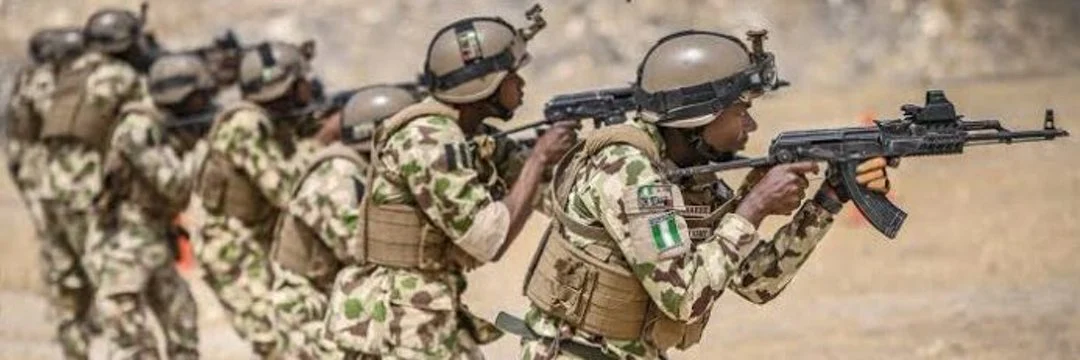
At least 792 persons lost their lives in 882 security incidents across all 36 states and the Federal Capital Territory in June 2026, with the military killing 274 insurgents, according to the latest report by SARI Global, a risk intelligence and security analysis firm that specialises in providing operational data, climate intelligence, and crisis management support for organisations working in the world’s most volatile environments.
This is as the report staed that the Islamic State West Africa Province launched a coordinated strategy in the Monguno axis of northern Borno that blocked access to humanitarian aid from reaching hundreds of thousands of internally displaced persons.
The document, SARI Global’s Nigeria Monthly Security Overview for June 2026, obtained by The PidomNigeria, identified the Monguno axis, covering the garrison towns of Monguno, Cross Kauwa, Baga, and Kukawa, as the country’s critical humanitarian flashpoint driven by ISWAP’s nighttime compound raids and daytime arson of aid-contracted cargo along the Monguno to Gajiram road.
The monthly Nigeria report is published on ReliefWeb, a leading humanitarian information repository on global crises managed by the United Nations Office for the Coordination of Humanitarian Affairs.
According to the report, the first week of June recorded 217 incidents; the second week, spanning June 8 to 14, recorded both the peak incident count of 278 and the highest fatality total of the month.
It said the activities intensified on June 14, 8, 11, and 13, when insurgent attacks, banditry, and heavy state counter-operations coincided across multiple theatres simultaneously.
“June opened at an elevated baseline and escalated through its first half before settling into a violent plateau.
“The first week recorded 217 incidents, and activity climbed sharply in the second week, which was the most intense of the month, with 278 incidents recorded and the peak fatality total.
“The tempo concentrated on a handful of days, 14, 8, 11 and 13 June, when insurgent attacks, banditry and heavy state operations coincided across multiple theatres.
“The arc of the month was therefore front-loaded, with the security apparatus containing but never reversing the early escalation, and lethality remaining high into the fourth week on the back of sustained rural attrition in the North-West,” the report stated.
According to the report, most defining incident of the month happened on June 24, when ISWAP fighters breached the 20 Units Housing area of Monguno town at night and abducted an international NGO staff member together with a local guard.
SARI Global added that the operation indicated detailed prior intelligence on the location of humanitarian personnel and the security architecture of their accommodation.
Days later, fighters operating informal vehicle checkpoints torched two NGO-contracted commercial trucks on the Monguno to Gajiram road on June 29, following an earlier arson attack on aid cargo on June 18.
The deliberate destruction of food cargo, the report says, revealed a calculated tactic to intimidate commercial vendors, deter them from contracting with humanitarian actors, and restrict the flow of essential commodities to isolated IDP communities in northern Borno.
SARI Global said ISWAP’s activities made staff unsafe at night and supply routes unsafe by day, thereby controlling humanitarian operations from outside the perimeter.
It noted that the arson attacks also led commercial vendors to withdraw from the route, raising the risk of delayed distributions and reduced food availability during the lean season.
“Running in parallel, ISWAP sustained a campaign of daytime supply-route interdiction along the Monguno to Gajiram road. Following an arson attack on June 18, fighters operating informal vehicle checkpoints torched two NGO-contracted commercial trucks on Jun 29, executing these operations in broad daylight and exploiting the limited presence of government forces.
“The deliberate destruction of food cargo is a calculated tactic to intimidate commercial vendors, deter them from engaging with humanitarian actors, and restrict the flow of essential commodities to the garrison towns of Monguno, Cross Kauwa, Baga and Kukawa,” SARI Global stated.
According to the June data, government-affiliated forces were the most frequent initiating actors, associated with 375 of 882 recorded incidents, the single largest share.
It said this was driven by an aggressive tempo of law-enforcement operations, arrests, seizures, and cordon activity.
The breakdown of the recorded deaths is as follows: government-affiliated forces (274), non-state armed actors (337), civilians (64), criminal actors (30), unknown actors (86) and political actors (1).
Despite generating the highest incident count, however, government-affiliated forces accounted for 274 of the 792 confirmed fatalities.
Non-state armed actors, by contrast, initiated 224 incidents, yet caused the most deaths totalling 337 fatalities, representing 42.5 per cent of all confirmed deaths in June and producing a kill-rate per incident far higher than that of government forces.
The remaining 181 fatalities were distributed across four other actor categories.
Unknown or unattributed actors accounted for 86 deaths from 54 incidents, the third-highest fatality figure, reflecting the difficulty of attribution in remote North-East and North-West theatres.
Civilians, involved in 124 incidents, recorded 64 fatalities. Criminal actors, responsible for 64 incidents, caused 30 deaths. Political actors, though associated with 39 incidents, accounted for just one confirmed fatality.
SARI Global said the attribution outlook revealed that non-state armed actors killed more people in fewer engagements, while the unknown-actor category recorded 86 deaths from 54 incidents.
The report cautioned that “A busy security apparatus is not the same as an improving environment.”
It said Borno was the single most violent state, recording 109 incidents and 172 confirmed fatalities, the highest of any state, concentrated around the Lake Chad basin, the Sambisa Forest periphery, Gwoza, and northern garrison towns.
Zamfara followed with 63 incidents, which it said reflected the entrenched banditry economy in the North-West.
Plateau recorded 51 incidents, Katsina (44), Lagos (40), the FCT (36), Rivers (32), Oyo and Sokoto (31) each, and Niger (29).
By incident category, criminality and law enforcement generated the largest volume at 369, followed by armed conflict at 297, civil unrest at 110, hazards at 64, and The report noted that despite their share of raw incidents, the armed conflict category carried a high lethality as non-state armed actors recorded 337 fatalities from 224 incidents.
This significantly outpaced the 274 fatalities recorded against the 375 incidents involving government-affiliated forces.
SARI Global also highlighted what it described as an expanding threat to educational facilities.
It said on June 29, ISWAP fighters raided the Government Day Secondary School in Lassa, Askira/Uba LGA, abducting students and teachers and exfiltrating with the majority of hostages in broad daylight.
It rated the attack as ideologically driven and instrumentally calculated to generate international attention while exposing state vulnerability.
The report warned that each successful abduction of this kind emboldens replication and that educational facilities in peripheral LGAs near the Sambisa axis must now be treated as elevated-threat settings.
“The failure to detect the group’s movement before the assault, and the absence of a rapid security response, reflect severe constraints in local surveillance, early-warning and community-alert mechanisms.
Each successful abduction of this kind emboldens replication,” it said, advising the government to “Treat all educational sites in peripheral LGAs near ISWAP strongholds as elevated-threat settings. Organisations with education or child-protection programming should reassess site security, the visibility of their association with targeted institutions, and movement timing, and should not rely on state protection frameworks that have repeatedly failed to detect or interdict these assaults”
According to the report, an assault of a different kind was carried out on June 5 in Banki, Bama, when an INGO staff member was attacked during food distribution by an individual excluded from the beneficiary list.
The report identified this as part of a growing but under-appreciated threat category it described as “beneficiary aggression,” warning that crowd-driven risk at distributions will intensify as lean-season food insecurity deepens into July.
Across the North-West, 67 insurgent-style ambush and explosive attacks were recorded in June, including an improvised explosive device on the Bagega to Anka road in Zamfara on June 15.
SARI Global noted that the spread of IED tactics from the North-East into the Zamfara, Katsina, Sokoto, and Kebbi belt suggests cross-pollination of methods between armed groups, adding a persistent area-denial threat to corridors that humanitarian logistics depend upon.
In the South, Lagos (40 incidents), Rivers (32), and Oyo recorded a lower-lethality but persistent mix of criminality, protest, and road-traffic incidents.
It said the 36 incidents recorded in the FCT were dominated by civil unrest linked to the advancing 2027 electoral cycle.
The report also identified the territory as an emerging primary flashpoint for politically driven protest, characterised by heavy crowd-control deployments and a low state threshold for coercive intervention.
In July, SARI Global projected that the gap between humanitarian need and response capacity will widen.
It said that deepening lean-season food insecurity will raise both the demand for distributions and the risk of crowd-related friction, while the sustained ISWAP campaign will continue to constrain the supply chain on which those distributions depend.
SARI Global, a US-registered security intelligence firm, provides conflict monitoring, threat analysis, and operational risk advisory services to international NGOs, UN agencies, embassies, and corporations working in high-risk environments.
Founded by professionals from the humanitarian, military, and private sectors, the organisation operates across Africa, the Middle East, and Asia.






Osun 2026: APC deputy gov candidate, Adeleke clash over religion stance

Pilot says one factor saved man almost sucked out of Ryanair plane

Sabotage, Corruption, Tribalism and Financial Recklessness Rocks Akwa-Ibom NSCDC Boss, Geraldine ABETIANBE

BREAKING: Ex-minister of Science, Uche Nnaji docked, denies certificate forgery
Amnesty demands probe into deadly Otukpo attack, urges protection for civilians

Seyi Tinubu, ministers to speak at Africa leadership conference

Donald Trump's ally Lindsey Graham's possible cause of death revealed

 National1 day ago
At Last, Fresh Video Showing How Some Of The Terrorists Was Arrested During Rescue Of Oyo Schoolchildren Emerged [WATCH HERE]
- News21 hours ago
Army officer killed during rescue of kidnapped Oyo pupils, teachers buried

 Investigation3 days ago
EU tells Meta to change Facebook and Instagramâs âaddictive designâ or face fines
- Investigation2 days ago
â"I want my wife submissive but I don’t want a daughter like that" Man reveals what he expects of his wife and how he’s raising his daughter to be the opposite of that
- News2 days ago
Police SFU nab suspect over alleged ₦3bn cyber fraud
- World2 days ago
Runner gored in the face at Spain’s San Fermin bull run festival
- Investigation3 days ago
Presidential aide, Bwala claims he rejected Al Jazeeraâs apology over controversial interview and now has a lawsuit against them in court
- Breaking2 days ago
â"Your marriages are not working because you’re l£sbians" Actress Shan George slams married women who are divorcing and blaming their husbands