World
Trump’s generic drug tariffs will drive up pharmaceutical prices

This Video Is Trending Right Now
President Donald Trump on Tuesday set a two-year deadline for manufacturers of generic drugs to move production plants to the United States, lest they face a 100 percent tariff. That would be a great way to jack up prices for lower-cost drugs that millions of Americans rely on — just ahead of the 2028 election.
The tariff threat is an extension of a similar gambit that Trump announced in April against branded drugs. The idea then was to use the threat of levies to jawbone drug companies into signing agreements to relocate to the U.S. or to sell versions of their products on TrumpRx, the administration’s drug discount platform. Many companies subsequently agreed to such deals, though details remain sparse.
That ploy exempted generic drugs, a tacit acknowledgment that applying the same pressure to that segment of the pharmaceutical industry would be hugely unpopular. Generics make up around 90 percent of all filled prescriptions in the U.S., and of those, 70 percent are sourced from other countries.
Compared with branded drugs, manufacturers of generics sell their products at much smaller margins. That gives them far less room to absorb the cost of tariffs. Nor would it be easy for companies operating abroad to reshore production to the U.S. without affecting prices. Some will surely look for government support to make it happen.
Many questions remain about Trump’s new proposal. Would the levies apply to pharmaceutical ingredients, of which more than 80 percent come from other countries? Or would manufacturers be able to avoid the tariffs if they merely “finish” the production of their pharmaceuticals in the U.S.? And what exactly counts as “reshoring” to the U.S.? Will there be any enforcement mechanisms to make sure companies follow through?
If Trump’s first round of threats is any indication, manufacturers will no doubt try to take advantage of these ambiguities to strike the most beneficial deals for their businesses. Backroom lobbying for special treatment will be intense, and there will be little transparency to judge these deals. That’s a recipe for cronyism.
The administration casts the tariffs as an effort to protect the U.S. drug supply from foreign adversaries such as China. But if anything, this invites uncertainty into the market, weakening the U.S. pharmaceutical industry at a moment when China’s biotech leaders are making enormous gains.
Trump made lowering drug prices a central promise of his campaign. Voters will see these tariffs for what they are: a tax that will make health care more expensive.


“Chocolate City Employee Sues Odumodublvck Over Alleged Assault At Flytime Festival” — Seeks ₦50m For Losses, Medical Expenses, Emotional Distress

D4vd’s garage had signs of blood where girl’s body was likely cut up, expert testifies

ADC rejects social media shutdown bill

How Trump authentic letter to Brazil president exposed fake Trump letter to Tinubu – US Firm
How Trump authentic letter to Brazil president exposed fake Trump letter to Tinubu – US Firm
D4vd’s garage had signs of blood where girl’s body was likely cut up, expert testifies

Angelina Jolie and Brad Pitt’s daughter Vivienne asks court to drop her dad’s last name

 Society3 days ago
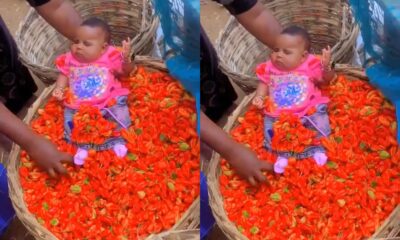
Pepper Seller Caught On Camera Applying Pepper On Newborn Baby As Rituals To Usher Her Into The Business
- Society3 days ago
2026 Ballon d’Or: Top 4 players to win award after World Cup final revealed
- Investigation1 day ago
65-year-old married female teacher blindfolded and tied 10-year-old schoolboy to bed before having s3x with him
- Investigation2 days ago
"I ‘m fine and healthy" – Video of late Mary Habila debunking her d3ath rumours 3 days before she d!ed at Umahi’s residence
- Investigation1 day ago
âBusinesses are dy!ng in South Africa. Nobody is making money – South African man decries low patronage days after anti-immigrant protest
- Investigation3 days ago
âResurrection of the Christâ writer reveals actor Mel Gibsonâs dark spiritual warning about âPassionâ sequel
- Investigation3 days ago
Army, hunters rescue kidnapped victim along BenueâNasarawa border
 News2 days ago
Alleged fraud: Court grants ex-Warri refinery MD, Jimoh Yisawu ₦500m bail