World
UK sanctions Russian scientists and research labs linked to Salisbury attack

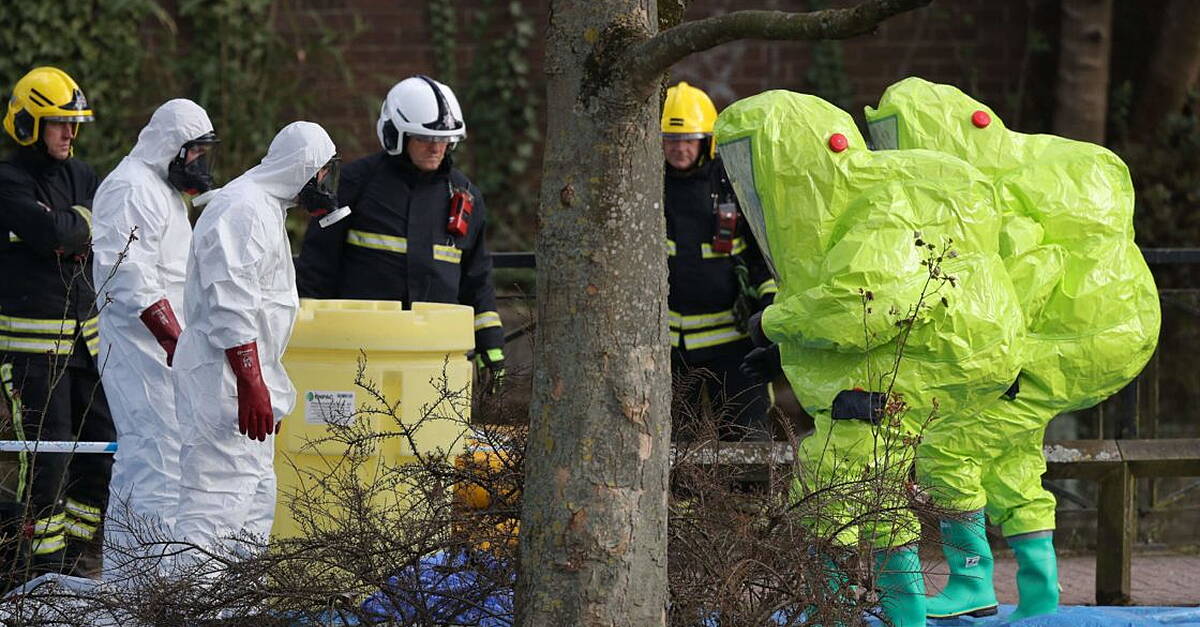
The scientists and institutions responsible for developing the Novichok nerve agent used in the 2018 Salisbury assassination plot have been hit with sanctions by the UK government.
Dawn Sturgess died after coming into contact with the poison which was used in an attempted assassination of former spy Sergei Skripal and his daughter Yulia.
The sanctions announced by the Foreign Office also targeted the Russians involved in the development of the Epibatidine toxin used against Alexei Navalny, a prominent opposition leader and critic of Vladimir Putin.
UK foreign secretary Yvette Cooper said: “Russia’s repeated use of chemical weapons is a sickening violation of international law and a direct threat to global security.
“From the use of Novichok nerve agents in Salisbury to Epibatidine in Siberia, poisoning Dawn Sturgess and Alexei Navalny, Russia continues to use barbaric tools to inflict death and suffering on innocent civilians, including in Ukraine.
“We will continue to call out Russia’s violations of the Chemical Weapons Convention, hold those responsible to account, and work with allies to deter further use of these dangerous weapons.”
The sanctions, including asset freezes and travel bans, apply to seven individuals and two research institutes.
The measures will target: SC Signal, a Russian state scientific research institute, and GNIII VM, the state scientific research and testing institute for military medicine.
The scientists hit by sanctions include Andrei Antokhin and Viktor Taranchenko, who conducted research on Novichok nerve agents, and Vladimir Kondratyev, who co-authored a paper on the toxic qualities of Epibatidine.
The others added to the sanctions list were: SC Signal’s director Artur Zhirov, GNIII VM chief Sergei Chepur, the chief scientist at SC Signal Alexsandr Makhlay and head of SC Signal’s fourth scientific research department Ivan Kravstov.

Ms Sturgess, 44, died after being exposed to the chemical weapon known as Novichok, which was left in a discarded perfume bottle in Amesbury, Wiltshire, in July 2018.
It followed the attempted murder of former spy Mr Skripal, his daughter and then-police officer Nick Bailey, who were poisoned in nearby Salisbury in March that year.
They were harmed when members of a Russian GRU military intelligence squad smeared the nerve agent on Mr Skripal’s door handle.
Alexander Petrov, 46, and Ruslan Boshirov, 47, are believed to have travelled to Salisbury together to carry out the attack, aided by a third agent, Sergey Fedotov, an alias for GRU officer Denis Sergeev.
Petrov’s real identity was believed to be Alexander Mishkin, who was a doctor for the GRU.
Boshirov’s was believed to be Anatoliy Vladimirovich Chepiga.
Mr Navalny died in a Siberian penal colony in 2024 after being targeted with Epibatidine, a substance developed from a poison dart frog toxin.


NADCEL 2026: Your injuries are ‘badges’ of honour, COAS tells wounded troops

EXCLUSIVE: Signage To 'Non-Existent' Presidential Council Still Mounted At Federal Secretariat Complex Despite Tinubu Presidency's Denial

US ends search for Navy pilot lost when helicopter crashed during Iran war

When elections are compromised, public trust is eroded — INEC

Kwankwaso mourns ex-Bauchi dep gov’s children killed in road crash

ALAS!!! Bouncer Loses Life As Sam Larry Hospitalized After Fatal Road Accident in Lagos [PHOTO]

Asaba King, Prof. Azinge Bans Deltans From Selling Ogbono In Markets And Hotels, Says It’s Against Tradition

 National2 days ago
Against Nigerian Law, CBN Deputy Governor Emem Usoro Allows Her Eleven Years Old Twin Daughters To Be Company Boss
 Investigation3 days ago
"Sometimes a man can genuinely love a woman and still not marry her because his spirit isn’t at peaceâ â X user shares opinion
- Society8 hours ago
H0rny Old Man Caught On Camera In Broad Daylight Trying To Chop Mad Woman At Roadside
 Society1 day ago
Sad Video emerges showing Kenyan Lady working in the Middle East crying in distress
- World2 days ago
Girl, 16, repeatedly raped by her older brother who 'saw his late wife in her'
- Investigation2 days ago
âWhatâs my sin?â â TV host Morayo Afolabi-Brown reacts after caller cÂ¥rses her over questions asked during interview
- Investigation3 days ago
âIâll be travelling to other African countries to encourage citizens to hold their governments accountable and build better nations" – Leader of a South African anti-migration group, Phakelâumthakathi
- Society2 days ago
61-Year-Old Woman Gives Birth To Healthy Baby In Greater Accra After Decades Of Childlessness