World
Ukraine’s arms makers say they need to figure out how to constantly update their weapons — without slowing output

This Video Is Trending Right Now
Defense companies supplying Ukraine’s army are trying to strike the right balance between constantly updating their weapons to stay on the cutting-edge of combat technology and producing enough of them for the fight against Russia’s invasion.
The war is changing so quickly that battlefield technology can become outdated within weeks, forcing arms makers to continually adapt their products to new threats and countermeasures.
Companies have changed how they design and manufacture weapons to move faster. That said, arms makers still need to produce weaponry at scale for a war chewing through equipment at a rate rarely seen in recent Western conflicts.
Achi, the CEO of the Ukrainian-Estonian robot, drone, and software company Ark Robotics, told Business Insider that when “talking about scale manufacturing, any change comes at a very high price.” Redesigning or making major changes can halt or slow production for long stretches and consume a lot of resources.
However, change is vital. “You cannot afford not to be able to make changes.”
“We need our company to work at scale,” Achi said. That means trying to chart the general trend of what’s needed and what’s going to be needed without taking too many risks or repeatedly disrupting production.
Striking the right balance, he said, is “really difficult.
The company takes risks at times to predict battlefield developments and shifts in the war, such as the bet it made at the beginning of last year that drone video and control links would shift from being mostly analog to increasingly being handled by onboard computers.
“That’s kind of the big bet we made, and the engineering direction to make it possible,” Achi said.
“We also don’t want to get trapped too much in this constant change cycle. So we try to find the trend and stick to it because then we can deliver on mass and quality,” he said.
With any of the changes it tests, the company always has to ask, “What could be the potential impact if we scaled it a thousand times?” Achi said.
“This iteration cycle is insane,” he added. “I’ve never seen anything like it.”
Gediminas Guoba, the CEO of Lithuanian drone maker Granta Autonomy, which has products in Ukraine, told Business Insider that trying to maintain that balance between producing at scale and making products that are well-suited to the requirements of the battlefield is crucial.
It’s a challenge that demands paying attention to immediate battlefield needs while also thinking further ahead about what will be needed in the longer term to avoid innovating in the wrong direction and becoming irrelevant.
The company has to “focus quite a lot on solving current issues, improving capability, bringing new features and capabilities. But at the same time,” Guoba said, “we need to think about how this year or next year will look like and what we should focus on because if we focus on today’s issues, maybe tomorrow we will lose the battle.”
New ways of making weaponry
Companies are striking this critical balance by designing their products to be easily altered and upgraded.
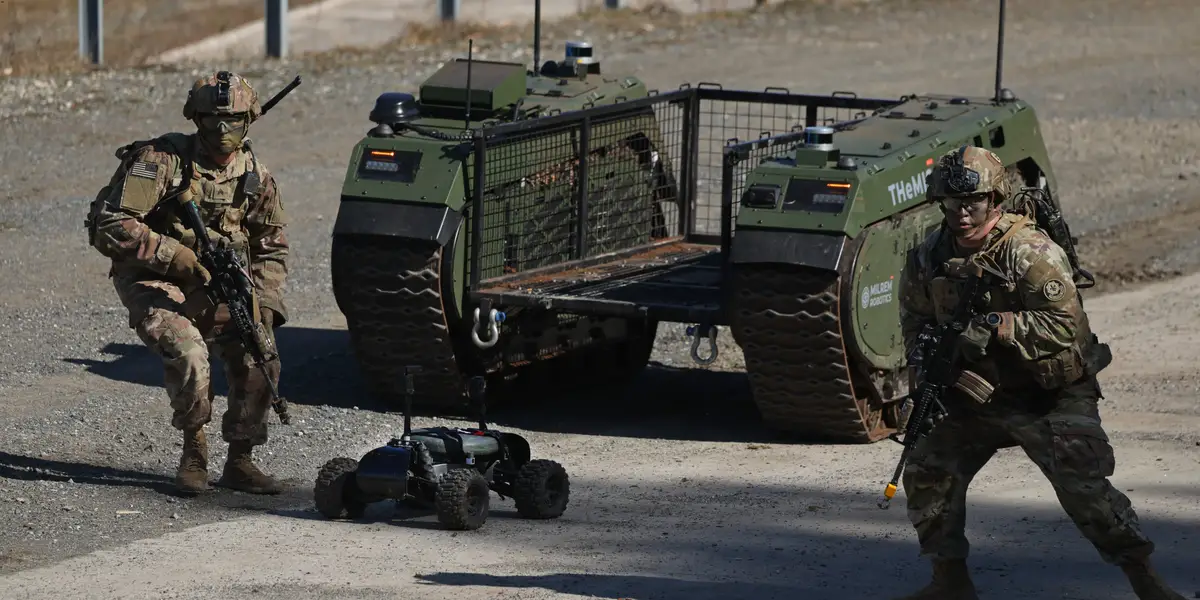
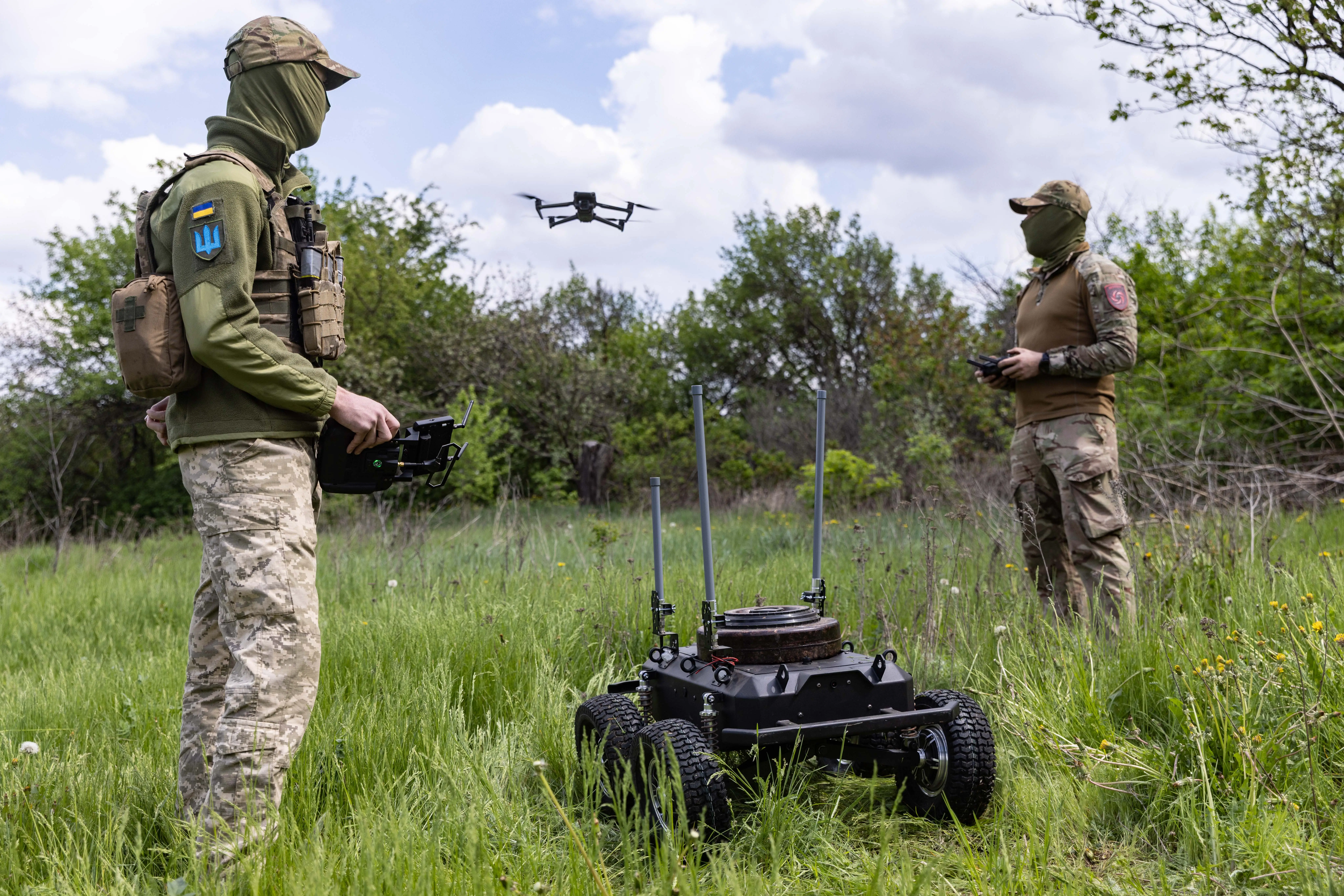
“We focus on building the UGV platform that is as cheap and as mass producible as possible,” Achi said. A UGV is an uncrewed ground vehicle, also known as a ground robot.
“And then when we get this right, we can do surface-level customization, either by making it armor or putting additional equipment on it or stuff,” he explained, “but the base of it stays the same, and we are able to manufacture it in substantially large numbers, so the price is low.”
Ark and other companies working in Ukraine are doing the same, changing how they build weapons, including making them modular and software-first so they can be upgraded without needing to be rebuilt or taken off the battlefield for long.
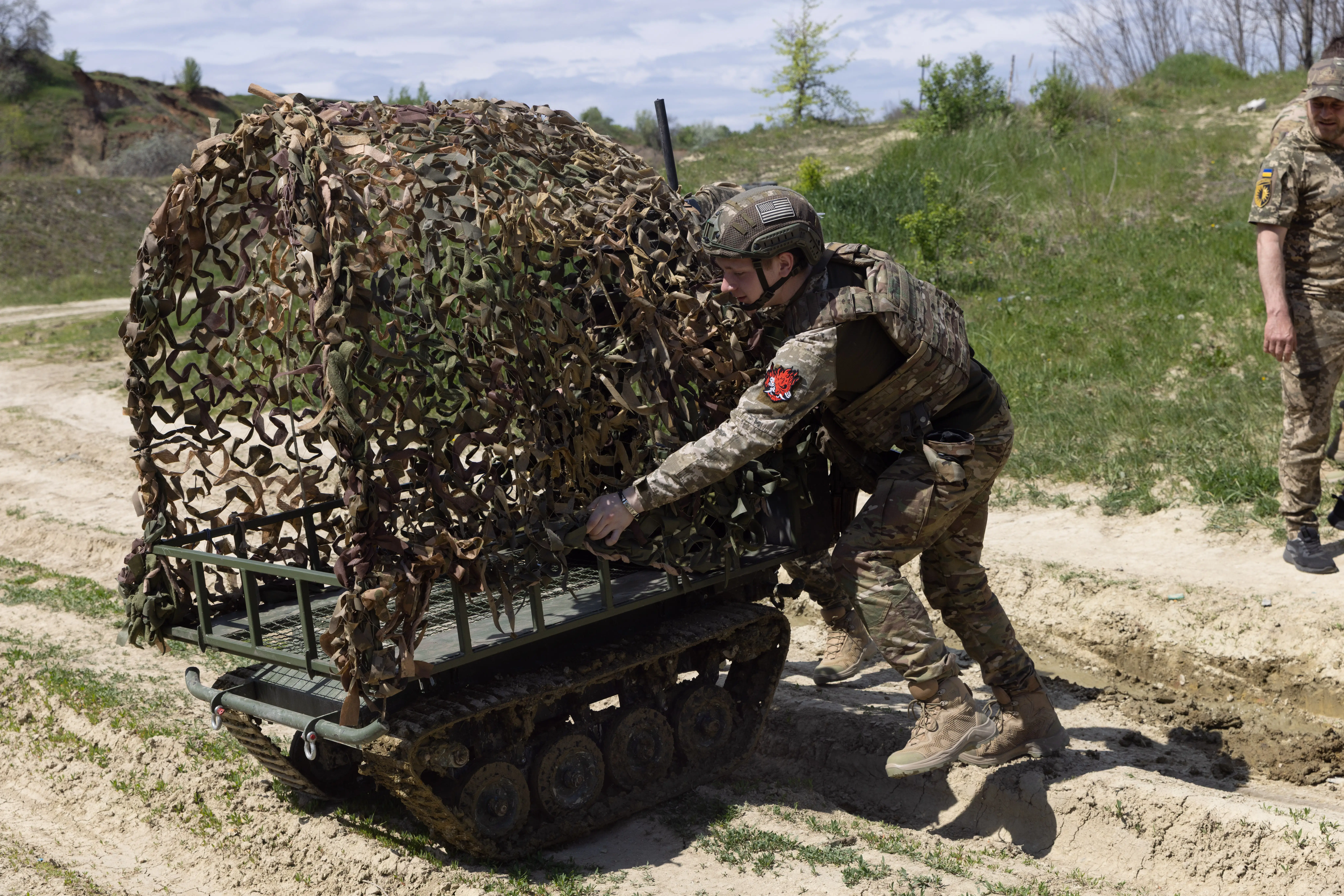
Achi described it as being able to “update one part of the system without fully relaunching the design, and you can really easily take it apart and then work with different components on their own.”
Ark also uses technology like 3D printing so it can quickly test and make smaller product changes.
Frontline Robotics, a Ukrainian company that makes drones and weaponry used by more than 60 Ukrainian units, uses manual assembly for some work rather than full automation to enable easier changes. Processes must be “lightweight, but still stable in order to sustain 20 changes per month,” Mykyta Rozhkov, the chief business development officer, told Business Insider.
“Automation comes with the cost of freezing the product version,” he said.
Guoba said that for Granta Autonomy, “to make our products future-proof, one of the most important things we are focusing on is autonomy.”
Frontline makes minor changes up to 20 times a month, and major changes roughly every six months, and Granta changes the software in its drones every month.
Guoba said his products are updated all the time based on what’s happening in Ukraine because “when you deliver your system, it is used every day and many times during the day.” In contrast, when it’s delivered to NATO militaries, “your systems get used maybe once a month, for example, during exercises and so on and so on.”
Western allies are watching, with leaders warning that their defense industries and armed forces aren’t innovating and building fast enough. They want to work in and with Ukraine to learn how to accelerate.
“I think there is so much innovation happening right now that it’s hard to comprehend,” Achi said. “This is my big message to Europe: You have right now this time.” He said, “Ukraine is buying this time for you to realize, understand the urgency.”
Read the original article on Business Insider


INEC Officials Accused of Demanding ₦2,000 for PVCs in Onitsha [VIDEO]

John Fetterman poised to flip and become Republican ‘majority-maker’: ex-chief of staff

Tinubu’s reforms attract $24.1bn capital, says Trade Minister

How my arrest saved me from Sam Larry’s accident – Peller + Video

âl did not k!ll him, he d!ed on top of me" – Sani Abacha’s mistress says

VIDEO: Tears as slain Lagos NURTW official laid to rest

Beloved EDM DJ Announces Indefinite Hiatus From Music and Touring: ‘I Finally Hit a Serious Breakdown Point’

 Society2 days ago
2026 Ballon d’Or: Top 4 players to win award after World Cup final revealed
- Society1 day ago
Pepper Seller Caught On Camera Applying Pepper On Newborn Baby As Rituals To Usher Her Into The Business
- World2 days ago
Spain earns $51 million for World Cup win and runner-up Argentina gets $34 million as total payout for all 48 teams hits record-high $871 million
- Society3 days ago
Prosecution Presents Evidence Against Adu-Boahene in GH¢49.1 Million Trial-Deputy AG Says
- Investigation3 days ago
Iâll retire and get a tattoo of our manager if Spain win World Cup 2026 – Spanish defender, Cucurella
 Investigation3 days ago
Police arrest four over mob k!ling, exhume victimâs remains for autopsy
- Investigation3 days ago
Iran will teach USA âunforgettable lessonsâ – Iranian Supreme Leader
- Society2 days ago
Nigerian Lady Weeps Uncontrollably On Social Media As Her Bank Account Gets Hacked, Life Savings Wiped Out Except ₦194