National
US imposes 12.5% tariff on Nigerian imports over forced labour concerns

The United States has imposed a 12.5 per cent tariff on products imported from Nigeria over what it described as the country’s failure to prohibit and effectively enforce a ban on goods produced with forced labour.
Nigeria is among 60 economies targeted under the new trade measure announced by the Office of the United States Trade Representative on Thursday.
The decision followed investigations launched by the USTR in May 2026 into 60 of America’s largest trading partners under Section 301 of the Trade Act.
According to the agency, more than 1,600 written submissions were received during the investigations, while public hearings involving over 100 witnesses were conducted and consultations held with more than 45 governments.
The USTR said economies that have already implemented or committed to enforcing prohibitions on forced labour imports would face a lower tariff rate of 10 per cent.
It said: “10 percent is the appropriate rate of Section 301 duties for investigated economies that (i) impose a forced labor import prohibition; (ii) have committed to impose and enforce such a prohibition through an Agreement on Reciprocal Trade; or (iii) have imposed a partial regime with the effect of preventing the importation of certain forced labor goods.
“These economies are: Argentina, Bangladesh, Cambodia, Canada, Ecuador, El Salvador, Guatemala, Honduras, India, Indonesia, Jordan, Malaysia, Mexico, Pakistan, Sri Lanka, Trinidad and Tobago, and the United Kingdom.
“10 percent or 12.5 percent, net of Most-Favored-Nation (MFN) rate, is the appropriate rate of Section 301 duties for certain products of the European Union, Taiwan, Japan, Korea, and Switzerland that are not otherwise exempted, as explained in greater detail in the Federal Register Notice.”
For other countries covered by the investigation, including Nigeria, the agency determined that a higher tariff should apply.
It added: “12.5 percent is the appropriate rate of Section 301 duty for all other investigated economies.”
A Federal Register notice obtained from the USTR on Friday specifically confirmed the application of the tariff to Nigerian products, subject to listed exemptions.
The notice read: “Based on the findings in the investigation of Nigeria, considering the public comments, testimony, and the advice of the Section 301 Committee, as well as the advice of advisory committees, and in accordance with the specific direction of the President, the Trade Representative has determined to impose 12.5 percent tariffs on products of Nigeria, except as provided in Annex I and Annex II, Part A, of this Notice.
“The Trade Representative has determined, in accordance with the specific direction of the President, that the tariff rate to be applied, and the scope of tariffs and exemptions, are appropriate to obtain the elimination of the acts, policies, and practices determined to be actionable in the investigation.”
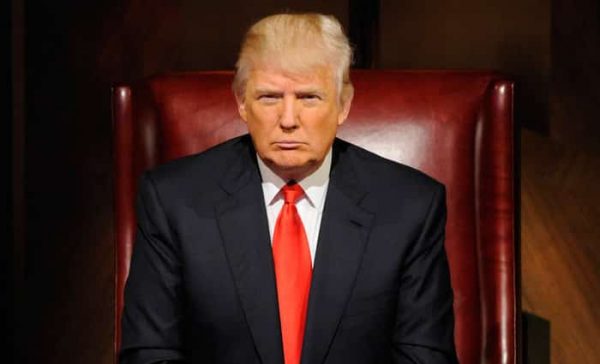
The latest measure follows President Donald Trump’s invocation of Section 122 of the Trade Act of 1974 to impose a temporary universal tariff on imports after the US Supreme Court blocked his administration’s broader tariff plan under the International Emergency Economic Powers Act.
US Trade Representative Jamieson Greer said the latest action was designed to pressure trading partners to strengthen their measures against forced labour in global supply chains.
Greer said: “President Trump recognises that decades of moral suasion have not eradicated forced labour from global supply chains.
“The United States has had a forced labour import ban for nearly a century. It’s well past time for our trading partners to do the same.”
The USTR, however, said some products would be exempted from the tariffs.
These include raw materials whose inclusion could create domestic supply shortages, goods capable of causing economy-wide disruptions and products that are unavailable in sufficient quantities in the United States or from alternative sources.
Selected goods from countries that have adopted or committed to implementing forced labour import prohibitions are also exempted.
The agency added that further exemptions were granted in instances where imposing the tariffs was considered unlikely to eliminate the trade practices identified during the investigations.


NSCDC operative killed during illegal mining raid in Niger

‘Unfair to a dead man’ — Atiku replies Obasanjo over N5m impeachment allegation

Igbo community in Abuja demands EFCC probe over N780m church budget

Oprah Winfrey, 72, reveals her real name after unknowingly going by the wrong one for years

Troops arrest five suspected kidnappers, seize arms in Yobe

Nigerian Army declares soldier wanted over alleged sale of military uniforms to terrorists

Singer Chris Brown pleads guilty to âviciousâ London club attack after hitting producer several times with bottle

 Investigation3 days ago
âBusinesses are dy!ng in South Africa. Nobody is making money – South African man decries low patronage days after anti-immigrant protest
- National3 days ago
CBN opened domiciliary accounts for Gbajabiamila-linked PFIPC on accountant-general’s order before N400 million bribe probe: Cardoso
- National3 days ago
INEC Officials Accused of Demanding ₦2,000 for PVCs in Onitsha [VIDEO]
- Investigation2 days ago
Married woman humiliated after allegedly being caught cheating on her husband with another man in Kogi community
- Investigation3 days ago
âl did not k!ll him, he d!ed on top of me" – Sani Abacha’s mistress says
- Investigation3 days ago
âThe court should marry her offââ Father of 11 begs Sharia Court to compel 27-Year-Old daughter to marry
- Investigation3 days ago
âHe bargained the car from â¦15m to â¦13.5m and asked for a test driveâ â Car dealer recounts how suspected car thief allegedly stole vehicle before being caught
- Investigation3 days ago
Police nab cleaner for stealing NYSC doctorâs N18m car in Adamawa