News
Why Ayodele Olawande’s NYSC reform is apt, timely and youthfully relevant

Since Nigeria’s return to democratic rule in 1999, when Chief Olusegun Obasanjo was elected President, the nation’s youth development sector has largely operated below its potential.
For many years, the ministry responsible for youth affairs was merged with sports, and successive ministers often focused more on sports administration than on policies directly affecting young people.
As a result, youth development received limited attention despite the enormous role young Nigerians play in nation-building.
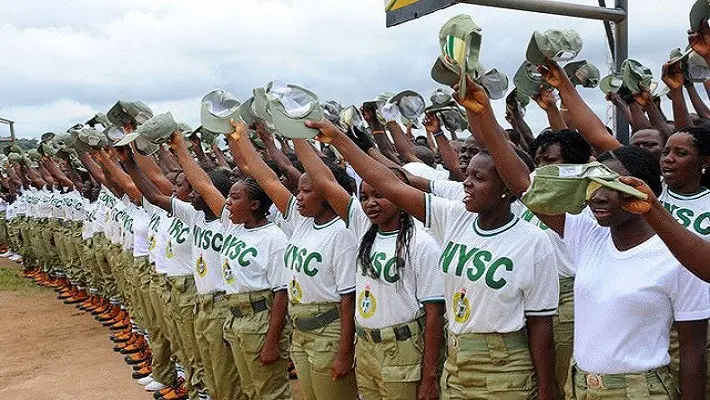
The National Youth Service Corps was established on May 22, 1973, under the administration of General Yakubu Gowon, who was only 38 years old at the time. As a relatively young leader, Gowon introduced the scheme with a clear objective: to promote national unity, reconciliation and integration after the Nigerian Civil War.
For decades, the scheme served as a symbol of nation-building, but over time, it gradually drifted away from many of its founding ideals.
Over the years, the NYSC became a shadow of its original vision. Securing deployment to a preferred state often depended on personal connections or unofficial payments rather than merit or established procedures.
These practices contradicted the objectives upon which the scheme was founded. In addition, worsening insecurity across parts of the country discouraged many prospective corps members from accepting postings outside their regions, thereby weakening the national integration purpose of the programme.
Similarly, the Skills Acquisition and Entrepreneurship Development programme, introduced to equip corps members with practical entrepreneurial skills, largely failed to achieve its intended objectives.
In many orientation camps, participation became routine rather than impactful, with many corps members attending sessions merely to fulfil requirements instead of acquiring meaningful skills.
The programme, in many respects, outlived its effectiveness and required urgent restructuring.
From Dapo Sarumi (1999–2002), Bello Usman (2001–2003), Col. Musa Mohammed (Rtd) (2003–2005), Saidu Balarabe Samaila (2005–2007), Akinlabi Olasunkanmi (2007–2010), who became the first Minister of Youth Development, Bolaji Abdullahi (2010–2012), Inuwa Abdulkadir (2012–2013), Boni Haruna (2014–2015), Solomon Dalung (2015–2019), Sunday Dare (2019–2023), Abubakar Momoh (August–September 2023), and Dr Jamila Bio Ibrahim (October 2023–October 2024), several ministers supervised youth affairs in one form or another.
While each made contributions in different areas, none pursued a comprehensive overhaul of the NYSC comparable to the current reform agenda.
Upon assuming office, Comrade Ayodele Olawande, whose age is relatively close to Gowon’s when he created the scheme, demonstrated a willingness to confront longstanding concerns surrounding the NYSC.
Rather than maintaining the status quo, he constituted a reform committee to critically examine the challenges confronting the scheme and recommend practical solutions capable of repositioning it for contemporary realities.
In 2025, the committee launched a nationwide survey inviting young Nigerians, stakeholders and members of the public to contribute ideas on how the NYSC could be improved.
Unfortunately, public participation was relatively low. Many young people who now dominate conversations on social media either ignored the opportunity or paid little attention to the consultation process.
Today, however, many of the same voices have emerged as critics of reforms that they had an opportunity to influence but chose not to engage with.
Public criticism remains an essential feature of democracy. However, meaningful engagement also requires active participation during policy formulation. Constructive input is most valuable before decisions are made, not only after reforms have been announced.
The approved reforms represent one of the most comprehensive overhauls in the history of the NYSC.
Among the key changes are a technology-driven call-up process to improve transparency; risk-sensitive deployment aimed at enhancing the safety of corps members; a redesigned six-week orientation programme with stronger emphasis on leadership, entrepreneurship, digital skills and specialised career pathways; skills-based primary assignments aligned with academic qualifications and career aspirations; modern governance with civilian operational leadership while retaining military support for camp security; improved orientation camp standards through a national grading and certification system; the introduction of a graduation ceremony to replace the traditional Passing Out Parade; and a redesigned NYSC uniform intended to reflect professionalism and national pride.
According to the Minister, the reform process began in 2025 through extensive consultations involving the Federal Ministry of Youth Development, the Federal Ministry of Education, and the Office of the Special Adviser to the President on Policy and Coordination.
The process also incorporated recommendations from experts, institutions and stakeholders across the country.
No reform is perfect, and implementation will ultimately determine its success. Nevertheless, the willingness to modernise a 53-year-old national institution deserves recognition. Rather than dismissing every change outright, Nigerians, especially young people, should monitor implementation, provide constructive feedback and support efforts that genuinely strengthen the scheme.
For the first time in many years, a Minister of Youth Development has demonstrated the political will to address structural shortcomings that successive administrations left untouched. Whether these reforms ultimately succeed will depend not only on government commitment but also on the willingness of Nigerians, particularly the youth, to actively participate in shaping the future of a programme originally designed for their benefit.
Dr Tosin Adesile, a media educator and entrepreneur, writes from Lagos.







Primate Ayodele predicts fierce 2027 polls, says Tinubu faces fresh hurdles

Performer at former Iranian supreme leader’s funeral calls for death of Trump

Nigerian Army eliminates suspected kidnapper in Benue

Trump mixes patriotism with partisanship as he celebrates 250th anniversary
Trump mixes patriotism with partisanship as he celebrates 250th anniversary

Police Recover GH¢140,000 and AK-47 After Mobile Money Robbery in Accra

World Cup: France break Paraguay resistance 1-0 to earn quarter-final berth

 Society3 days ago
Iyabo Obasanjo clarifies father’s real age
 National18 hours ago
Against Nigerian Law, CBN Deputy Governor Emem Usoro Allows Her Eleven Years Old Twin Daughters To Be Company Boss
- Investigation3 days ago
Eight de@d and 13 injured after being hit by truck ‘being driven by child’
- Breaking3 days ago
Panelists and guests on a podcast burst into laughter after 54-year-old US woman âmarriedâ to a 36-year-old Nigeria-based man, who she sends money to every month, laments about lack of love from him
- World2 days ago
WW3 fears explode as Cuba warns Donald Trump it's 'preparing for war'
- Investigation3 days ago
Man who took sister-in-law to court over his brotherâs £5m fortune lands huge bill after losing battle
- Investigation3 days ago
â15k from someone in the US who promised me âbig moneyâ feels somehowâ â X user sparks debate
- World3 days ago
Monaco bombing: Ukrainian oligarch's alleged mistress loses both legs as wife speaks out