World
Why e-commerce pitches are creeping into TV news

This Video Is Trending Right Now
If you feel like your favorite morning news or talk show is frequently trying to sell you something, you’re right.
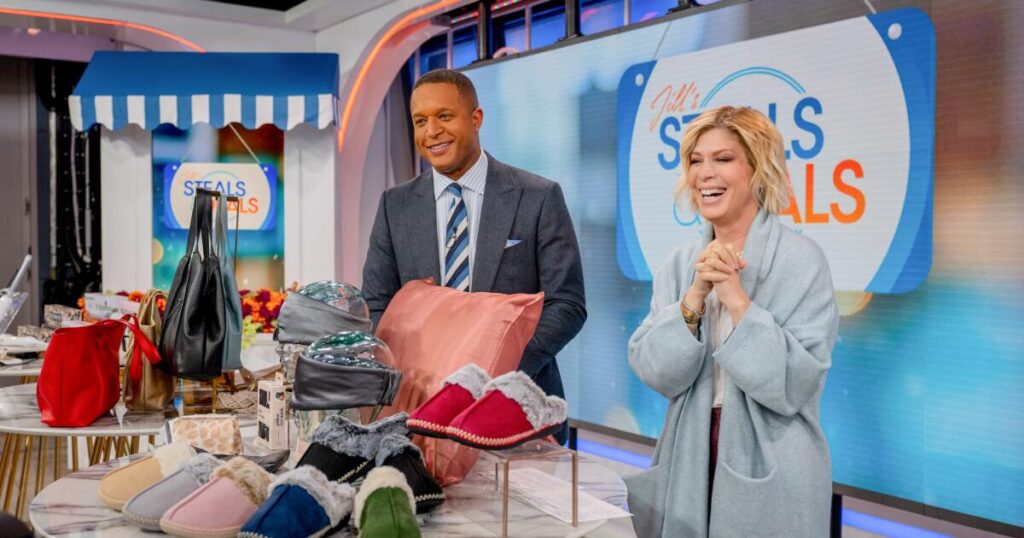
Shopping segments within the program content of NBC’s “Today,” ABC’s “Good Morning America” and “CBS Mornings” have grown in recent years. Using QR codes on the screen, viewers are taken directly to dedicated e-commerce sites where they can put in their orders, with the program getting 20% or more of the revenue generated.
The segments typically feature a contributor or expert presenting household items, fashion or personal care products, alongside the host viewers know and trust. While hosts typically don’t do the actual pitching, their presence provides a seal of approval that helps drive a purchase.
The segments are also a staple of talk shows and syndicated programs such as “The View,” “The Jennifer Hudson Show,” “Entertainment Tonight” and “Inside Edition” and have spread to local TV stations. Ownership groups have signed deals with companies that match them up with brands looking for exposure that goes far beyond what they get with a 30-second commercial.
“This is the savior for media, if they really focus on it,” said Brian Meehan, co-founder of Knocking, a Connecticut-based company that specializes in embedding e-commerce into TV and digital content.
That may seem bit hyperbolic, but there is little doubt that TV outlets are looking for help as they navigate the upended media industry.
Streaming has pulled viewers away from traditional television, driving down ad revenues. Since 2022, ad spending on broadcast and cable TV has dropped 23%, to $51 billion in 2025. Consumers bypassing or canceling their cable subscriptions are cutting into the fees stations receive from pay TV providers.
As a result, both networks and TV stations have had to make significant cuts in their news operations to maintain profit margins. The daytime syndication business has declined dramatically as well, with NBCUniversal exiting the market and canceling “Access Hollywood” and “The Kelly Clarkson Show.”
Networks and stations don’t reveal how much they earn from the shopping segments, which typically run four minutes, but insiders say it’s well into the eight-figure range.
Bill Hague, executive vice president for the media research firm Magid, said more TV stations are turning to the segments to help fill the additional hours of local news they are programming instead of syndicated talk shows.
“Why invest in syndication when you can have the same audience and more revenue tied to it?” Hague said, adding that the company’s research shows consumers don’t believe the practice diminishes the quality of a newscast.
Jeff Rossen, a former consumer reporter for NBC News, recently pitched online shopping deals for Tegna’s TV local stations. The products he demonstrated sold briskly, likely helped by the credibility and trust he has accrued as a journalist.
That authority matters to viewers. NBC says its research shows that 94% of “Today” viewers trust the product recommendations made on the program.
Morning shows, with their mix of hard news, entertainment segments and lighter fare, have always had more latitude in what they present. But the current dire circumstances of the TV business explain why there is little pushback.
“If helping me buy a better blender also helps pay for an investigative reporter, I’m fine with it,” said Andrew Heyward, a former CBS News president who has consulted for TV station groups.
Heyward said consumers have gotten accustomed to editorial content being a gateway to online shopping. The New York Times gets a cut of sales linked to its Wirecutter product review site. Book reviews in the Los Angeles Times are linked to Bookshop.org, and the newspaper gets a commission for any sales.
Amazon and other web platforms have made e-commerce account for 21.8% of all U.S. retail purchases, according to the Department of Commerce.
Direct selling on traditional media goes back decades. In 1978, a Clearwater, Fla., radio station accepted 112 electric can openers from an advertiser who could not afford to pay for commercial time. Station owner Bud Paxson had a newscaster auction the inventory over the air and it sold out quickly, leading to a regular show called “Suncoast Bargaineers.”
In 1982, Paxson moved the concept to a local Tampa cable outlet, called it Home Shopping Channel and, after a few years, took it national as Home Shopping Network. HSN soon had celebrities pitching their own product lines, a technique that is now occasionally used by the morning shows.
Candi Carter, whose Cistus Media handles e-commerce for Tegna, said viewers have long been accustomed to seeing products touted inside of programming content, going back to the days of Oprah Winfrey’s “favorite things” segments.
“Brands do it for visibility,” Carter added. “They don’t have to pay a product integration fee and they get revenue from the sales.”
The broadcast networks experimented with direct selling to viewers over the years. NBC even put its name on ShopNBC, a cable channel it co-owned in the 1990s. But the concept was not mastered until NBC’s “Today” introduced “Steals and Deals” in 2010 as an occasional segment that grew over time.
The program now has 30 contributors who present wares in about 350 shopping segments each year. They are available across digital, social, newsletters and mobile platforms after they air on “Today.”
ABC’s “Good Morning America” started its own version in 2011, brazenly calling it “Deals and Steals.” The network now has daily segments on both “GMA” and the afternoon hours “GMA 3” and “The View.” Network contributor Tory Johnson has handled “Deals and Steals” since its launch and has long been one of the most familiar faces on “GMA.” Other contributors, such as former fashion magazine editor Laurie Bergamotto, have been added over the years.
Meehan recalls the biggest hurdle to launching the segments at ABC was the language explaining the arrangement to viewers — making it clear that the network stands to benefit.
“It came down to the attorneys just saying, ‘ABC may receive promotional or financial consideration,’” he said. “It took a long time to go through that process.”
CBS News, historically cautious about any endeavors that could tarnish its legacy as a journalism organization, was the last of the traditional networks to get into e-commerce in 2022 after COVID-19 lockdowns depressed ad revenues. The division was also under pressure to improve its financial performance as Shari Redstone, then-chair of parent Paramount, was intent on improving the company’s balance sheet ahead of a sale.
“Shop CBS” segments, as they’re called, are presented multiple times a week on “CBS Mornings” and “CBS Saturday Morning” and have become key revenue drivers for the struggling news division. Any resistance from producers or on-air talent recedes once they learn how much money e-commerce takes in, according to one veteran at the division not authorized to discuss the matter publicly.
While ABC and NBC broker their e-commerce deals in-house and through some of their contributors, CBS turned to Knocking to develop its segments. The company makes deals with product suppliers looking for in-program exposure, supplies the on-air talent that does the pitching with the network’s hosts and builds the websites that handle the transactions.
While on-air network journalists appear in the segments, they are not asked to do the selling. When CBS News signed on with Knocking, the division insisted the talent and producers involved be able to test the products before putting them on air. When they can react with enthusiasm, it’s a big help.
“When ‘CBS Mornings’ co-host Nate Burleson puts on a massager and he’s like, ‘Ooh, wow, this feels like real human hands,’ — none of that is scripted,” said Meehan.
Still, programs are putting their credibility on the line by selling the products. There is little margin for error or customer dissatisfaction, as disgruntled viewers will tune out.
Meehan said Knocking does its best to mitigate that possibility by accepting returns up to six months after purchase.
“A bad experience will hurt both the product or service being featured, and the broadcaster,” Heyward said. “All the parties have a vested interest in honesty, and in a good user experience.”


Real reason Tinubu lost Lagos in 2023 elections – Obanikoro
NPFL: Elijah Akanni move to Barau FC on a year deal

2027: NDC will win before 12 noon in free, fair election – Fayose

NBA set to elect 33rd president amid leadership crisis

NRS issues July 31 deadline for e-invoicing compliance

Police nab five suspects for fake transfer fraud, arrest two over child rape

Startling warning sets off internet firestorm as Democrats face massive midterm test

 Society2 days ago
Heartbroken Girlfriend Storms Studio To Remove Portrait Tattoo Of Cheating Boyfriend From Her Back
- Breaking1 day ago
Ondo police arrest father for burning his 10-year-old daughter’s private part with hot iron over bedwetting
- Investigation2 days ago
Woman forced to dance as punishment after allegedly being caught sneaking into a compound in Awka
- Investigation3 days ago
âWhy are Lagos residents acting surprised? Victoria Island has been flooding for decadesâ â Actor Ikechukwu Onunaku reacts to Lagos flooding
- Investigation3 days ago
âJurassic Parkâ actor Sam Neillâs cause of death revealed by agent
- Investigation3 days ago
Nigeria has no business being poor â VP Shettima
- Investigation3 days ago
How Mary Habila di£d â Colleague Anita Baaki recounts final moments at David Umahi’s House
- World3 days ago
US Air Force F-33 fighter jet declares emergency over UAE 'after Iran attack'